Bybit recovers market share to 7% after $1.4B hack
Bybit’s market share has rebounded to pre-hack levels following a $1.4 billion exploit in February, as the crypto exchange implements tighter security and improves liquidity options for retail traders.The crypto industry...
Archive context
Older archive item. Useful for background and entity history, but not a fresh market-moving signal.

Bybit’s market share has rebounded to pre-hack levels following a $1.4 billion exploit in February, as the crypto exchange implements tighter security and improves liquidity options for retail traders.
The crypto industry was rocked by its largest hack in history on Feb. 21 when Bybit lost over $1.4 billion in liquid-staked Ether (stETH), Mantle Staked ETH (mETH) and other digital assets.
Despite the scale of the exploit, Bybit has steadily regained market share, according to an April 9 report by crypto analytics firm Block Scholes.
“Since this initial decline, Bybit has steadily regained market share as it works to repair sentiment and as volumes return to the exchange,” the report stated.
Block Scholes said Bybit’s proportional share rose from a post-hack low of 4% to about 7%, reflecting a strong and stable recovery in spot market activity and trading volumes.
Bybit’s spot volume market share as a proportion of the market share of the top 20 CEXs. Source: Block Scholes
The hack occurred amid a “broader trend of macro de-risking that began prior to the event,” which signals that Bybit’s initial decline in trading volume was not solely due to the exploit.
Related: Can Ether recover above $3K after Bybit’s massive $1.4B hack?
It took the Bybit hackers 10 days to launder all the stolen Bybit funds through the decentralized crosschain protocol THORChain, Cointelegraph reported on March 4.
Source: Ben Zhou
Despite efforts, 89% of the stolen $1.4 billion was traceable by blockchain analytics experts.
Related: THORChain generates $5M in fees, $5.4B in volume since Bybit hack
Lazarus Group’s 2024 pause was repositioning for Bybit hackBlockchain security firms, including Arkham Intelligence, have identified North Korea’s Lazarus Group as the likely culprit behind the Bybit exploit, as the attackers have continued swapping the funds in an effort to render them untraceable.
Illicit activity tied to North Korean cyber actors declined after July 1, 2024, despite a surge in attacks earlier that year, according to blockchain analytics firm Chainalysis.
The slowdown in crypto hacks by North Korean agents had raised significant red flags, according to Eric Jardine, Chainalysis cybercrimes research Lead.
North Korean hacking activity before and after July 1. Source: Chainalysis
North Korea’s slowdown “started when Russia and DPRK [North Korea] met for their summit that led to a reallocation of North Korean resources, including military personnel to the war in Ukraine,” Jardine told Cointelegraph during the Chainreaction show on March 26, adding:
“So, we speculated in the report that there might have been additional things unseen in terms of resources reallocation from the DPRK, and then you roll forward into early February, and you have the Bybit hack.”— Cointelegraph (@Cointelegraph) March 26, 2025The Bybit attack highlights that even centralized exchanges with strong security measures remain vulnerable to sophisticated cyberattacks, analysts said.
The attack shares similarities with the $230 million WazirX hack and the $58 million Radiant Capital hack, according to Meir Dolev, co-founder and chief technical officer at Cyvers.
Magazine: Trump’s crypto ventures raise conflict of interest, insider trading questions
Why this matters
This security story adds another data point to the current market tape and is useful when read alongside nearby source coverage.
Original source
Read on CointelegraphRelated market context

North Korean Hackers Linked to $388M Bitget Crypto Exchange Theft: CEO
Bitcoin Magazine North Korean Hackers Linked to $388M Bitget Crypto Exchange Theft: CEO Hackers from North Korea targeted crypto e...

Crypto Hacks: Three Projects Hacked in One Day as Losses Hit Over $11M
Three crypto projects were attacked on September 24, suffering combined losses of more than $11M. Attackers drained around $1.8M f...

Bitget’s hack just got $36 million bigger, and now there’s a bounty on the stolen crypto
Bitget has raised the estimated value of assets taken in its Sept. 24 breach to $387.5 million as exchanges and security firms mob...

XRP News: Bitget Hacker Moves 54M XRP, Putting Fresh Selling Pressure
The attacker behind Bitget’s $388 million news driver has moved about 54 million stolen XRP out of three of the five wallets that...

Visa cuts reported stablecoin volume but there’s no proof payments fell
Visa’s September 18 data refresh lowered its adjusted stablecoin volume measure, while its adjusted transaction count fell by less...
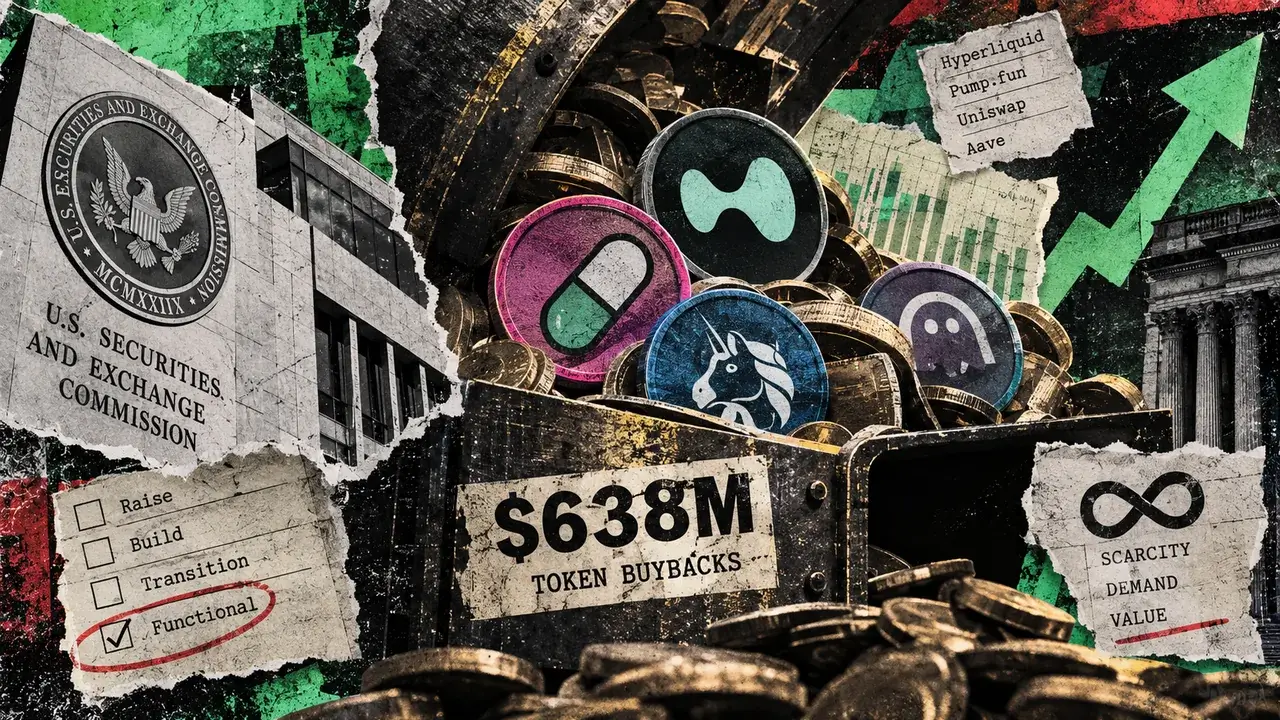
SEC clears regulatory hurdle as crypto token buybacks hit record $638 million
Crypto projects spent about $638 million with token buybacks through late August 2026, according to Allium Labs data. That is alre...