Cork Protocol hacked for $12M, smart contracts paused
Cork Protocol, a decentralized finance (DeFi) platform, was hit by a smart contract exploit on May 28, resulting in the loss of roughly $12 million in digital assets.Cybersecurity firm Cyvers said the hack occurred at 11...
Archive context
Older archive item. Useful for background and entity history, but not a fresh market-moving signal.
Cork Protocol, a decentralized finance (DeFi) platform, was hit by a smart contract exploit on May 28, resulting in the loss of roughly $12 million in digital assets.
Cybersecurity firm Cyvers said the hack occurred at 11:23:19 UTC and was funded by an address ending in “762B.” According to the firm, the attacker used the exploit to steal roughly 3,761 Wrapped Staked Ether (wstETH), which was converted to Ether (ETH) almost immediately after the attack.
“We are investigating a potential exploit on Cork Protocol and are pausing all contracts. We will report back with more information,” Cork Protocol co-founder Phil Fogel wrote on X.
Cork Protocol smart contract exploit details. Source: CyversThe Cork Protocol exploit is the latest hacking incident to impact the crypto industry as cybersecurity continues to be a major issue in the sector, lowering consumer confidence, and prompting calls to improve security measures from crypto industry executives.
Related: Hacken CEO sees ‘no shift’ in crypto security as April hacks hit $357M
Cetus hacked for $223 million days agoThe Cetus decentralized crypto exchange (DEX), a trading platform built on the Sui network, was hacked on May 22, resulting in $223 million in stolen funds.
Sui validators froze a majority of the funds, sparking a debate about the centralization of the network and the appropriate course of action for blockchain validators following a major hacking incident.
The Cetus team announced a $6 million bounty for white hat hackers assisting in the return of the remaining stolen funds.
Blockchain security firm Dedaub released a post-mortem report dissecting the incident details. According to the report, the hack was caused by an exploit of the liquidity parameters used by the Cetus automated market maker (AMM).
The hackers manipulated the field by altering values that went undetected in a most significant bits (MSB) check. Changes to a binary code’s most significant bits dramatically alter the values produced by that binary code.
This allowed the hackers to add massive amounts of liquidity to the system with only a keystroke and drain other liquidity pools of hundreds of millions of dollars.
Magazine: Weird ‘null address’ iVest hack, millions of PCs still vulnerable to ‘Sinkclose’ malware: Crypto-Sec
Why this matters
This security story adds another data point to the current market tape and is useful when read alongside nearby source coverage.
Original source
Read on CointelegraphRelated market context

Crypto Hacks: Three Projects Hacked in One Day as Losses Hit Over $11M
Three crypto projects were attacked on September 24, suffering combined losses of more than $11M. Attackers drained around $1.8M f...

Bitget Confirms $387.5 Million Security Breach as Revised On-Chain Accounting Reveals Wider Losses
Bitget raises breach losses to $387.5 million after Zcash and TRON transfers found. Attackers spoofed backend transaction data to...

Bitget’s hack just got $36 million bigger, and now there’s a bounty on the stolen crypto
Bitget has raised the estimated value of assets taken in its Sept. 24 breach to $387.5 million as exchanges and security firms mob...

Bitget Confirms $351.6M Hot Wallet Breach And Pauses Withdrawals
Bitget says unauthorized transfers affected approximately $351.6 million held across parts of its hot and warm wallet infrastructu...
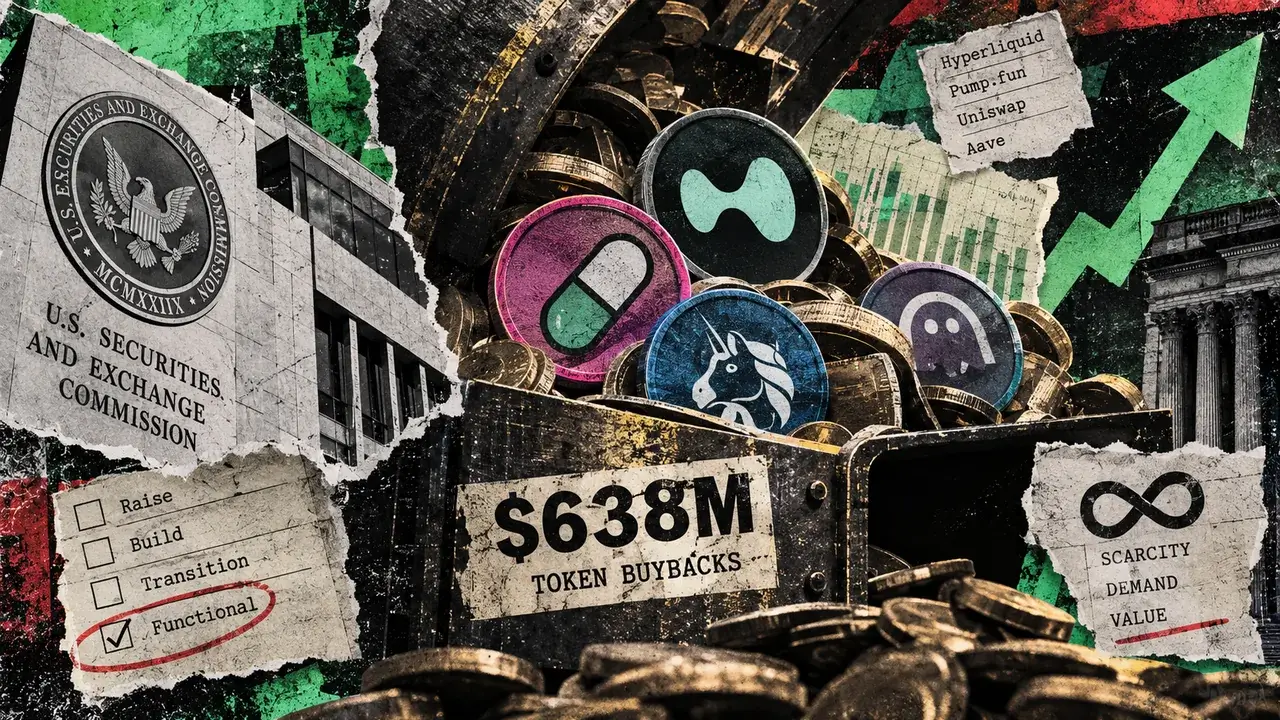
SEC clears regulatory hurdle as crypto token buybacks hit record $638 million
Crypto projects spent about $638 million with token buybacks through late August 2026, according to Allium Labs data. That is alre...

North Korean Hackers Linked to $388M Bitget Crypto Exchange Theft: CEO
Bitcoin Magazine North Korean Hackers Linked to $388M Bitget Crypto Exchange Theft: CEO Hackers from North Korea targeted crypto e...