Criminal Complaint Against Circle Puts USDC Freeze Policy Under a Microscope
A criminal complaint filed by Wisconsin prosecutors against Circle, the company behind USDC, has put an uncomfortable question back in the spotlight. Why does the world’s second-largest stablecoin issuer appear far less...
Archive context
Older archive item. Useful for background and entity history, but not a fresh market-moving signal.

A criminal complaint filed by Wisconsin prosecutors against Circle, the company behind USDC, has put an uncomfortable question back in the spotlight. Why does the world’s second-largest stablecoin issuer appear far less willing than Tether to help law enforcement recover stolen crypto?
An ICIJ investigation published on July 8 points to three issues driving the debate. Circle insists it only freezes funds after receiving valid legal orders, disputes claims it can simply burn and reissue stolen tokens, and rejects allegations from New York prosecutors that it profits by leaving frozen assets untouched. Meanwhile, critics say that the policy leaves scam victims waiting while their money disappears.
The case started with a romance scam in Walworth County, Wisconsin. A resident identified only as “Victim #1” was convinced to buy USDC and send about 381,000 tokens to what turned out to be a fake investment platform. After investigators traced the funds, a judge ordered Circle to freeze the wallet. The company did so without delay.
Months later, the court took the next step. It ordered Circle to invalidate those frozen tokens and issue the same amount of fresh USDC to the Walworth County Sheriff’s Office. Circle refused, saying it does not have the technical ability to burn and reissue USDC held inside someone else’s wallet. Prosecutors responded with a criminal complaint, an unusual move against a company of Circle’s size.
Circle later asked the court to dismiss the case. It argued the Wisconsin court lacked jurisdiction and said prosecutors ignored alternative proposals it had offered to compensate the victim. Walworth County prosecutor Thomas Binger said the dispute shows how quickly scammers can move funds compared with the pace of the legal system.
ICIJ: Circle Faces Criminal Complaint in Wisconsin Over Refusal to Recover Scam Victim Funds
An ICIJ investigation reported that law enforcement authorities in Wisconsin and New York accused Circle of refusing to assist in freezing or recovering scam victims’ USDC. Wisconsin… pic.twitter.com/QZv7PNN0Du
The Wisconsin case is not the only one raising questions. Earlier this year, New York prosecutors told U.S. senators that Circle generally requires court orders before freezing USDC and has not consistently returned stolen funds after courts approved their release. Since stablecoin transfers settle within seconds, investigators argue valuable time is often lost before legal paperwork is complete.
Discover: The Best Crypto to Diversify Your Portfolio
The Debate Over Frozen FundsNew York prosecutors also made a more serious allegation. They argued Circle continues earning interest on reserve assets backing frozen USDC, giving the company little financial incentive to return those funds quickly. Circle has not accepted that claim.
Blockchain researcher Yury Serov estimates that at least 119 million USDC is currently frozen. Those tokens cannot move, but they remain backed by reserve assets unless another process removes them permanently.
Circle’s technical explanation has also drawn criticism. Joshua Cooper-Duckett of Cryptoforensic Investigators told ICIJ the company could update its smart contracts to support burning and reissuing tokens held in third-party wallets. Circle did not answer when asked whether it could make those changes.
One detail from the court filings caught investigators’ attention. Circle disclosed it had already discussed a victim compensation process with federal prosecutors that involved permanently freezing stolen tokens before issuing replacement USDC. The company did not explain whether that arrangement applies outside federal cases.
Discover: The Best Token Presales
Circle USDC vs. Tether’s Model and the 30x GapThe difference between Circle and Tether is hard to ignore. AMLBot data shows Tether froze about $3.3 billion in USDT across more than 7,200 wallets between 2023 and 2025. Circle froze about $109 million in USDC over the same period, a 30 times gap by value.
Part of that difference comes from Tether’s burn and reissue process. After freezing stolen USDT, the company can destroy those tokens and issue clean replacements to law enforcement or victims.
Tether says it has already reissued around $1.1 billion and frozen $4.7 billion linked to illicit activity. Circle does not currently offer the same public process for third-party wallets, although its court filings show it has discussed similar arrangements with federal authorities.
The companies also draw the line in different places. Tether has said it sometimes acts before courts become involved if law enforcement requests help. Circle says it only responds through formal legal process, arguing that the approach protects users from wrongful or politically motivated freezes. Investigators counter that by the time those orders arrive, stolen crypto is often long gone.
Milwaukee County detective Scott Simons told ICIJ he has worked on more than a dozen cases where Circle either declined an early freeze request or where the court order came too late. For many victims, he said, the answer is simply that the money is gone.
Don’t Miss Out on Our $1,000 USDT Airdrop on ByBit
The post Criminal Complaint Against Circle Puts USDC Freeze Policy Under a Microscope appeared first on Cryptonews.
Why this matters
USD Coin is showing up inside the Stablecoins theme, so this story is worth tracking for follow-through rather than treating it as a one-off headline.
Original source
Read on CryptonewsRelated market context
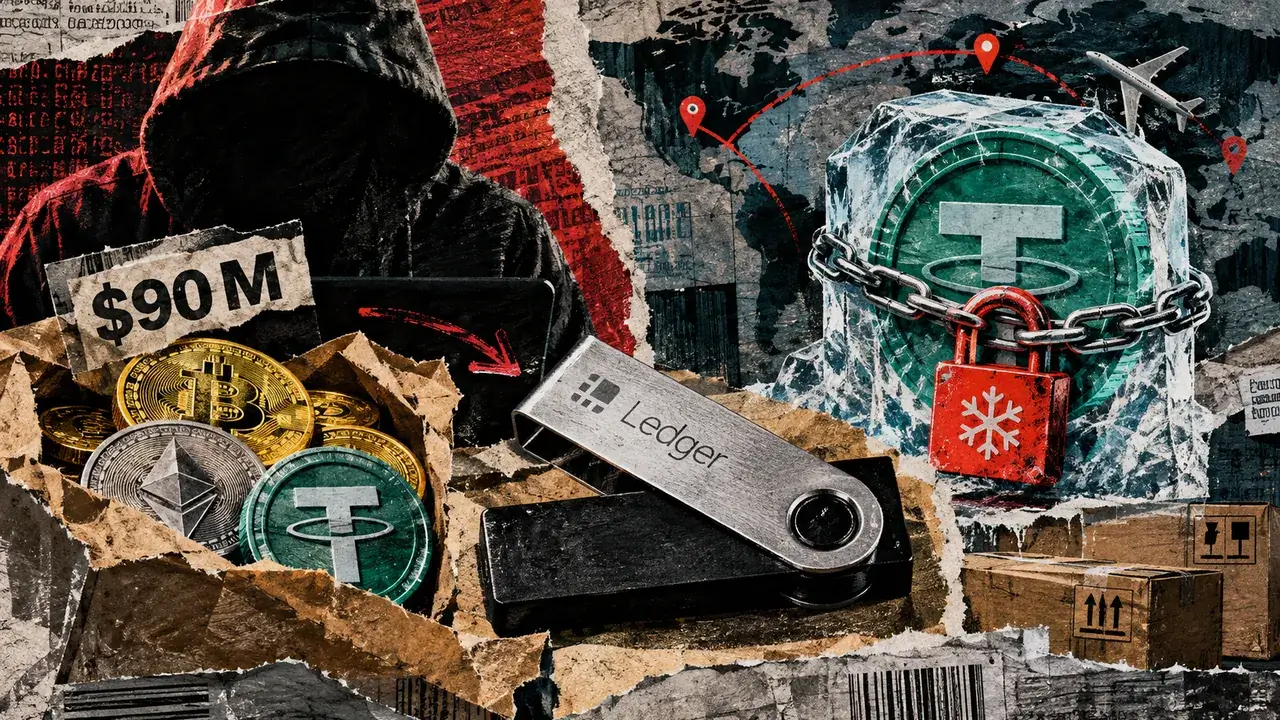
Ledger hack scare nears $90 million as Tether moves to freeze stolen USDT
Suspected Ledger wallet thefts are approaching $90 million as Tether freezes USDT stablecoin linked to the incident, according to...
Tether Freezes $1.45M in THORChain USDT Vaults, Then Reverses Blacklist Hours Later
Key Takeaways: The amount of about $1.45 million in USDT was temporarily frozen in THORChain vault addresses. According to THORCha...

Ledger theft-linked funds shift from USDT to USDD to dodge Tether freezes
The shift from USDT to USDD underscores vulnerabilities in stablecoin freeze mechanisms, prompting scrutiny on regulatory and secu...

Circle mints 250M USDC on Solana, boosting liquidity and network potential
Increased USDC supply on Solana may enhance network activity and adoption, but market caution persists regarding significant price...

Circle minted another 750 million USDC on Solana in the last 24 hours
Increased USDC liquidity on Solana may boost SOL demand, but its market impact depends on active circulation and broader crypto tr...

Tokenized stocks can carry the same rights without the same trading protections
Tokenized stocks eligible for the SEC’s September exemption must carry equivalent shareholder rights, yet their trading venues can...