Decentralized exchanges gain ground despite $6M Hyperliquid exploit
Decentralized cryptocurrency exchanges (DEXs) continue to challenge the dominance of centralized platforms, even as a recent $6.2 million exploit on Hyperliquid highlights risks in DEX infrastructure.A cryptocurrency wha...
Archive context
Older archive item. Useful for background and entity history, but not a fresh market-moving signal.

Decentralized cryptocurrency exchanges (DEXs) continue to challenge the dominance of centralized platforms, even as a recent $6.2 million exploit on Hyperliquid highlights risks in DEX infrastructure.
A cryptocurrency whale made at least $6.26 million profit on the Jelly my Jelly (JELLY) memecoin by exploiting the liquidation parameters on Hyperliquid, Cointelegraph reported on March 27.
The exploit was the second major incident on the platform in March, noted CoinGecko co-founder Bobby Ong.
“$JELLYJELLY was the more notable attack where we saw Binance and OKX listing perps, drawing accusations of coordinating an attack against Hyperliquid,” Ong said in an April 3 X post, adding:
“It’s clear that CEXes are feeling threatened by DEXes, and are not going to see their market share erode without putting on a fight.”DEX growth reshapes derivatives marketHyperliquid is the eighth-largest perpetual futures exchange by volume across both centralized and decentralized exchanges. This puts it “ahead of some notable OGs such as HTX, Kraken and BitMEX,” Ong noted, citing an April 4 research report.
Related: Bitcoin to $110K next, Hyperliquid whale bags $6.2M ‘short’ exploit: Finance Redefined
Hyperliquid’s growing trading volume is starting to cut into the market share of other centralized exchanges.
Top derivative exchanges by open interest. Source: CoinGecko
Hyperliquid is the 12th-largest derivatives exchange, with an over $3 billion 24-hour open interest — though it still trails Binance’s $19.5 billion by a wide margin, CoinGecko data shows.
According to Bitget Research analyst Ryan Lee, the incident may harm user confidence in emerging decentralized platforms, especially if actions taken post-exploit appear overly centralized.
“Hyperliquid’s intervention — criticized as centralized despite its decentralized ethos — may make investors wary of similar platforms,” Lee said.
Whale exploits Hyperliquid’s trading logicThe unknown Hyperliquid whale managed to exploit Hyperliquid’s liquidation parameters by deploying millions of dollars worth of trading positions.
The whale opened two long positions of $2.15 million and $1.9 million and a $4.1 million short position that effectively offset the longs, according to a postmortem by blockchain analytics firm Arkham.
Hyperliquid exploiter, transactions. Source: Arkham
When the price of JELLY rose by 400%, the $4 million short position wasn’t immediately liquidated due to its size. Instead, it was absorbed into the Hyperliquidity Provider Vault (HLP), which is designed to liquidate large positions.
Related: Polymarket faces scrutiny over $7M Ukraine mineral deal bet
As of March 27, the unknown whale still held 10% of the memecoin’s total supply, worth nearly $2 million, despite Hyperliquid freezing and delisting the memecoin, citing “evidence of suspicious market activity” involving trading instruments.
The Hyperliquid exploit occurred two weeks after a Wolf of Wall Street-inspired memecoin — launched by the Official Melania Meme (MELANIA) and Libra (LIBRA) token co-creator Hayden Davis — crashed over 99% after launching with an 80% insider supply.
Magazine: Memecoins are ded — But Solana ‘100x better’ despite revenue plunge
Why this matters
This security story adds another data point to the current market tape and is useful when read alongside nearby source coverage.
Original source
Read on CointelegraphRelated market context

Centralized exchanges see $3B in Bitcoin outflows in past week
The significant Bitcoin outflows from exchanges suggest a trend towards self-custody, potentially reducing market liquidity and im...
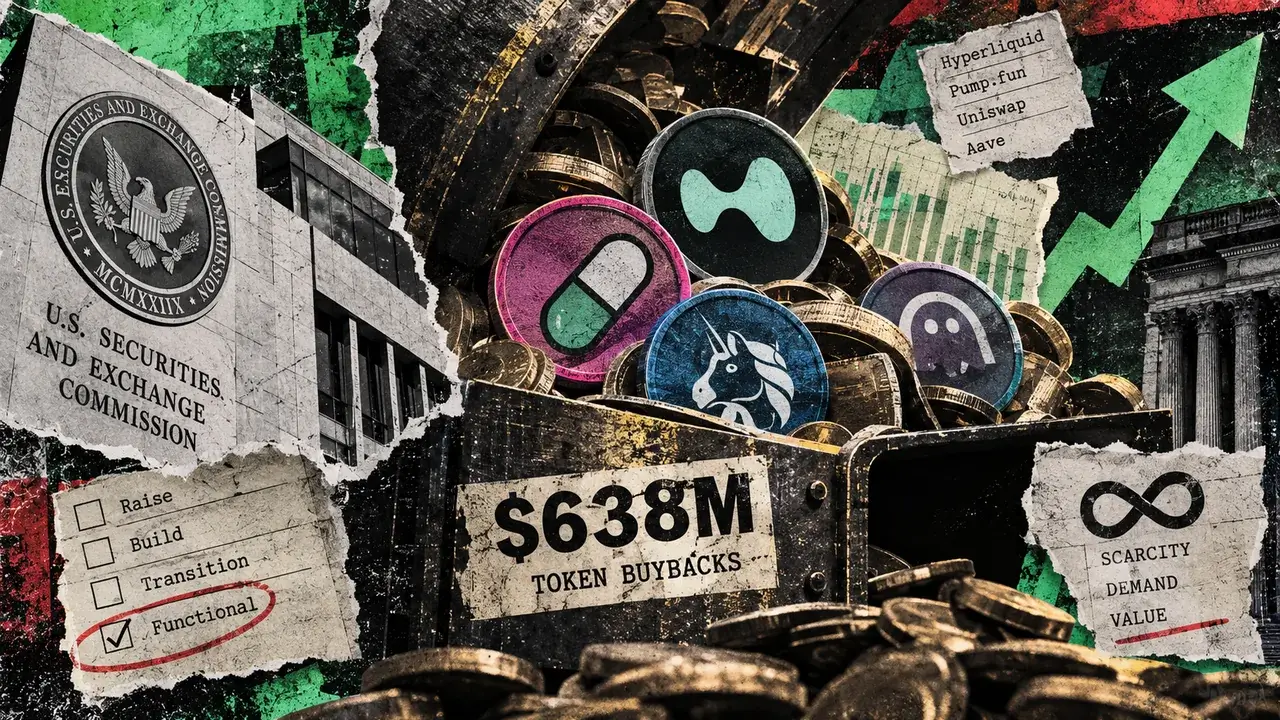
SEC clears regulatory hurdle as crypto token buybacks hit record $638 million
Crypto projects spent about $638 million with token buybacks through late August 2026, according to Allium Labs data. That is alre...

Dormant whale moves $380M Bitcoin, leaving the sale question unanswered
A Bitcoin address sent 4,499.99987779 BTC to a single destination in a transaction confirmed at 02:30:04 UTC on Sept. 25, 2026. Th...

Bitget’s hack just got $36 million bigger, and now there’s a bounty on the stolen crypto
Bitget has raised the estimated value of assets taken in its Sept. 24 breach to $387.5 million as exchanges and security firms mob...

Crypto scammers built an entire fake blockchain to steal over $2 million
Scammers built a counterfeit version of Upbit-backed GIWA blockchain and lured 1,333 wallets into depositing 767 ETH, worth about...

Discover How 20 Million Russians Tap Into Over $43B in Cryptocurrency
Deputy Finance Minister Ivan Chebeskov has estimated that 20 million Russians have invested 3.7 trillion rubles (nearly $44 trilli...