EU Bans Crypto Services for Russians in New Sanctions Over Ukraine Escalation
An array of crypto-related services have been targeted in the latest round of sanctions on Russia approved by the EU. The measures are part of an expected tightening of the economic and financial restrictions in response...
Archive context
Older archive item. Useful for background and entity history, but not a fresh market-moving signal.
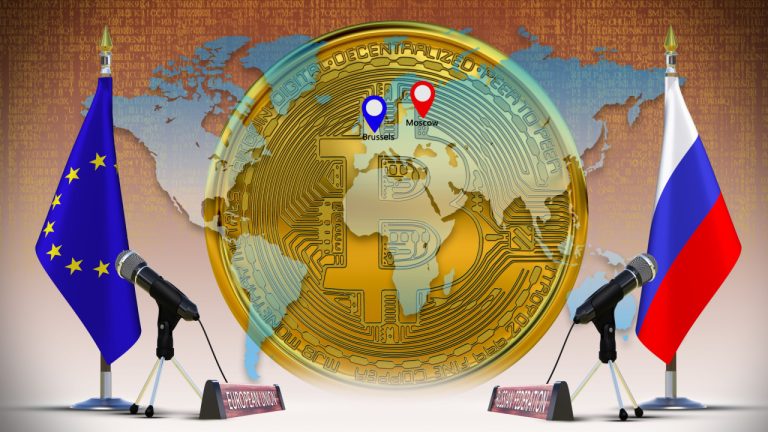
An array of crypto-related services have been targeted in the latest round of sanctions on Russia approved by the EU. The measures are part of an expected tightening of the economic and financial restrictions in response to Moscow’s decision to annex Ukrainian territories.
EU Council Adopts Full Ban on Crypto Wallet and Custody Services for Russian Persons
The Council of the European Union announced new sanctions against Russia on the backdrop of the deepening military conflict in Ukraine. The penalties, expected to hurt the Russian government and economy, come after Moscow took steps to annex the Ukrainian regions of Donetsk, Luhansk, Zaporizhzhia, and Kherson.
In a statement, the EU’s High Representative for Foreign Affairs and Security Policy Josep Borrell emphasized that the sanctions are a response to the latest escalation with the “fake referenda” in these four oblasts. Russian individuals and entities that have played a role in their organization will be specifically targeted.
Other Russian citizens and businesses are also going to take a hit, including those that deal with cryptocurrencies. The new measures include a full ban on the provision of wallet, account, or custody services for crypto assets to Russian persons and residents. That’s regardless of the value of these assets, according to the eighth package of sanctions imposed by Brussels.
This spring, when the EU approved its fifth round of such measures, the Council prohibited only the provision of “high-value” crypto-asset services to Russians and organizations registered in their country. The ban applied to digital funds exceeding €10,000 (close to $11,000 at the time).
New European Sanctions to Hit Russian Imports and Exports
While the earlier restrictions were meant to limit the transfer of wealth through digital assets and close other loopholes in the crypto space, a recent report revealed that pro-Russian groups have been actively using cryptocurrency, often in small transactions, to fund paramilitary operations in Ukraine. According to the research, they have raised $400,000 in crypto since the start of the invasion in late February. Russian authorities have also been working to allow businesses to employ crypto payments for international settlements.
With the latest move, the EU also bans the provision of IT consultancy and legal advisory services to Russia as well as architectural and engineering services. Russian imports and exports have been targeted, too, including the maritime transport of crude oil and petroleum products to third countries. The provision of related services will be allowed only if these have been purchased at or below a pre-established price cap, which is yet to be determined.
Among the other measures is a ban on EU nationals to hold any posts on the governing bodies of some Russian state-owned or government-controlled entities. The Council also decided to broaden the criteria under which persons can be designated as facilitating the circumvention of restrictions imposed by the European Union. The European Commission, the executive body in Brussels, welcomed the latest sanctions package.
Do you think the new EU sanctions will significantly limit access to cryptocurrencies for Russians? Share your thoughts on the subject in the comments section below.
Why this matters
This security story adds another data point to the current market tape and is useful when read alongside nearby source coverage.
Original source
Read on Bitcoin NewsRelated market context

Binance Gave Russian Investigators Data of Ukraine Donor to Build a Terrorism Financing Case, Documents Show
Binance supplied Russian investigators with a client’s identity documents and transaction history in 2025, and prosecutors folded...

Binance gave Russia customer details despite 2023 exit, report
Crypto exchange Binance reportedly handed Russian authorities the transaction details of one of its customers despite fully withdr...

Binance provided Russian authorities with crypto donation details that led to terrorism financing charges
This case highlights the tension between crypto privacy and regulatory compliance, emphasizing the potential for state surveillanc...

Bank of Russia Lets Brokers Count Crypto as Capital. Anything Off-List Is Treated as 100% Risk
The central bank's draft rules recognise digital currencies as capital, but treat anything outside its approved perimeter as pure...

HIVE’s $84.7 million Swedish tax provision eclipsed revenue even as Bitcoin output hit a record
HIVE Digital Technologies booked an $84.7 million non-cash Swedish tax provision tied to contested VAT exposure after adverse cour...

Binance handed user data to Russia that led to a Ukrainian donor's arrest
Binance says it cooperates with lawful requests, despite exiting the Russian market in 2023 to improve its compliance strategy.