Ex-Employee Hacks Bedrock UniBTC for $2M: Fuzzland Uncovers Insider Exploit
Fuzzland has disclosed a $2 million insider attack that targeted Bedrock’s UniBTC protocol in September 2024, was carried out by a former employee who used malware, social engineering, and privileged access to compromise...
Archive context
Older archive item. Useful for background and entity history, but not a fresh market-moving signal.

Fuzzland has disclosed a $2 million insider attack that targeted Bedrock’s UniBTC protocol in September 2024, was carried out by a former employee who used malware, social engineering, and privileged access to compromise internal systems.
Fuzzland has taken full responsibility for the breach and reimbursed all affected parties.
Insider Access Used in $2M Bedrock Protocol ExploitFuzzland, in a post on X, revealed that a past employee exploited the UniBTC protocol via a sophisticated insider operation. The individual joined the company under the guise of a skilled MEV developer and later inserted a trojan into Fuzzland’s MEV codebase using a malicious Rust crate named rands.
— 𝕗𝕦𝕫𝕫𝕝𝕒𝕟𝕕 (@fuzzland_) June 23, 2025The attack vector began with social engineering. The former employee impressed during interviews and demonstrated a functioning MEV bot, earning access to the company’s infrastructure.
On September 4, 2024, the attacker modified the project’s Cargo.toml file to include the trojan, which auto-executed in commonly used IDEs such as VSCode and JetBrains.
The malware allowed persistent, undetected access to engineering workstations for over three weeks. Security tools such as Falcon and AVG failed to detect the intrusion.
However, on September 26, Fuzzland discussed a vulnerability in UniBTC, discovered in a Dedaub report, during an emergency call. Just over an hour later, at 18:28 UTC, the UniBTC protocol was exploited.
@Bedrock_DeFi, a multi-asset liquid staking protocol, has confirmed it suffered a security breach involving its synthetic Bitcoin token, uniBTC. #Hack #DeFihttps://t.co/fRStCw7hK1
— Cryptonews.com (@cryptonews) September 27, 2024In response, Fuzzland compensated Bedrock for its losses using company funds. The firm enlisted Web3 security firm zeroShadow to investigate the breach and rule out any internal collusion. It also filed reports with both the FBI and Chinese law enforcement to pursue criminal action.
Despite the attack, Bedrock’s total value locked (TVL) grew from $240 million in September 2024 to $535 million in June 2025, according to DeFiLlama data.
Fuzzland Launches Major Security Revamp Amid Industry-Wide Spike in Crypto HacksTo safeguard its systems from future incidence, Fuzzland launched new internal controls and adopted enhanced vetting procedures.
This includes on-site employee screenings, detailed know-your-employee (KYE) verification, and strict privilege separation. Sensitive systems remain isolated, and private keys are secured in trusted execution environments (TEEs).
According to its report, Fuzzland has implemented software bill of materials (SBOM) checks across all codebases. This ensures that any malicious dependencies are flagged before deployment.
Fuzzland also expanded its source code analysis capabilities by integrating tools like CodeQL and CodeRabbit.
Additionally, Fuzzland reinforced its protocols for handling intelligence under TLP:RED, ensuring strict need-to-know access for vulnerability information.
Fuzzland also acknowledged the contributions of Bedrock, SEAL 911, Slowmist, and zeroShadow in coordinating a swift response. It shared threat indicators such as suspicious IP addresses and malware samples on VirusTotal to assist the broader security community.
Crypto hacks and scams hit $364M in April, driven by a $331M phishing heist as social engineering threats surge.#CryptoHacks #BlockchainSecurity https://t.co/4xOe5Qnpkr
— Cryptonews.com (@cryptonews) May 1, 2025Notably, the crypto industry continues to see a rise in crypto hacks driven by phishing and social engineering. Blockchain security firm CertiK reported that over $364 million was stolen in April 2025. This amounted to a 1,163% surge from the $28.8 million stolen in March.
In one of the year’s most severe breaches, hackers stole 3,520 Bitcoins worth $330.7 million from a U.S. senior citizen.
Meanwhile, the biggest hack to date remains the Bybit hack on February 21. The exchange suffered a major security breach, resulting in hack of a $1.5 billion worth of ETH.
The post Ex-Employee Hacks Bedrock UniBTC for $2M: Fuzzland Uncovers Insider Exploit appeared first on Cryptonews.
Why this matters
This security story adds another data point to the current market tape and is useful when read alongside nearby source coverage.
Original source
Read on CryptonewsRelated market context

Crypto Hacks: Three Projects Hacked in One Day as Losses Hit Over $11M
Three crypto projects were attacked on September 24, suffering combined losses of more than $11M. Attackers drained around $1.8M f...

Bitget Confirms $387.5 Million Security Breach as Revised On-Chain Accounting Reveals Wider Losses
Bitget raises breach losses to $387.5 million after Zcash and TRON transfers found. Attackers spoofed backend transaction data to...
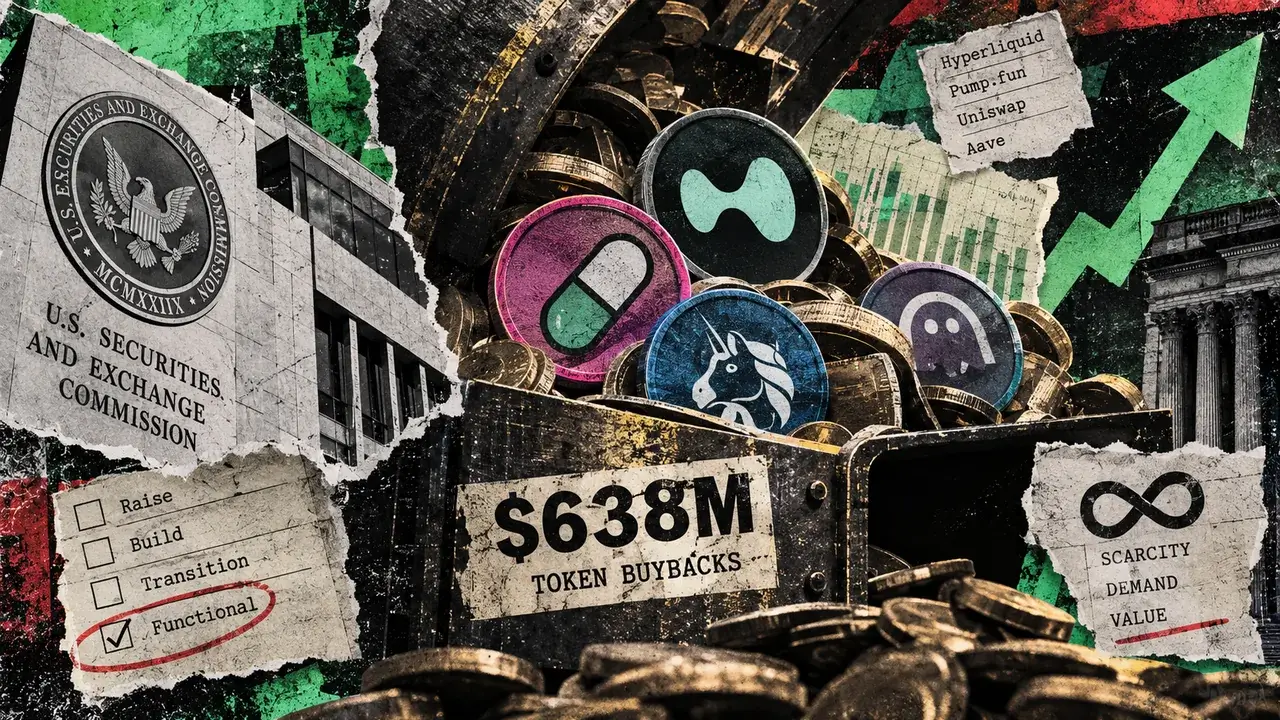
SEC clears regulatory hurdle as crypto token buybacks hit record $638 million
Crypto projects spent about $638 million with token buybacks through late August 2026, according to Allium Labs data. That is alre...

EU faces September 30 clock to decide future of DeFi loans
The European Banking Authority has asked the European Commission to examine new MiCA rules for crypto firms that connect customers...
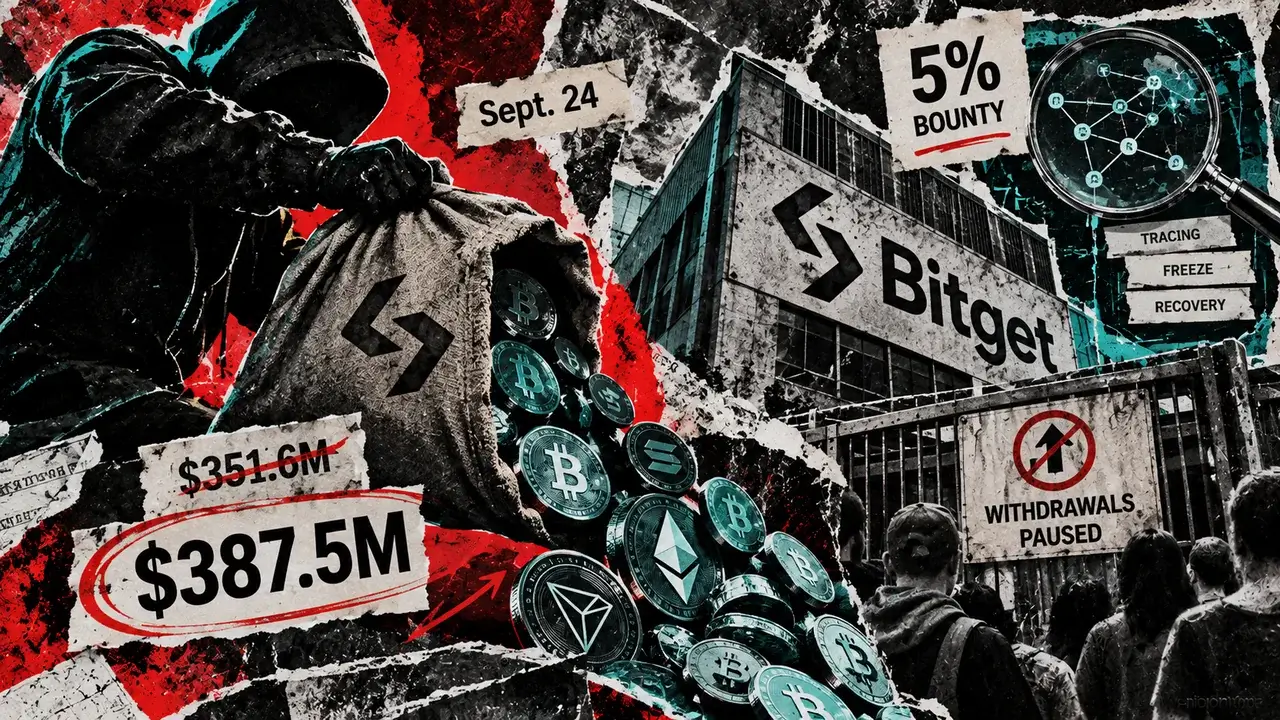
Bitget’s hack just got $36 million bigger, and now there’s a bounty on the stolen crypto
Bitget has raised the estimated value of assets taken in its Sept. 24 breach to $387.5 million as exchanges and security firms mob...

Ledger Opens 24/7 Tokenized Stocks to Millions With xStocks Integration
Key Takeaways: Ledger and a new partnership with Payward have brought xStocks to the Ledger wallet ecosystem. Eligible Ledger hold...