Hacker Jailed for Triggering $3,000 Bitcoin Swing in SEC X Account Breach
Key Takeaways: The hacker, Eric Council Jr., was sentenced to 14 months in prison and forfeited $50,000. A hacker exploited a SIM swap to hijack the SEC’s X account, posting fake Bitcoin ETF approval. The false post temp...
Archive context
Older archive item. Useful for background and entity history, but not a fresh market-moving signal.
Key Takeaways:
- The hacker, Eric Council Jr., was sentenced to 14 months in prison and forfeited $50,000.
- A hacker exploited a SIM swap to hijack the SEC’s X account, posting fake Bitcoin ETF approval.
- The false post temporarily caused Bitcoin to surge over $1,000 before crashing $2,000.
A shocking cyber breach involving the U.S. Securities and Exchange Commission (SEC) shook the crypto markets earlier this year. Now, the man behind the manipulation has been sentenced to prison. The case highlights both the power of social media over financial markets and the growing danger of SIM swap fraud in the crypto world.
Read More: CZ Sounds Alarm After Ledger Discord Hack Exposes Users to Phishing Trap
Sentencing Sends a Message to Crypto CriminalsEric Council Jr., a 26-year-old from Athens, Alabama, was sentenced on May 16, 2025 to 14 months in jail and ordered to lose his $50,000 fraud-related income. With limitations including a prohibition on using the dark web or carrying on more identity-related crimes online, he will also have three years of supervised release.
The sentence was announced by U.S. Attorney Jeanine Ferris Pirro, Head of the Justice Department’s Criminal Division Matthew R. Galeotti, SEC Inspector General Deborah Jeffrey, and FBI Assistant Director in Charge Steven J. Jensen of the Washington Field Office.
U.S. prosecutors emphasized that Council’s actions not only manipulated the market but also undermined trust in financial institutions. FBI officials warned that digital anonymity does not guarantee safety from law enforcement and vowed to continue cracking down on cybercrime rings targeting crypto.
Hacker Exploits SEC to Spike Bitcoin PriceIn January 2024, Council was part of a SIM swapping ring that hijacked the official X (formerly Twitter) account of the SEC. The intrusion was utilized to publish a false release saying Bitcoin spot ETFs had been authorized; this statement caused Bitcoin’s price to rise by more than $1,000 in minutes.
Traders responding to what seemed to be official regulatory news caused turmoil in the market from the fast price fluctuation. But the SEC refuted the statement and took back control of its account within hours, therefore causing a quick $2,000 fall in Bitcoin’s value. The swing exposed how fragile market sentiment can be, especially when driven by manipulated headlines from supposedly trusted sources.
Read More: Hacker Returns Stolen $5M to ZKsync After Bounty Agreement
The SIM Swap Method Behind the Attack Fake IDs and iPhones: A Playbook for Crypto FraudAccording to court documents, Council executed a sophisticated SIM swap attack to gain access to the SEC’s mobile phone line. Using a fake ID, he impersonated a customer at an AT&T store in Huntsville, Alabama, and tricked employees into handing him a new SIM card linked to the SEC’s phone number.
He inserted the SIM into a newly purchased iPhone, received password reset codes for the @SECGov X account, and snapped a photo of the codes to send to his co-conspirators. Council then returned the iPhone for a cash refund. The fraud was coordinated, deliberate, and timed to exploit crypto market volatility.
Further investigation revealed Council had templates for fake IDs on his laptop, a portable ID card printer, and even conducted Google searches on “how to know if the FBI is investigating you” and “telegram sim swap.” Authorities concluded that Council was compensated roughly $50,000 for his role in the scheme.
A Wake-Up Call for Crypto and RegulatorsThis incident has intensified scrutiny of cybersecurity practices at top regulatory agencies like the SEC. Critics argue that the vulnerability exploited by Council—a SIM swap—is a known threat that should have been mitigated by stronger multi-factor authentication and device-level security protocols.
For crypto traders, it’s a sobering reminder: markets remain highly sensitive to information—real or fake. And as regulators prepare for broader ETF approvals and digital asset integration, the pressure to secure communications channels is more urgent than ever.
As Bitcoin continues to hover in volatile territory, the risks of manipulation—whether from social media hacks or insider schemes—remain a pressing concern for institutional and retail investors alike.
The post Hacker Jailed for Triggering $3,000 Bitcoin Swing in SEC X Account Breach appeared first on CryptoNinjas.
Why this matters
This security story adds another data point to the current market tape and is useful when read alongside nearby source coverage.
Original source
Read on CryptoNinjasRelated market context

Bitget Confirms $387.5 Million Security Breach as Revised On-Chain Accounting Reveals Wider Losses
Bitget raises breach losses to $387.5 million after Zcash and TRON transfers found. Attackers spoofed backend transaction data to...

North Korean Hackers Linked to $388M Bitget Crypto Exchange Theft: CEO
Bitcoin Magazine North Korean Hackers Linked to $388M Bitget Crypto Exchange Theft: CEO Hackers from North Korea targeted crypto e...
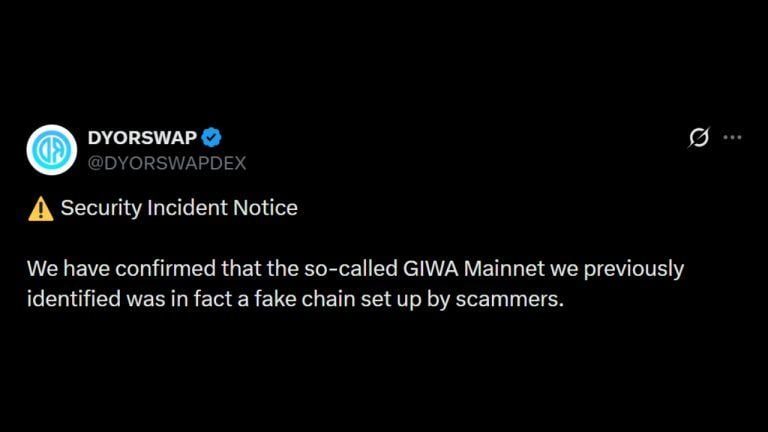
Scammers Launch Fake ETH L2 to Steal $2M From Crypto Traders
An unidentified group of threat actors launched a fake L2 chain impersonating Giwa, a project backed by Upbit, identified by DYORS...
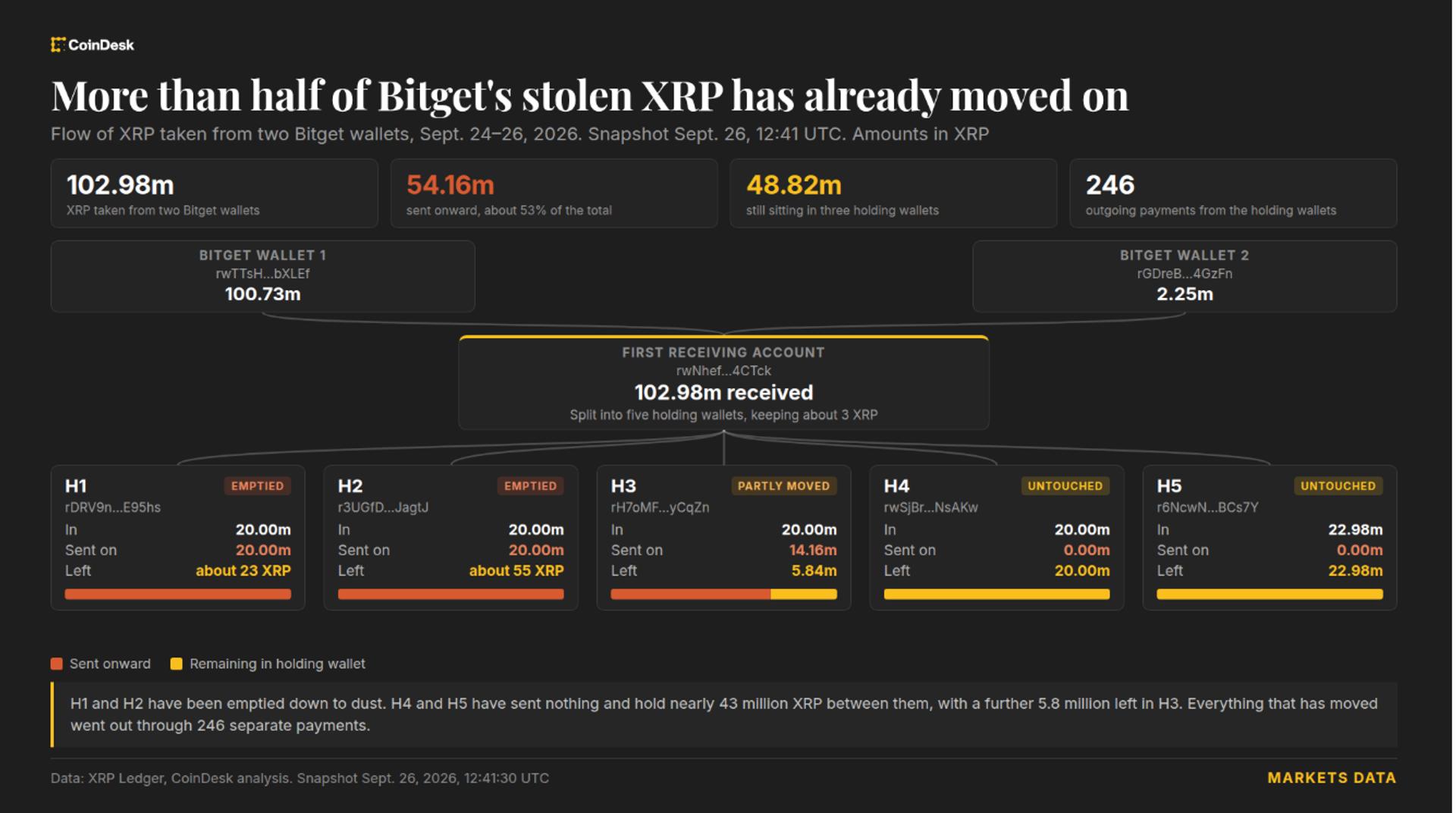
Bitget hacker moves $83 million in stolen XRP that Ripple cannot freeze
Two wallets have been almost emptied and a third is being drained, with about $75 million remaining across the five original holdi...

Bitget Confirms $351.6M Hot Wallet Breach And Pauses Withdrawals
Bitget says unauthorized transfers affected approximately $351.6 million held across parts of its hot and warm wallet infrastructu...

Scammers steal over $2M by creating fake GIWA blockchain
The incident highlights the urgent need for improved blockchain security measures and verification processes to prevent similar sc...