India’s tokenized bond pilot starts with institutions, with retail access planned next
India’s securities regulator has launched a pilot that places corporate bonds and their cash settlement on linked digital rails, moving ₹1,025 crore through the first three issuances while preserving the securities’ exis...
Archive context
Older archive item. Useful for background and entity history, but not a fresh market-moving signal.
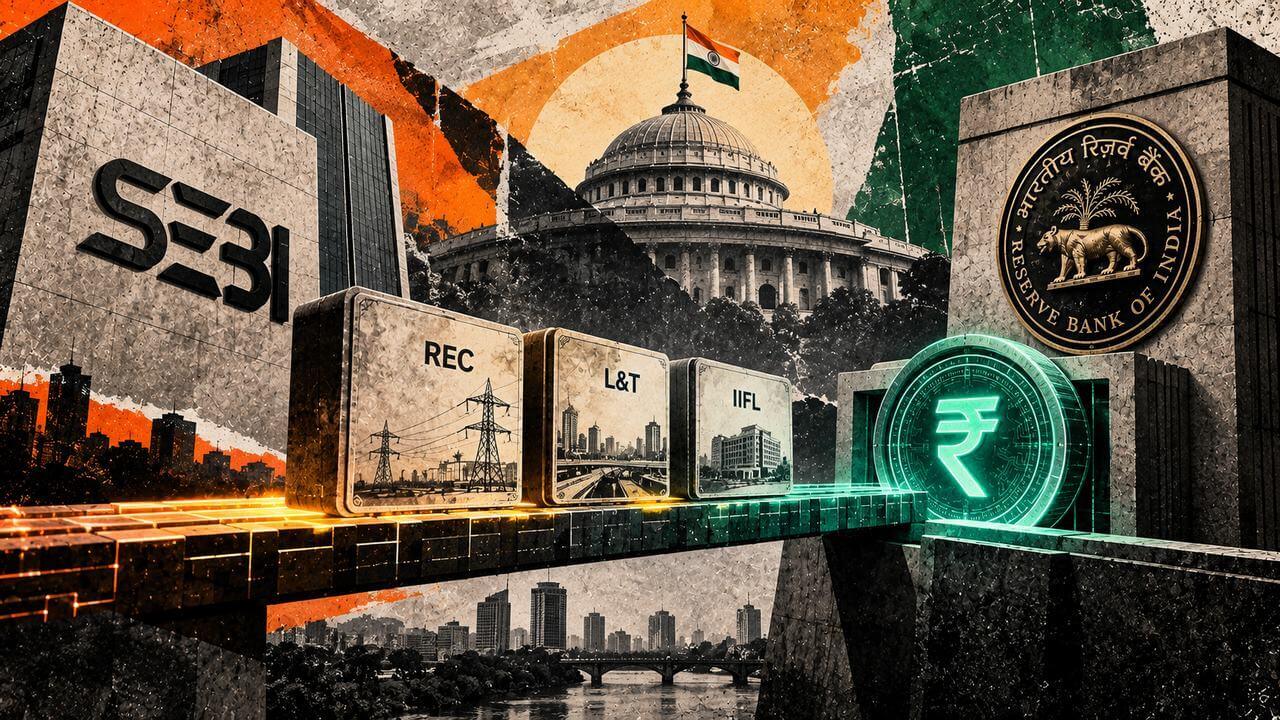
India’s securities regulator has launched a pilot that places corporate bonds and their cash settlement on linked digital rails, moving ₹1,025 crore through the first three issuances while preserving the securities’ existing legal and economic terms.
The Securities and Exchange Board of India announced Demat 2.0 on Sept. 10 after REC Limited, L&T Limited and IIFL completed tokenized bond issues on Sept. 7 and Sept. 9. The transactions comprised ₹500 crore from REC, ₹500 crore from L&T and ₹25 crore from IIFL, according to SEBI’s release. Further Stage I issuance is ongoing.
The central change is how the security and payment meet. A corporate bond is issued as a native digital token on a private, permissioned distributed ledger, while payment uses the Reserve Bank of India’s wholesale digital rupee, a central bank currency designed for financial institutions.
SEBI’s technical FAQ says the two legs are linked for atomic delivery-versus-payment. Either the bond and cash both settle, or neither does. That synchronization removes the interval in which a buyer could send funds before receiving the security, or a seller could deliver the bond before receiving payment. Issuer credit risk remains unchanged.
Related Reading Central bank-backed tokenization pilot exposes settlement problem assets alone cannot solveThe token is the bond itself, rather than a digital claim on a conventionally held security. It keeps the same ISIN identifier, coupon, maturity, covenants, rating and security as a conventional dematerialized bond. Issuer obligations, investor rights and regulatory treatment also stay the same.
The network is private and institutionally controlled. India’s depositories own it and remain the statutory, authoritative records of beneficial ownership. Market infrastructure institutions developed and operate the system, with depositories and stock exchanges initially running the network’s validating computers. Depositories also hold and manage investors’ private keys, preserving an intermediated custody model.
That structure leaves the familiar custody chain in place. Investors gain access to the tokenized ledger without managing the bond tokens’ private keys or replacing the depository record that establishes ownership.
Related Reading Crypto promised to eliminate stockbrokers, but 94% of its tokenized market now relies on an Alpaca Secondary trading comes laterThe live first stage covers institutional issuance and ledger-based asset servicing. SEBI reserves tokenized secondary-market trading and retail participation for Stage II.
Related Reading SEC tokenized stock exemption to let equities move onto crypto railsDuring the interim, an investor may exit through a peer-to-peer or demat-to-demat transfer handled by depositories. Payment for that transfer may occur outside the atomic setup through the digital rupee or conventional banking channels.
The first deals show how regulated securities records and central bank money can be synchronized at issuance. The larger test for Stage II is whether the same architecture can support routine liquidity and a broader investor base after the bond has been issued.
The post India’s tokenized bond pilot starts with institutions, with retail access planned next appeared first on CryptoSlate.
Why this matters
SEC is showing up inside the Regulation theme, so this story is worth tracking for follow-through rather than treating it as a one-off headline.
Original source
Read on CryptoSlateRelated market context

South Korea Opens $5 Trillion Market to Tokenized Stocks, Bonds in 2027
South Korea is laying the regulatory groundwork to bring stocks, bonds, funds and fractional securities onto blockchain infrastruc...

Tokenized Stocks, Investor Rights, and Their Crypto Role
Tokenized stocks could give crypto-native investors access to equity exposure through crypto platforms, but a token that tracks a...

BNY weighs digital asset infrastructure deal with Kraken parent Payward: CoinDesk
A potential BNY-Payward partnership could significantly enhance crypto infrastructure, fostering greater integration with traditio...

India’s local crypto exchanges get just 0.7% of inflows, Chainalysis reports
India’s crypto users send substantial value to centralized exchanges, but domestic platforms receive just 0.7% of exchange value i...

HSBC RedCoin Targets 74% Stablecoin-Aware Users Ahead of Hong Kong Launch
Key Takeaways: HSBC has officially unveiled the name of its stablecoin, HSBC RedCoin Of the 1,060 consumers surveyed, 74% now unde...

American Bankers Sue OCC Over Crypto Bank Charters, Challenging Coinbase and Circle
The lawsuit, filed October 2 in the U.S. District Court for the District of Columbia, puts the growing role of crypto firms within...