Investor Loses $3M in Crypto Phishing Scam After Signing Malicious Transaction
A cryptocurrency investor has fallen victim to a phishing scam, losing $3.05 million in Tether (USDT) after unknowingly signing a malicious blockchain transaction. Key Takeaways: A crypto investor lost $3.05 million in U...
Archive context
Older archive item. Useful for background and entity history, but not a fresh market-moving signal.

A cryptocurrency investor has fallen victim to a phishing scam, losing $3.05 million in Tether (USDT) after unknowingly signing a malicious blockchain transaction.
Key Takeaways:
- A crypto investor lost $3.05 million in USDT after signing a phishing transaction.
- Many platforms obscure wallet address middles, making it easier for scammers to exploit users.
- Phishing remains the most damaging threat in crypto, with over $1 billion in losses in 2024.
The loss, flagged by blockchain analytics platform Lookonchain on Wednesday, underscores the rising threat of phishing attacks targeting digital asset holders.
The attacker exploited a common habit among crypto users: validating only the first and last few characters of a wallet address while ignoring the middle.
Obscured Wallet Addresses Aid $3M Crypto ScamMany platforms obscure middle characters for design reasons, making it easier for scammers to trick users into approving fraudulent transactions. In this case, the investor’s oversight cost them millions.
Lookonchain issued a warning following the incident, urging users to remain vigilant.
“Stay alert, stay safe. One wrong click can drain your wallet. Never sign a transaction you don’t fully understand,” Lookonchain wrote.
Someone fell victim to a phishing attack, signed a malicious transfer, and lost 3.05M $USDT!
Stay alert, stay safe. One wrong click can drain your wallet.
Never sign a transaction you don’t fully understand.
Double-check the URL, double-check all signature requests
Verify… pic.twitter.com/39YYe1LAoz
Phishing scams in the crypto space typically rely on social engineering tactics rather than technical exploits.
Fraudsters often share convincing links that lead users to grant access or approve malicious smart contracts.
These scams are becoming increasingly sophisticated and personal, focusing more on human behavior than on breaking through hardened protocols.
Just days earlier, another user reportedly lost over $900,000 due to a similar exploit, signing a malicious approval transaction more than a year prior.
In May, a notorious “wallet poisoning” scam made headlines after draining $71 million.
In a rare twist, the attacker returned the funds after blockchain investigators traced a possible Hong Kong IP address.
After we published an analysis article about the 1155 WBTC phishing incident and a profile of the hacker, it seems like there is a potential turning point in the situation.
3 hours ago, the hacker requested to contact the victim. https://t.co/ZspG0F7bqW pic.twitter.com/4ZUAGttP5c
According to CertiK’s 2024 Web3 security report, phishing scams were the most damaging attack vector in the crypto ecosystem, accounting for over $1 billion in losses across 296 recorded incidents.
At least three of those surpassed the $100 million mark.
Last week, blockchain analytics firm Arkham Intelligence reported that 127,426 BTC, valued at around $3.5 billion at the time and nearly $14.5 billion today, was stolen from Chinese mining pool LuBian in December 2020.
LuBian rose quickly in early 2020, becoming the sixth-largest mining pool on the Bitcoin network by mid-year, before being hacked on December 28, 2020, for over 90% of their BTC.
Crypto Hacks Cost Investors $2.2B in H1 2025: CertiKCrypto investors lost over $2.2 billion to hacks, scams, and breaches in the first half of 2025, driven largely by wallet compromises and phishing attacks, according to CertiK’s latest security report.
Wallet breaches alone caused $1.7 billion in losses across just 34 incidents, while phishing scams accounted for over $410 million across 132 attacks.
Two major incidents, including Bybit’s $1.5 billion hack in February and Cetus Protocol’s $225 million exploit in May, skewed the year’s losses upward, together accounting for nearly $1.78 billion.
Without these, losses align more closely with previous years at around $690 million.
Ethereum remained the primary target, suffering over $1.6 billion in losses across 175 events.
The post Investor Loses $3M in Crypto Phishing Scam After Signing Malicious Transaction appeared first on Cryptonews.
Why this matters
This security story adds another data point to the current market tape and is useful when read alongside nearby source coverage.
Original source
Read on CryptonewsRelated market context

Bitget Confirms $387.5 Million Security Breach as Revised On-Chain Accounting Reveals Wider Losses
Bitget raises breach losses to $387.5 million after Zcash and TRON transfers found. Attackers spoofed backend transaction data to...

Washington has $114 billion reasons to want Tether around
Not that long ago, Washington fined Tether for misleading people about the dollars behind its tokens. Today, the company's insatia...

Bitget raises breach losses to $387.5 million after on-chain tracing uncovers Zcash and TRON transfers
Bitget raises breach losses to $387.5 million after tracing reveals Zcash and TRON transfers. Cold wallets secure, protection fund...
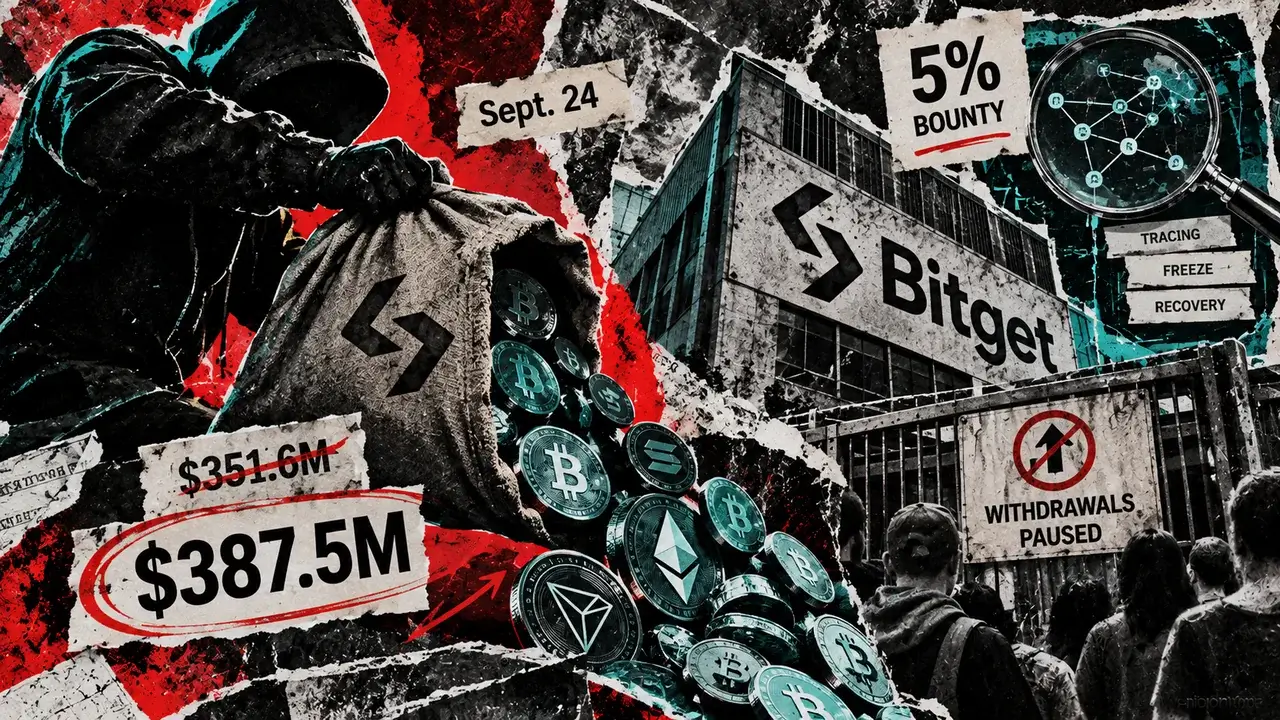
Bitget’s hack just got $36 million bigger, and now there’s a bounty on the stolen crypto
Bitget has raised the estimated value of assets taken in its Sept. 24 breach to $387.5 million as exchanges and security firms mob...

Ledger Opens 24/7 Tokenized Stocks to Millions With xStocks Integration
Key Takeaways: Ledger and a new partnership with Payward have brought xStocks to the Ledger wallet ecosystem. Eligible Ledger hold...

Crypto Investors Can Now Buy Into Cathie Wood’s Fund Holding SpaceX, OpenAI and Kalshi
Cathie Wood’s ARK Invest and tokenization firm Securitize announced on Sept. 24 that they have tokenized the ARK Venture Fund (ARK...