Iran Top Security Official Believes Recent De-Dollarization Efforts Will Doom ‘Illegal Western Sanctions’ to Failure
Ali Shamkhani, secretary of the National Security Council of Iran, has stated that the recent bilateral cooperation efforts between his country and Russia are contributing to rendering U.S.-established sanctions useless...
Archive context
Older archive item. Useful for background and entity history, but not a fresh market-moving signal.
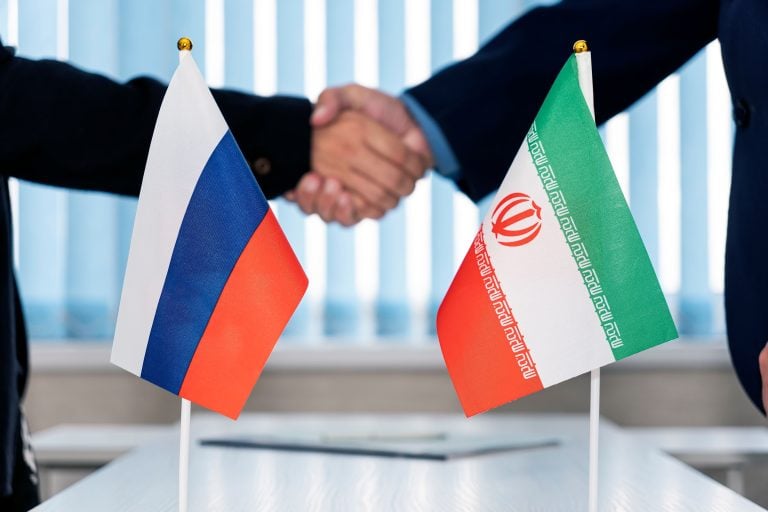
Ali Shamkhani, secretary of the National Security Council of Iran, has stated that the recent bilateral cooperation efforts between his country and Russia are contributing to rendering U.S.-established sanctions useless at a global level. The official noted that many other countries are also in this course of action — abandoning the hegemony of the U.S. dollar.
Iran Top Security Official States Ongoing De-Dollarization Efforts Will Render Sanctions UselessAli Shamkhani, secretary of the National Security Council of Iran, issued his opinion when it comes to the effect that bilateral deals and recent global de-dollarization efforts will have on the effectiveness of U.S. sanctions. In a meeting with Russian officials, Shamkhani explained that the recent bilateral advancements between Iran and Russia, involving monetary and banking matters, are crucial for “dooming the illegal Western sanctions to failure,” according to Xinhua.
At the same time, Shamkhani referred to other de-dollarization movements around the world, noticing that many other countries have also started to walk this path. Iran has been facing U.S. sanctions since 1979, being lifted during the 1981-1987 period, only to be re-enacted and maintained ever since.
The two countries, which are two of the most sanctioned nations by the U.S. in the world, are on the verge of finalizing a comprehensive strategic agreement that would further advance the integration between their economic systems, turning aside from the Western influence and the clout of the U.S. dollar in their trading operations.
The establishment of sanctions and the so-called weaponization of the U.S. currency have been recently brought into the spotlight, being criticized for their negative effect on the status of the U.S. dollar as a reserve currency.
Jeffrey Sachs, a renowned economist, recently stated that other countries fear the confiscation of their dollars if they get into a policy disagreement with the U.S. Jim Rickards, an economist and author of “Currency Wars,” has also called out the behavior of the U.S. Treasury in this regard, stating it was the greatest enemy of the dollar as a reserve currency.
Sanctions Bringing Them TogetherAccording to analysts, the continued enactment of sanctions as well as the need to trade for goods that cannot be imported due to restrictions, has taken these two nations into close ranks together. There are not many companies or entities willing to risk facing secondary economic sanctions, so they choose to cut ties with Russia and Iran, even abandoning lucrative deals.
In fact, the latest round of sanctions applied to Iran on March 2, is directed at several international companies accused of being involved in the transport or sale of Iranian oil and petrochemicals.
This is why the two nations are working to establish the International North-South Transport Corridor, a multilateral corridor comprised of more than 7,200 km of roads, rail, and sea communication links, that would facilitate trade between Russia, Azerbaijan, Iran, and India, as well as opening the possibilities of accessing Central Europe, too.
What do you think about the recent de-dollarization efforts and the bilateral agreements between Iran and Russia to avoid sanctions? Tell us in the comments section below.
Why this matters
This security story adds another data point to the current market tape and is useful when read alongside nearby source coverage.
Original source
Read on Bitcoin NewsRelated market context

Bitcoin ETFs bleed $1.07 billion in second straight billion-dollar outflow week
US spot Bitcoin ETFs bled $1.07 billion in the week to November 13, a second straight billion-dollar outflow week. Total losses hi...

U.S. Targets $1.2 Billion From Binance Hack—Where Is the Rest?
The Binance hack recovery has reached a significant milestone: U.S. authorities say more than $1.2 billion in stolen cryptocurrenc...

Bitcoin slides under $70,000 as dollar surge triggers $1.6 billion crypto liquidation wave
Bitcoin fell to $67,770, its lowest since August 19, as a surging dollar and Fed rate expectations triggered $1.6 billion in crypt...

Safepal Hardware Wallet Users Receive Fake Security Alerts in the Mail
Safepal customers in Italy are reportedly being targeted by a sophisticated phishing campaign involving fraudulent letters contain...
Bitcoin Price Briefly Crashes to $67,500, Lowest Since August, as Dollar Holds 19-Month High
Bitcoin Magazine Bitcoin Price Briefly Crashes to $67,500, Lowest Since August, as Dollar Holds 19-Month High Bitcoin price traded...
South Korea’s FSC tightens crypto exchange security with 24/7 monitoring rules
South Korea's enhanced crypto exchange security measures could bolster consumer protection and trust, but may also lead to tempora...