Ledger Data Leak Exposes Customer Details via Global-e, ZachXBT Flags Fresh Third-Party Breach
Key Takeaways: Ledger confirmed a customer data exposure tied to its third-party payment processor, Global-e. Leaked information includes names and contact details; no wallet seeds, private keys, or crypto funds were com...
Archive context
Older archive item. Useful for background and entity history, but not a fresh market-moving signal.

Key Takeaways:
- Ledger confirmed a customer data exposure tied to its third-party payment processor, Global-e.
- Leaked information includes names and contact details; no wallet seeds, private keys, or crypto funds were compromised.
- The incident was first flagged publicly by blockchain investigator ZachXBT, prompting customer notifications and an ongoing forensic review.
Ledger users received an alert after Global-e detected unauthorized access within parts of its cloud systems. The disclosure renews scrutiny on third-party risk in crypto commerce, even when core wallet infrastructure remains intact.
What Happened: Third-Party Exposure, Not a Wallet HackLedger disclosed that the incident occurred outside its own hardware, software, and platform environment. The breach traces back to Global-e, which serves as a merchant-of-record and payment processor for Ledger’s online store.
According to the notification sent to customers, Global-e identified unusual activity and quickly implemented controls. An independent forensic investigation later confirmed that some customer order data was improperly accessed. The exposed fields include names and other contact information, while payment details were not involved.
Ledger emphasized a critical point for users: Global-e does not have access to recovery phrases, private keys, balances, or any secrets tied to self-custodied assets. As a result, the exposure does not affect the cryptographic security of Ledger devices.
What Data Was Exposed and What Was NotThere should be a distinct line in such incidents. The facts are available to show a data privacy incident, but not a crypto compromise.
Exposed- Customer names
- Contact details associated with orders (such as email or shipping information)
- Recovery phrases (24 words)
- Private keys or wallet secrets
- On-chain balances or transaction signing
- Payment card data
This identification restricts the exposure to direct financial risk, although the possibility of targeted phishing is greater. Hackers can use data that has been leaked to design persuasive messages that pretend to be the work of wallet providers.
Self-Custody Limits the Blast Radius of Data LeaksThe self-custodial model that is used by Ledger served as a very strict border. Attackers had no avenue to empty finances or make transactions, even in the presence of third-party order information. The threat changes to social engineering rather than stealing assets and vigilance is the leading line of defense.
How the Incident Came to LightThe matter came into the limelight when ZachXBT posted a community alert on X, which cited the emails given by customers who detailed about the Global-e breach. Disclosures like these tend to speed up the creation of awareness in that they integrate on-chain culture and off-chain security reporting.
Soon enough, Ledger took charge of the incident and sorted out responsibilities. Global-e is the data controller of the order processing; therefore, it took the initiative of notifying customers. Ledger coordinated communications so that the users were aware of the extent and boundaries of the exposure.
The following separation of roles is common to the ecommerce industry, and it demonstrates a consistent threat to crypto companies that need to be external processors to cater to international markets.
Read More: BNB Chain Brings on Top Crypto Sleuth ZachXBT in Major Push to Combat Web3 Scams and Fraud
Why Third-Party Risk Keeps Hitting Crypto BrandsCrypto firms are relying more and more on dedicated vendors in areas like payment, logistics and compliance. Both integrations increase the attack surface of the wallet or protocol itself.
The case of Ledger is part of a larger tendency:
- Core crypto systems remain secure
- Peripheral services: emails, orders, support tools become targets
- Data leaks fuel phishing rather than direct hacks
To the attackers, databases of customers are valuable. A validated list of crypto hardware purchasers can also be monetized with scam campaigns mentioning actual purchases, shipping information or support tickets.
Read More: Trust Wallet Extension Bug Triggers $6M Crypto Losses, Forces Emergency Upgrade to Version 2.69
The post Ledger Data Leak Exposes Customer Details via Global-e, ZachXBT Flags Fresh Third-Party Breach appeared first on CryptoNinjas.
Why this matters
BNB is showing up inside the Security Incidents theme, so this story is worth tracking for follow-through rather than treating it as a one-off headline.
Original source
Read on CryptoNinjasRelated market context
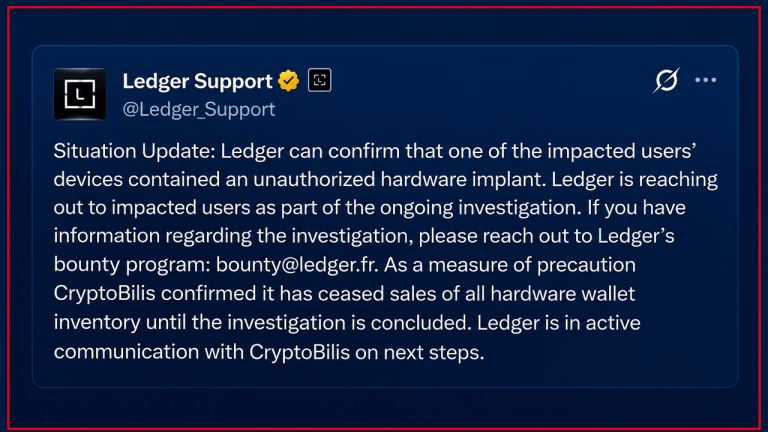
Ledger Confirms Hidden Hardware Implant in Affected User’s Wallet
Ledger confirmed Saturday, Oct. 10, 2026, that a hardware wallet belonging to one affected customer contained an unauthorized impl...

Ledger investigates wallet tampering tied to tens of millions in crypto thefts
The investigation highlights the critical need for enhanced security measures and trust in crypto hardware supply chains to preven...
Ledger Wallet Mystery Deepens as Suspected Losses Hit $93.4M
On Friday, the crypto community finds itself confronting yet another security controversy, this time involving hardware wallet man...
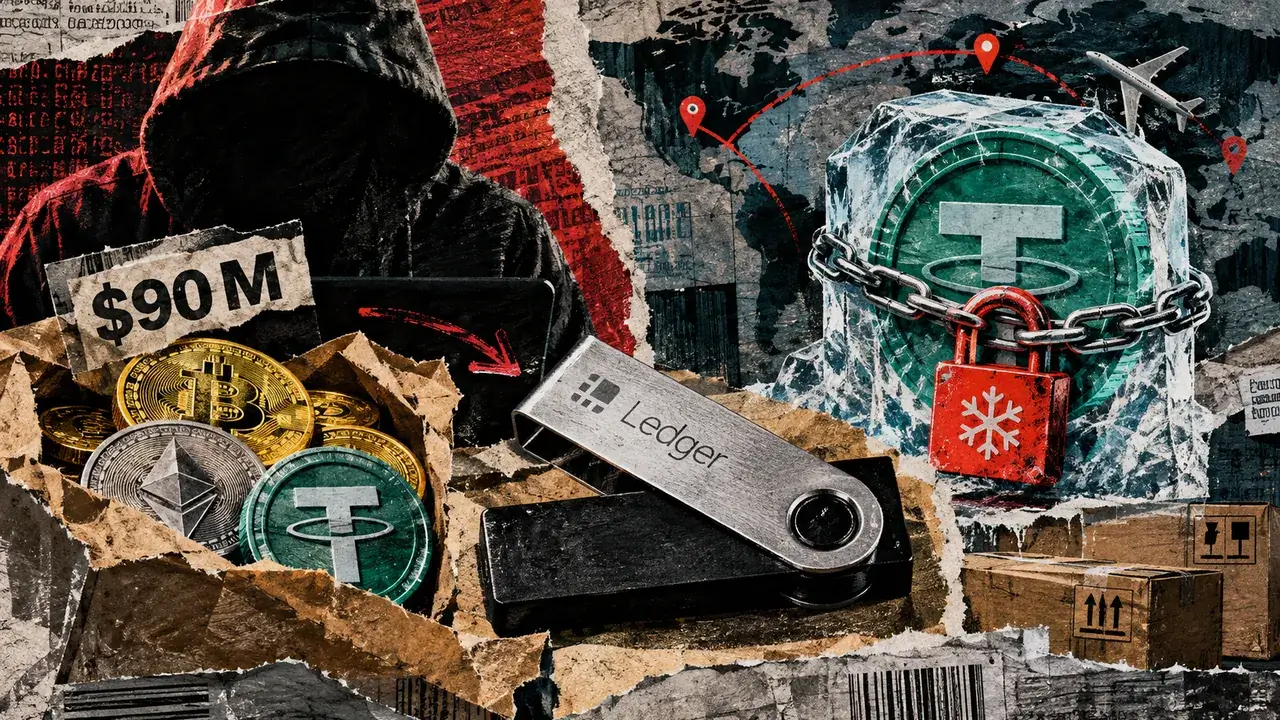
Ledger hack scare nears $90 million as Tether moves to freeze stolen USDT
Suspected Ledger wallet thefts are approaching $90 million as Tether freezes USDT stablecoin linked to the incident, according to...

AI Could Weaken Ethereum Security as Cryptographic Risks Grow, Vitalik Buterin Warns
Buterin urged developers to prepare for potential AI vulnerabilities in both conventional and quantum-resistant cryptography, whil...

Stealing $1.5B in crypto is easy, cashing out is the trap
North Korean hackers stole around $1.5 billion from Bybit in February 2025. While the hack itself has been widely covered and anal...