New Phishing Scheme Targets Crypto Futures On MEXC Exchange
The JFrog Security Research team has warned about a malicious package targeting crypto futures trading on the MEXC exchange, seeking to steal funds and leak trading credentials.The team has published a report on April 15...
Archive context
Older archive item. Useful for background and entity history, but not a fresh market-moving signal.

The JFrog Security Research team has warned about a malicious package targeting crypto futures trading on the MEXC exchange, seeking to steal funds and leak trading credentials.
The team has published a report on April 15 detailing the “ccxt-mexc-futures” package, which uses the legitimate Cryptocurrency Exchange Trading (CCXT) library to redirect user trading requests to a malicious server.
NEW SECURITY RESEARCH ALERT: The JFrog #Security Team found a phishing scheme in the Python Package Index (PyPI) targeting crypto futures trading, which reached $1.67B in Q1 2025. A malicious package redirects users to a fake MEXC site (https://t.co/H4IJLdEb5o), promoted on… pic.twitter.com/UUYaLKSZbW
— JFrog (@jfrog) April 15, 2025The malicious party sets a domain, very similar to the legitimate one. In this case, a user can mistake the fake MEXC domain for a legitimate one.
Once a victim falls into the trap, the attackers can hijack all crypto and sensitive information that the trading request contains.
Therefore, attackers can also steal Application Programming Interface (API) keys and secrets. Subsequently, this compromises crypto trading accounts.
Per the researchers, “the use of obfuscation techniques and a fake MEXC website further demonstrates the sophistication of this phishing campaign.” The fake website is even promoted on Facebook.
Source: JFrogMeanwhile, going into more detail, JFrog explains that the ccxt-mexc-futures package claims to extend the crypto trading capabilities via the CryptoCurrency eXchange Trading (ccxt) PyPI package.
This is a legitimate and popular crypto trading Python package that supports trading on many exchanges, including MEXC.
However, the attackers claim that the malicious package extends the legitimate CCXT package to support “futures” trade on MEXC.
Instead, to accomplish its goals, the malicious package overrides three relevant functions: describe, sign, and prepare_request_headers.
You might also like New Malicious Campaign Targets Atomic and Exodus Wallets Adding, Rewriting, Redirecting, Stealing Crypto FuturesThe report goes on to explain that the MEXC interface in CCXT defines a wide set of APIs to support different types of trading. The attackers targeted two of these APIs: contract_private_post_order_submit and contract_private_post_order_cancel.
Once the malicious ccxt-mexc-futures package overrides these two APIs, it adds a third one, spot4_private_post_order_place.
Therefore, users create, place, or cancel trading orders through these APIs that pose as the legitimate APIs of the CCXT library.
“Every time a user utilizes these entries, instead of using the CCXT-defined entries, they will use the attacker’s entries, specifying futures trading in the request,” the researchers say.
Source: JFrogNotably, the attackers went even further. They made it so that a “BadRequest” response will change into an “OrderFilled” response, so that users think the order went through.
Also, as the malicious package overrides the sign function, if a user tries to communicate with MEXC using the package, the requests will go to the fake domain.
This also means sending the user token in the request header to the attackers.
If the user token is not supplied, the package will request the user to add it before making an order.
“If it is not a future-related entry, the package directs the flow to the original MEXC exchange implementation of the CCXT package,” the report notes.
Meanwhile, the researchers discovered two versions of the malicious package. They use different methods to hide and run arbitrary code on the computer of the victim who installed the package.
However, both methods are “very common ways for attackers to hide and run malicious payloads.”
As a response to this threat, JFrog says it has added the malicious Python packages to JFrog Xray to enable users to detect them immediately.
You might also like Crypto Mining Malware and Open Source Malware Packages Doubled in Q1 2025The post New Phishing Scheme Targets Crypto Futures On MEXC Exchange appeared first on Cryptonews.
Why this matters
This security story adds another data point to the current market tape and is useful when read alongside nearby source coverage.
Original source
Read on CryptonewsRelated market context

Crypto scammers built an entire fake blockchain to steal over $2 million
Scammers built a counterfeit version of Upbit-backed GIWA blockchain and lured 1,333 wallets into depositing 767 ETH, worth about...
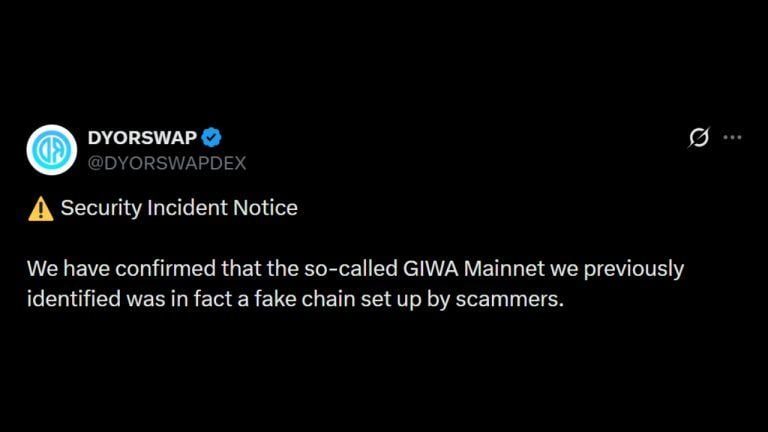
Scammers Launch Fake ETH L2 to Steal $2M From Crypto Traders
An unidentified group of threat actors launched a fake L2 chain impersonating Giwa, a project backed by Upbit, identified by DYORS...

Kalshi must lock out state users after major court loss
The Sixth Circuit ruled Sept. 25 that Ohio and Tennessee can apply their gambling laws to Kalshi's sports contracts. The court rej...

North Korean Hackers Linked to $388M Bitget Crypto Exchange Theft: CEO
Bitcoin Magazine North Korean Hackers Linked to $388M Bitget Crypto Exchange Theft: CEO Hackers from North Korea targeted crypto e...

Why your tokenized stock could stop trading for three months
Buying a tokenized stock sounds as though it should be simple. You pick a company you know, buy a token representing its shares, a...
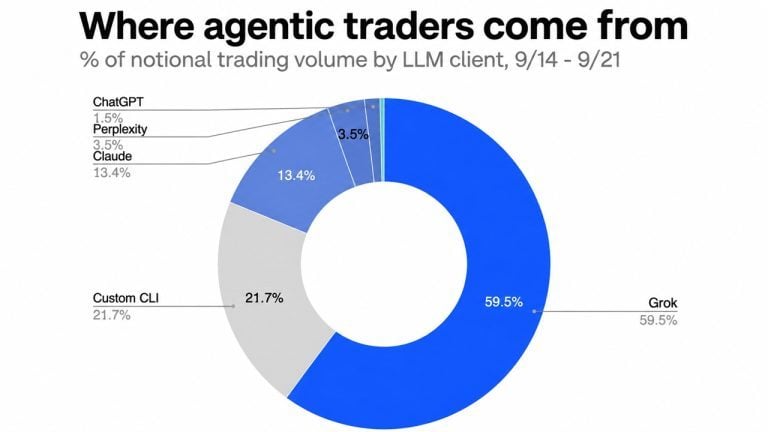
Musk’s Grok Is Out-Trading ChatGPT 40 to 1 Among Coinbase AI Agents
Elon Musk’s Grok placed 59.5% of all AI agent trading volume on Coinbase in the week leading up to Sept. 21, nearly 40 times ChatG...