Nomad Bridge Hacker Arrested in Israel Over $190M Crypto Exploit
Alexander Gurevich, an American-Israeli dual citizen, was detained in Israel and now faces extradition to the United States. Arrest of Nomad Bridge Hack Suspect Gurevich, a dual Russian-Israeli citizen, has been arrested...
Archive context
Older archive item. Useful for background and entity history, but not a fresh market-moving signal.

Alexander Gurevich, an American-Israeli dual citizen, was detained in Israel and now faces extradition to the United States.
Arrest of Nomad Bridge Hack SuspectGurevich, a dual Russian-Israeli citizen, has been arrested in Israel for his alleged involvement in the $190 million Nomad Bridge hack that occurred in August 2022. The arrest was made at Ben Gurion Airport while Gurevich was attempting to flee to Russia under a new identity, having legally changed his name to “Alexander Block” just days prior.
“He fits the profile of a crypto-native threat actor: skilled in smart contract exploitation but ultimately undone by poor opsec,” said Peter Kacherginsky, a blockchain security expert and formerly of Coinbase’s Unit 0x security team, on X in reaction to Gurevich’s arrest.
Details of the 2022 Nomad Bridge ExploitThe Nomad Bridge exploit remains one of the most remarkable and chaotic hacks in decentralized finance (DeFi) history. On August 1, 2022, attackers took advantage of a critical vulnerability in a Nomad smart contract — a verification bug introduced in a routine code update that allowed messages with invalid proofs to be accepted as valid.
This misconfiguration in the bridge’s process() function caused the contract to accept any message with the correct root hash, regardless of whether the proof was legitimate. Once one user figured out the exploit, believed to be Gurevich, it was rapidly copied and pasted by hundreds of wallets in a type of “mob attack,” turning a targeted hack into an opportunistic frenzy.
Gurevich’s Alleged Actions and Attempted EscapeIt has been reported that US prosecutors are accusing Gurevich of being the first to exploit the weakness in Nomad’s smart contracts. This eventually led to the exploit of $190 million, which was mostly in USDC stablecoin and wrapped versions of Bitcoin and Ethereum.
The accusations are based on a series of Telegram messages Gurevich sent to the Nomad team. He allegedly requested a US$500,000 bounty for identifying the vulnerabilities in Nomad’s smart contracts that allowed them to be exploited.
According to publicly available court filings and law enforcement statements, Gurevich worked with others to conduct the exploit and launder the funds. The funds are alleged to have been laundered through a complex web of privacy coins, mixers, and offshore financial entities.
US prosecutors say Gurevich managed to siphon US$2.89 million from Nomad Bridge. The rest of the US$190 million is believed to have been lost to the copycats who joined in a free-for-all to steal as much money as they could.
Blockchain intelligence firm TRM Labs reported that Gurevich used a ‘classic mixer stack’. He moved assets through Tornado Cash on Ethereum, then converted ETH to privacy coins such as Monero (XMR) and Dash (DASH). The privacy-centric assets were then routed through Defi tools — non-custodial exchanges and decentralized liquidity pools — Before cashing out via over-the-counter (OTC) and offshore bank accounts. The offshore bank accounts were often linked to shell companies registered in jurisdictions with ‘loose’ regulations.
It is also suggested that Gurevich leveraged Virtual Asset Service Providers (VASPs) platforms with weak Know Your Customer (KYC) standards to convert crypto into fiat. He also allegedly used peer-to-peer (P2P) platforms in jurisdictions with limited enforcement capacity.
Implications for DeFi Security and Legal PrecedentsThe successful arrest and extradition of a key figure in the Nomad Bridge exploit signal that pseudo-anonymity is no guarantee of impunity in the crypto space. Through global cooperation, data-driven investigations, and increasingly sophisticated blockchain intelligence, law enforcement agencies are closing the gap on illicit actors.
Why this matters
This security story adds another data point to the current market tape and is useful when read alongside nearby source coverage.
Original source
Read on Brave New CoinRelated market context
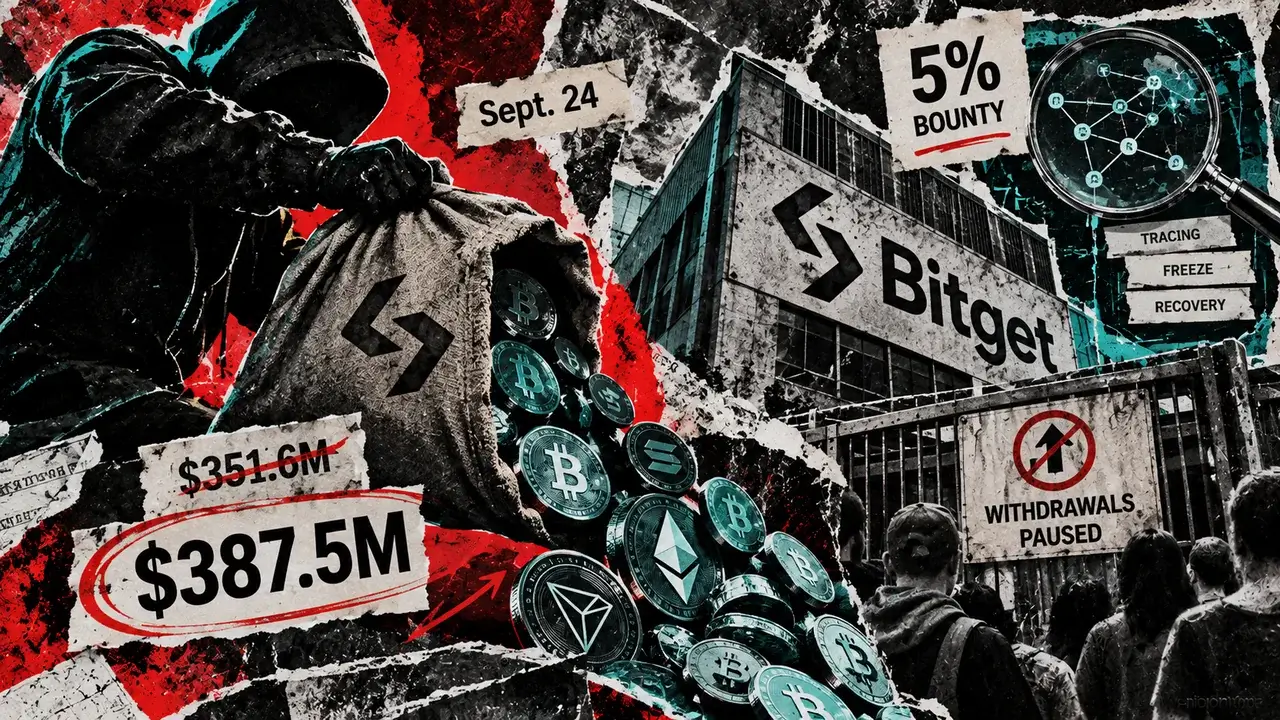
Bitget’s hack just got $36 million bigger, and now there’s a bounty on the stolen crypto
Bitget has raised the estimated value of assets taken in its Sept. 24 breach to $387.5 million as exchanges and security firms mob...
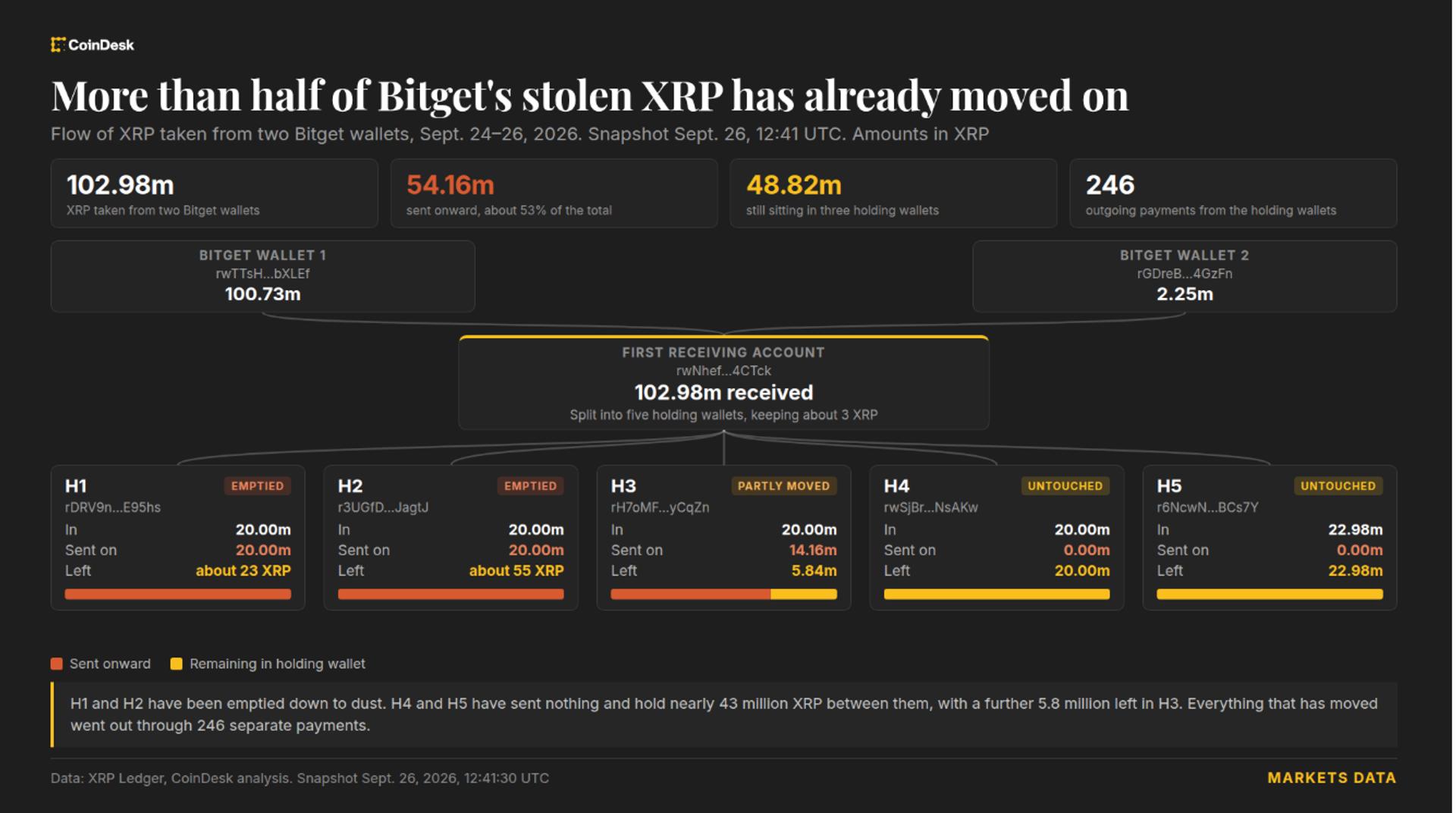
Bitget hacker moves $83 million in stolen XRP that Ripple cannot freeze
Two wallets have been almost emptied and a third is being drained, with about $75 million remaining across the five original holdi...
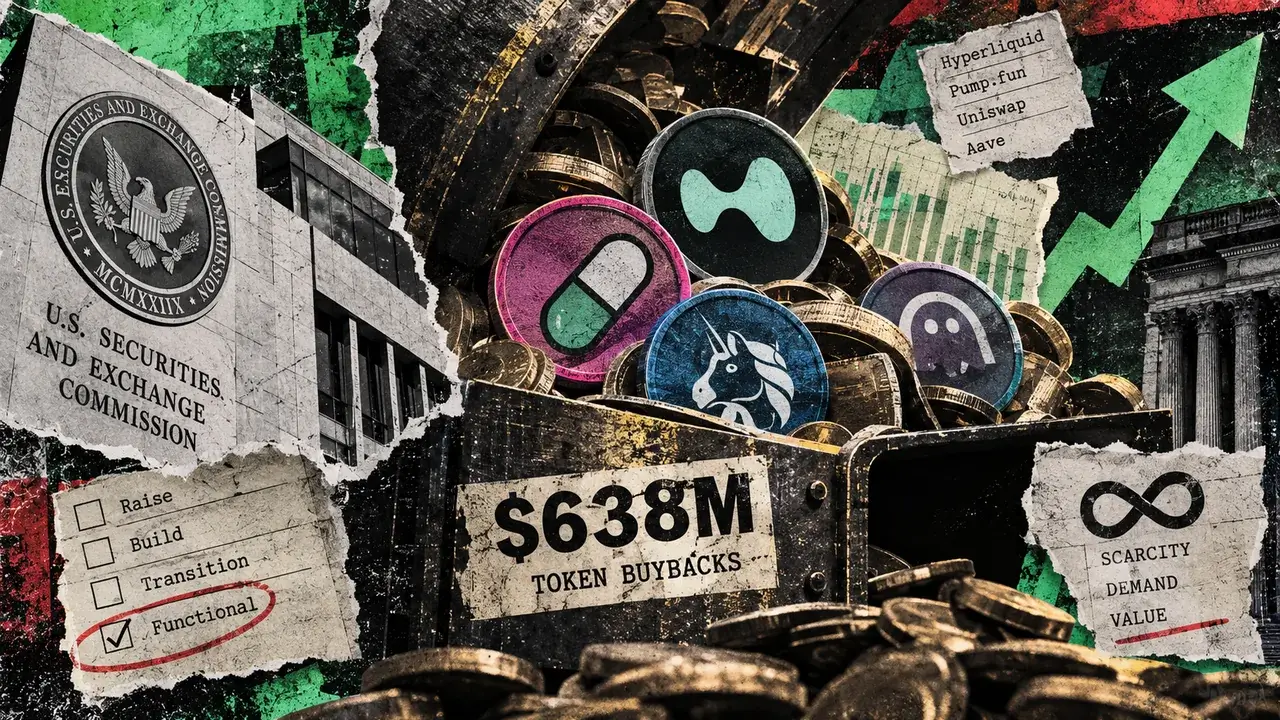
SEC clears regulatory hurdle as crypto token buybacks hit record $638 million
Crypto projects spent about $638 million with token buybacks through late August 2026, according to Allium Labs data. That is alre...

North Korean Hackers Linked to $388M Bitget Crypto Exchange Theft: CEO
Bitcoin Magazine North Korean Hackers Linked to $388M Bitget Crypto Exchange Theft: CEO Hackers from North Korea targeted crypto e...

An $84 million US asset seizure just sparked a massive question for Tether
Tether has disclosed exposure to EQIBank as the bank fights a US seizure involving payment processor Capstone Limited, raising a q...

Crypto Hacks: Three Projects Hacked in One Day as Losses Hit Over $11M
Three crypto projects were attacked on September 24, suffering combined losses of more than $11M. Attackers drained around $1.8M f...