Onramp Launches Institutional Bitcoin Custody Platform with Global Multisig Security
Bitcoin Magazine Onramp Launches Institutional Bitcoin Custody Platform with Global Multisig Security Onramp, a Bitcoin-only financial services company, recently launched an institutional-grade asset management offering,...
Archive context
Older archive item. Useful for background and entity history, but not a fresh market-moving signal.

Bitcoin Magazine
Onramp Launches Institutional Bitcoin Custody Platform with Global Multisig Security
Onramp, a Bitcoin-only financial services company, recently launched an institutional-grade asset management offering, built on top of their multisignature, multi-institutional, multi-jurisdictional custody platform. Onramp is by all intents and purposes a 21st-century, full-reserve Bitcoin bank, leveraging Bitcoin’s unique and paradigm-shifting technology, in partnership with institutional custodians like BitGo, CoinCover, and Tetra Trust.
Founded in Texas in 2022 by Michael Tanguma, a former Google and Unchained Capital executive, Onramp looks to democratize institutional-grade custody, offering the full range of financial services to Bitcoiners of all sizes; Onramp offers IRAs, trusts, bitcoin-backed loans, inheritance planning, tax/advantaged accounts, and more.
Onramp operates globally (except for nations sanctioned by the U.S. like Venezuela and Iran), offering its services not just to institutions but to Bitcoin OGs and Bitcoiners with more than 10% of their portfolios in the emerging asset. Today, Onramp is a “profitable business that has billions of dollars in assets under custody,” with a lean team of over 25 people, according to Tanguma, who spoke with Bitcoin Magazine.
A Bitcoin Bank in CypherspaceLooking to take full advantage of the paradigm shift in financial security that Bitcoin unlocks, Onramp leverages Bitcoin’s smart contract tools, one of which is known as multisignature script (or multisig for short). These are a high-security, low-complexity set of programming tools native to the Bitcoin protocol that have wide ranges and use cases — from payment networks like the Lightning Network, to wealth protection greater than any single bank can offer.
Historically there’s been only two fundamental forms of wealth custody: People either buried their gold in their own land, the modern equivalent of putting cash under the mattress, or they looked for a reputable bank with the most compelling trust-me-bro offer, and had them hold that wealth instead (in exchange for an IOU note or a title of ownership over the assets). This second form of custody is how fiat currency was born. Both forms of custody have their benefits and risks_ one is vulnerable to petty crime and home invasion theft, the other to financial fraud and invading armies. Users have to trade off one for the other, or split their wealth and diversify their risks. The invention of Bitcoin shattered this paradigm.
As a distributed or decentralized network, Bitcoin effectively exists everywhere, with over 80,000 known copies of itself all over the world, gossiping with each other about the latest transactions is a way that routes around bottlenecks and choke points by design. To guarantee the value of its transactions, the network leverages the most powerful computing network in history, known as proof-of-work or Bitcoin mining. What most people don’t know is that Bitcoin transactions are programmable. Users can effectively create transactions that are like if-else statements —they are only valid if certain conditions are met. The most popular implementations of this Bitcoin scripting language are as multisig transactions, meaning that multiple independent signatures need to be valid for the transaction to be accepted and processed by the Bitcoin network.
Multisig accounts are similar to shared accounts in traditional banks, except that instead of being secured by lawyers and accountants, they are secured by mathematics and cryptography on top of a global, decentralized network. The result is something new: a money account that can resist the whims of specific political jurisdictions, wars, or even natural disasters, distributing those keys among custodians across the world. The balances of these accounts can be publicly audited as well by running a full copy of Bitcoin on a home computer, or using a Bitcoin explorer — something unimaginable in the traditional finance world. To invoke ex-President Obama, this is a lot better than having a “Swiss bank account in your pocket.”
"Bitcoin is a Swiss bank account in your pocket."byu/rtmxavi inBitcoin Onramp’s Multi-institutional Custody
Up until now, most Bitcoin users are ironically still stuck in the pre-Bitcoin paradigm of custody, either holding all their coins in high-tech trust-me-bro exchanges like Coinbase, while holding a large portion of the bitcoin represented by the various ETFs and bitcoin treasury companies in the United States, or by putting all their coins into a hardware wallet that they control. More advanced users leverage multisig protocols for “cold storage”, high security wallets for personal use that distribute the keys geographically, while keeping them within the control of the user. Onramp does a similar thing but at the institutional level.
Leveraging three independent custodians across different countries — BitGo in the U.S., Tetra in Canada, and CoinCover in the UK — Onramp can offer financial security that diversifies risk from any single nation, jurisdiction, team, or hardware device. This provides an alternative to the otherwise highly concentrated custody options.
“Half of Bitcoin’s $2 trillion market cap sits on hardware wallets,” Tanguma told Bitcoin Magazine, adding that aside from Ledger’s massive representation in the self-custody market, “Trezor has about 7%, with Coldcards and other hardware devices, the rest on Coinbase. If we’re generalizing, Fidelity and other institutions hold some, but Coinbase and Ledgers hold the vast majority of Bitcoin. If we think 15 years from now, with Bitcoin at $1 million to $10 million, $1 million puts it at a $20 trillion market cap, $10 million at a $200 trillion market cap. There’s no way it will scale with people putting it on Ledgers.”
Taguna’s skepticism about the future of Bitcoin custody reveals a great deal of work needed to improve the financial security of the world, and he invites Bitcoiners to be more creative about how to deliver the promises of Bitcoin to the next $200 trillion of wealth.
This post Onramp Launches Institutional Bitcoin Custody Platform with Global Multisig Security first appeared on Bitcoin Magazine and is written by Juan Galt.
Why this matters
This security story adds another data point to the current market tape and is useful when read alongside nearby source coverage.
Original source
Read on Bitcoin MagazineRelated market context

Quant Crypto Blasts 3x in a Week Following Huge US Bank Deal
Quant crypto has exploded roughly +178% over the last seven days, including an extraordinary +72% daily surge. Quant is quickly be...
SEC Staff Says Token Buybacks Don't Make Crypto a Security—If the Network Works
New SEC staff guidance says announcing a token buyback on a functional network isn't a promise that turns the token into a securit...
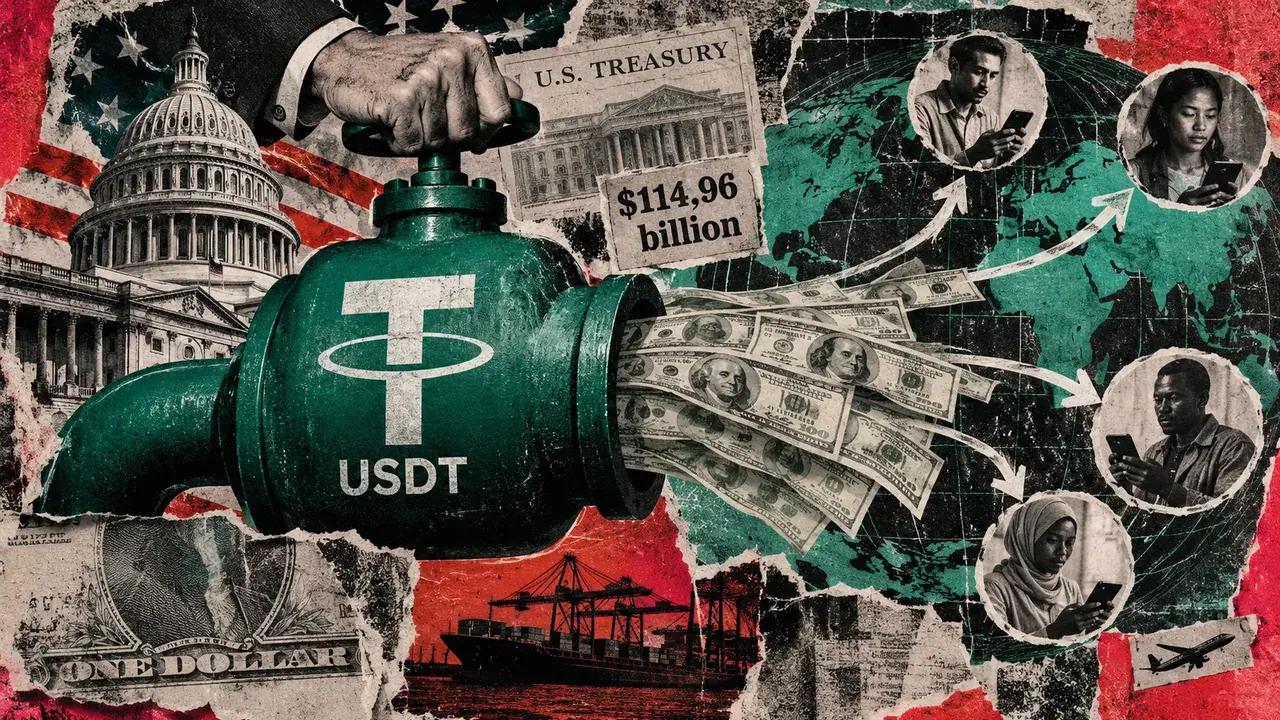
Washington has $114 billion reasons to want Tether around
Not that long ago, Washington fined Tether for misleading people about the dollars behind its tokens. Today, the company's insatia...

SEC Staff Clear Token Buybacks on Working Networks, With a Warning for Unfinished Ones
More crypto projects are using revenue to buy back their own tokens, the way public companies repurchase stock. Ethena proposed a...
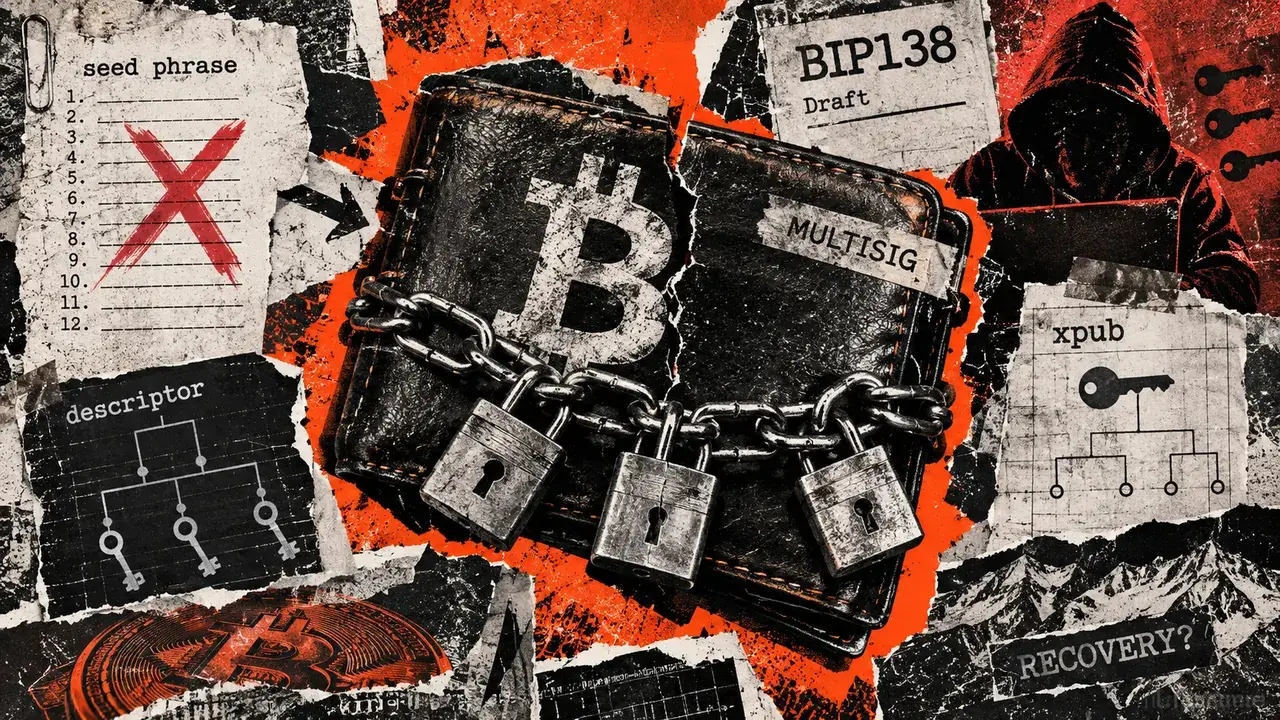
New Bitcoin proposal rescues locked multisig wallets – At a hidden cost
Bitcoin's BIP138 wallet-backup proposal was merged into the Bitcoin Improvement Proposals repository on Sept. 21, but the specific...

Solana Foundation Hires Former Binance CMO For Institutional Push
The Solana Foundation has appointed former Binance global CMO Rachel Conlan as chief strategy officer. Former Polygon Labs executi...