Pectra lets hackers drain wallets with just an offchain signature
Ethereum’s latest network upgrade, Pectra, introduced powerful new features aimed at improving scalability and smart account functionality — but it also opened a dangerous new attack vector that could allow hackers to dr...
Archive context
Older archive item. Useful for background and entity history, but not a fresh market-moving signal.

Ethereum’s latest network upgrade, Pectra, introduced powerful new features aimed at improving scalability and smart account functionality — but it also opened a dangerous new attack vector that could allow hackers to drain funds from user wallets using only an offchain signature.
Under the Pectra upgrade, which went live on May 7 at epoch 364032, attackers can exploit a new transaction type to take control of externally owned accounts (EOAs) without requiring the user to sign an onchain transaction.
Arda Usman, a Solidity smart contract auditor, confirmed to Cointelegraph that “it becomes possible for an attacker to drain an EOA’s funds using only an offchain signed message (no direct onchain transaction signed by the user).”
At the center of the risk is Ethereum Improvement Proposal (EIP)-7702, a core component of the Pectra upgrade. The Ethereum Improvement Proposal introduces the SetCode transaction (type 0x04), which enables users to delegate control of their wallet to another contract simply by signing a message.
If an attacker obtains this signature — say, via a phishing site — they can overwrite the wallet’s code with a small proxy that forward calls to their malicious contract.
“Once the code is set,” Usman explained, “the attacker can invoke that code to transfer out the account’s ETH or tokens — all without the user ever signing a normal transfer transaction.”
Source: Vladimir S. | Officer's NotesRelated: Ethereum Pectra upgrade adds new features
Wallets can be altered with offchain signatureYehor Rudytsia, onchain researcher at Hacken, noted that this new transaction type introduced by Pectra allows arbitrary code to be installed on the user’s account, essentially turning their wallet into a programmable smart contract.
“This tx type allows the user to set arbitrary code (smart contract) to be able to execute operations on the user’s behalf,” Rudytsia said.
Before Pectra, wallets could not be modified without a transaction signed directly by the user. Now, a simple offchain signature can install code that delegates complete control to an attacker’s contract.
“Pre-Pectra, users needed to send transaction (not sign message) to allow their funds to be moved… Post-Pectra, any operation may be executed from the contract which user approved via SET_CODE,” Rudytsia explained.
The threat is real and immediate. “Pectra activated May 7, 2025. From that moment, any valid delegation signature is actionable,” Usman warned. He added that smart contracts relying on outdated assumptions, such as using tx.origin or basic EOA-only checks, are particularly vulnerable.
Wallets and interfaces that fail to detect or properly represent these new transaction types are most at risk. Rudytsia warned that “wallets are vulnerable if they do not analyze Ethereum’s transaction types,” especially transaction type 0x04.
He emphasized that wallet engines must clearly display delegation requests and flag any suspicious addresses.
This new form of attack can be easily executed through common offchain interactions like phishing emails, fake decentralized applications or Discord scams.
“We believe it will be the most popular attack vector regarding these breaking changes introduced by Pectra,” Rudytsia said. “From now on, users have to carefully validate what they are going to sign.”
Source: NoirRelated: Pectra features already in use: Ethereum EIP-7702 wallets roll out
Hardware wallets are not safer anymoreHardware wallets are no longer inherently safer, Rudytsia said. He added that hardware wallets from now on are at the same risk as hot wallets from the perspective of signing malicious messages. “If done, all the funds are gone in a moment.”
There are ways to stay safe, but they require awareness. “Users should not sign the messages they do not understand,” Rudytsia advised. He also urged wallet developers to provide clear warnings when users are asked to sign a delegation message.
Special caution should be taken with new delegation signature formats introduced by EIP-7702, which are not compatible with existing EIP-191 or EIP-712 standards. These messages often appear as simple 32-byte hashes and may bypass normal wallet warnings.
“If a message includes your account nonce, it’s probably affecting your account directly,” Usman warned. “Normal sign-in messages or offchain commitments don’t usually involve your nonce.”
Adding to the risk, EIP-7702 allows for signatures with chain_id = 0, meaning the signed message can be replayed on any Ethereum-compatible chain. “Understand it can be used anywhere,” Usman said.
While multisignature wallets remain more secure under this upgrade, thanks to their requirement for multiple signers, single-key wallets — hardware or otherwise — must adopt new signature parsing and red-flagging tools to prevent potential exploitation.
Alongside EIP-7702, Pectra also included EIP-7251, which raised Ethereum’s validator staking limit from 32 to 2,048 ETH, and EIP-7691, which increases the number of data blobs per block for better layer-2 scalability.
Magazine: Bitcoin eyes ‘crazy numbers,’ JD Vance set for Bitcoin talk: Hodler’s Digest, May 4 – 10
Why this matters
This security story adds another data point to the current market tape and is useful when read alongside nearby source coverage.
Original source
Read on CointelegraphRelated market context

Ethereum’s 2030 Shift: Vitalik Maps a Cryptographic World Computer Beyond Blockchain
Key Takeaways: According to Vitalik Buterin, Ethereum is going further than simply being a blockchain to “cryptographic world comp...

Ethereum is not instant, but collateral could make it feel that way
When a payment app tells you a transfer is complete, you start making decisions. You hand over whatever you've sold, spend the mon...
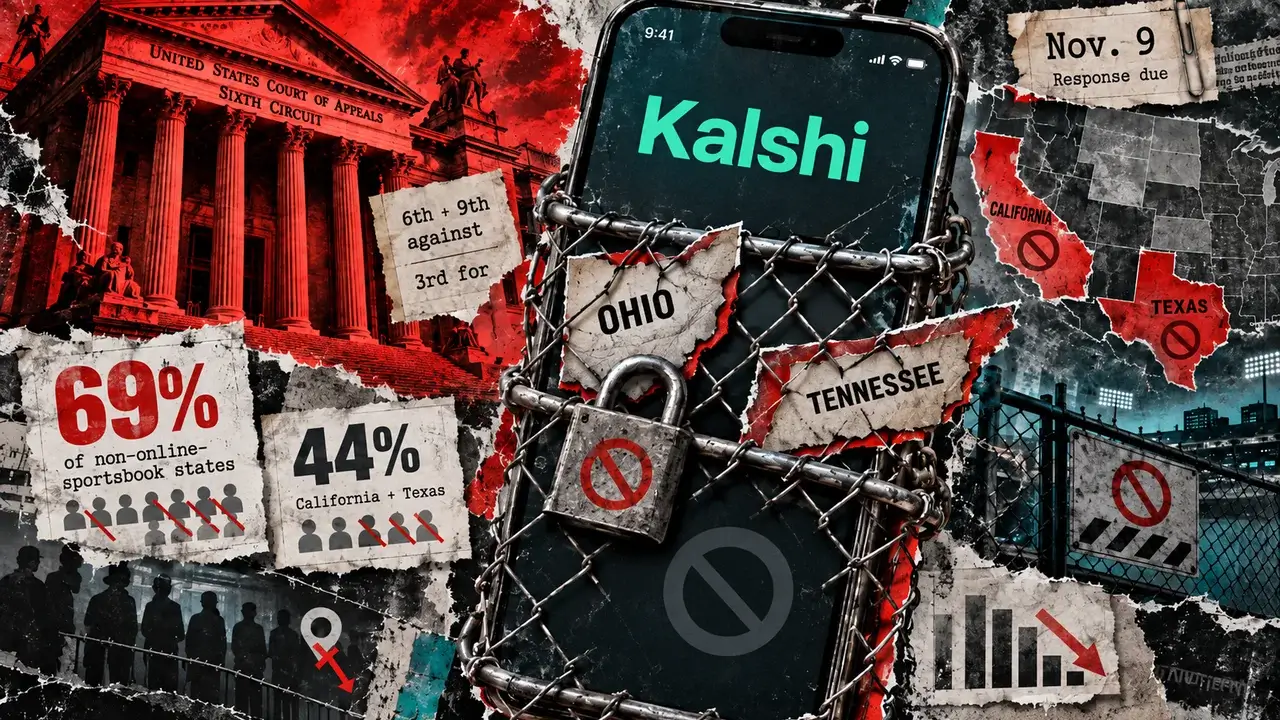
Kalshi must lock out state users after major court loss
The Sixth Circuit ruled Sept. 25 that Ohio and Tennessee can apply their gambling laws to Kalshi's sports contracts. The court rej...

ARK partners with Securitize to put a venture fund on Ethereum, but leaves exit doors locked
ARK Invest and Securitize announced on Sept. 24 that eligible investors would be able to hold tokenized interests in the ARK Ventu...

Binance Wallet lets users pay gas fees in USDT across four major networks
Binance Wallet's USDT gas fee option simplifies crypto transactions, potentially increasing user adoption and reducing reliance on...

SEC staff’s staking-token split spotlights the exit risks behind staked ETH tokens
An ETH holder can sell a liquid-staking token while the ETH behind it remains staked. A Sept. 25 SEC staff FAQ draws a conditional...