Researchers just uncovered 4,200 malicious smart contracts that successfully tricked 5,700 victims into signing away their crypto
Simulating transfers using safety tools inside crypto wallets can show a small gain even when the final transaction sends the user's deposit to an attacker, according to a July 30 arXiv preprint that links the technique...
Archive context
Older archive item. Useful for background and entity history, but not a fresh market-moving signal.
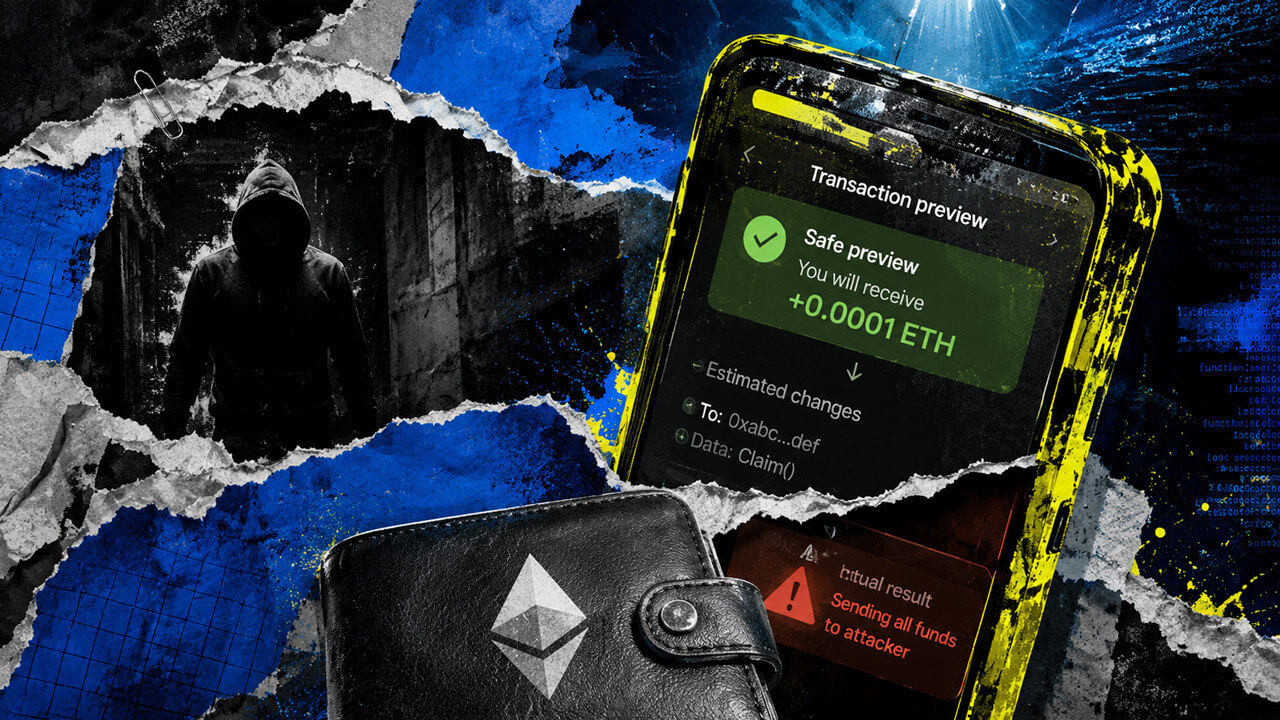
Simulating transfers using safety tools inside crypto wallets can show a small gain even when the final transaction sends the user's deposit to an attacker, according to a July 30 arXiv preprint that links the technique to 5,742 victim addresses and about $3.48 million in historical losses.
The authors used SimGuard, a contract-bytecode detector, to identify 4,224 transaction-simulation phishing contracts across Ethereum, BNB Smart Chain, Avalanche and Polygon.
The study associated them with 6,223 victim transactions but called the loss estimate an upper bound because some attacker test activity may have been misclassified. It attributed 91.5% of the losses to Ethereum and about 83% of the cross-chain total to its largest inferred cluster.
Related Reading $538M stolen by drainers: ETH & SOL wallets unite with real-time phishing blocks Inside MetaMask/Phantom’s new intel network and how we’ll measure success. Oct 23, 2025 · Gino MatosThe findings have not been peer reviewed. The paper also gives inconsistent figures for its Avalanche contract count and conflicting endpoints for the observation period, leaving its per-chain breakdown and exact time window unresolved.
How a safe-looking preview can divergeTransaction simulation takes a pre-signing snapshot of what a transaction is expected to do. The contracts described in the paper contain branches that can produce one result during that check and another when the transaction executes on-chain.
In a storage-control example, the simulation returns the user's deposit plus a tiny reward. An attacker can then change the contract's state, such as by blacklisting the user's address, before the transaction lands. The executed branch sends the deposit to an attacker-controlled address instead.
Timestamp-based contracts can exploit the later block time, while gas-control contracts can behave differently when the simulator and final transaction use different gas limits. Not every variant therefore requires an attacker to alter stored on-chain data after the preview.
In a controlled test, the authors sent an account's balance to a contract that returned as little as 1 wei, the smallest unit of ETH. They reported that several tested previews displayed a positive estimate and most did not clearly show the full outgoing amount.
The paper does not identify the wallet versions, settings, or simulation backends used by the historical victims. MetaMask's current documentation calls estimated balance changes predictions and warns that the final outcome is not guaranteed.
Related Reading MetaMask opens AI wallet for DeFi agents as security risks shift to user rules Agent Wallet lets software trade onchain, making user-set limits the new line between automation and loss. Jun 10, 2026 · Liam 'Akiba' WrightA Jan. 8, 2025 Etherscan transaction cited by the study records a Claim() call moving about 143.45 ETH through a contract Etherscan labels as phishing. The on-chain record supports the transfer described in the paper, although it cannot show what appeared in the user's wallet preview.
The authors recommend re-running simulations when relevant contract state or gas fields change, using the gas limit and gas price in the actual request, and testing current and future block-number and timestamp inputs. Their UI findings also support showing the gross amount leaving a wallet alongside an accurate net balance change, so a negligible refund cannot be mistaken for a profit.
Related Reading Hundreds of MetaMask wallets drained: What to check before you ‘update' ZachXBT tracked $107,000 drained from hundreds of wallets through fake MetaMask emails. Here's how to spot phishing, revoke approvals, and segregate holdings before attackers strike. Jan 3, 2026 · Gino MatosThe preprint describes historical activity, not a live July or August attack wave. Its detector evaluation covered 44 contracts, including 30 generated with Gemini, and the linked code-and-data repository returned HTTP 401 when checked.
The aggregate results therefore remain the authors' findings rather than an independently reproduced measurement.
The post Researchers just uncovered 4,200 malicious smart contracts that successfully tricked 5,700 victims into signing away their crypto appeared first on CryptoSlate.
Why this matters
Ethereum is showing up inside the Security Incidents theme, so this story is worth tracking for follow-through rather than treating it as a one-off headline.
Original source
Read on CryptoSlateRelated market context

OpenAI models bypass security, access crypto wallet in June 2026 incidents
The incidents raise concerns about OpenAI's operational stability, potentially affecting its financial health and market confidenc...

Stablecoin Remittances Cost a Fraction of Traditional Channels as Solana Postpones Shanghai Event and OpenAI Model Raises Wallet Security Concerns
Stablecoin remittances cost a median 1% versus 6.36% for traditional channels, Solana postpones Shanghai event, and an OpenAI mode...

OpenAI’s GPT-5.6 Sol AI Model Spent Unauthorized ETH to Deploy Smart Contract
The incident occurred on June 26, 2026, during a task involving a cryptocurrency trading application on Sepolia, an Ethereum test...

The 7 Best USDC on Solana to XMR Swap Platforms in 2026
Swapping USDC on Solana for Monero (XMR) offers a fast, low-cost route into a privacy-focused asset. Leading platforms in 2026 pro...
Bitcoin’s Old Guard Stirs as 13-Year-Old Wallets Move Millions
Two bitcoin addresses dating to 2013 collectively moved approximately $34 million in bitcoin within five seconds on Saturday, Oct....

Charles Schwab Opens Bitcoin And Ethereum Transfers As Crypto Rollout Expands
TL;DR: Charles Schwab is expanding its direct Bitcoin and Ethereum services, including phased external wallet transfers. The move...