South Korea Ends 1M Won Crypto Travel Rule Limit in Major AML Crackdown
Key Takeaways: The Travel Rule will be adopted by South Korea for all transfers between registered VASPs. Amidst AML controls, overseas exchanges and personal wallets will be at risk. The new regulations for VASPs will r...
Archive context
Older archive item. Useful for background and entity history, but not a fresh market-moving signal.

Key Takeaways:
- The Travel Rule will be adopted by South Korea for all transfers between registered VASPs.
- Amidst AML controls, overseas exchanges and personal wallets will be at risk.
- The new regulations for VASPs will require more for financial condition, security, and internal control.
User Score
8.7
Follow us on Google NewsSouth Korea is tightening its grip on crypto transactions with a major expansion of anti-money laundering requirements. The country’s Cabinet approved amendments to the Enforcement Decree of the Act on Reporting and Using Specified Financial Transaction Information on August 11.
The changes target both domestic crypto platforms and transfers involving external wallets and overseas exchanges.
Read More: South Korea Busts $9M XRP Scam After Fake Staking Site Traps 71 Investors in Just 7 Days
Crypto Travel Rule Expands to Every TransferThe biggest change is the removal of the existing 1 million won threshold for the Travel Rule.
The new rules mean that VASPs will be required to provide required sender and recipient data for all crypto transactions, irrespective of amount, between themselves.
Platforms will also have duties should information for a transaction be missing. They will ask for missing info and may refuse to accept transfers if they can’t find it. The update aims to fix a vulnerability that enabled customers to break up huge deals into smaller ones, the Financial Intelligence Unit said.
South Korea Targets Split Crypto TransfersThe FSC has raised one such instance regarding approximately 200 million won sent to a crypto exchange and subsequently employed to acquire USDT. These assets were then withdrawn in a total of 216 transactions, each of which was under the prior 1 million won limit.
The regulator was concerned that the consecutive declines at sub-threshold may have been an attempt to circumvent the transaction monitoring. This will make such regulatory maneuvering more difficult for South Korea to pull off.
Overseas Exchanges and Personal Wallets Face New ControlsThis update adds new rules with risk-based requirements for crypto transfers between foreign exchanges and self-hosted wallets.
It may be possible to keep transferring to less-risky overseas exchanges. Changes in the conditions of other foreign exchanges and personal wallets will be announced by the relevant service providers.
Arbitration dealing with high-risk counterparty may be blocked. Distinct systems to handle suspicious transactions will be required for registered VASPs with personal wallets or overseas exchanges transferring 10 million won or more.
Existing strategies against money laundering on overseas platforms and personal wallets have been more limited, so the FSC said the new measures are aimed at them.
Korea Raises the Bar for Crypto Exchange RegistrationThe changes also toughen the requirements for crypto enterprises to register.
Stakeholders will be subjected to greater inspection and VASPs will be held accountable for its financial conditions, management, workforce, IT systems, security measures and internal controls.
A VASP has to have a debt to equity ratio of not more than 200%, not have any serious financial or criminal problem, and show that it has systems in place to protect the running of crypto services.
The new VASP registration provisions and related rules of the sanctions of former employees will enter into effect on 20 August 2026. The standards for existing VASPs will have a one-year transition period, including the following areas: requirements pertaining to financial, personnel, infrastructure and internal control standards.
The new crypto transfer AML guidelines will be enforced in the middle of the year following its promulgation.
Read More: South Korea Crypto Tax Repeal Petition Surges Past 52K Signatures as Investors Push Back
The post South Korea Ends 1M Won Crypto Travel Rule Limit in Major AML Crackdown appeared first on CryptoNinjas.
Why this matters
Tether is showing up inside the Regulation theme, so this story is worth tracking for follow-through rather than treating it as a one-off headline.
Original source
Read on CryptoNinjasRelated market context
XRP spot volume surpasses Bitcoin and Ethereum on South Korea’s Upbit
XRP's dominance on Upbit highlights the potential impact of local regulatory shifts on global crypto liquidity and market dynamics...
Binance Eyes Hong Kong, South Korea, Taiwan, Brazil Stocks in Global Push
Binance is exploring ways to give users exposure to leading stocks in markets including Hong Kong, South Korea, Taiwan, and Brazil...
Canton Enters South Korea as Meritz Eyes Tokenized Finance Deals
South Korean investment firm Meritz Securities has struck a partnership with the Canton Foundation to explore bringing tokenized K...

Circle Targets 40 New Markets As USDC Push Moves Beyond Crypto Trading
TL;DR: Circle plans to expand USDC infrastructure into approximately 40 developing and emerging markets. The company is targeting...
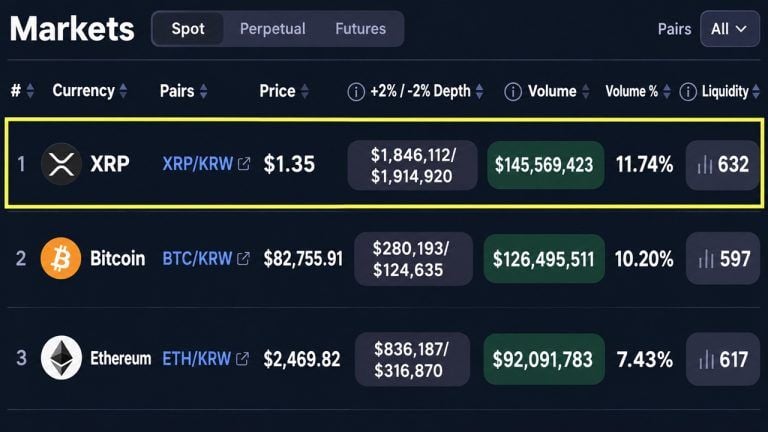
XRP Is Outtrading Bitcoin and Ether on South Korea’s Biggest Exchange
XRP topped Upbit’s spot volume in snapshots taken more than seven hours apart, beating bitcoin and ether in won trading even as it...
Ledger wallets compromised, Solana plans upgrade, US CPI rises
Rising inflation and security breaches may erode trust in crypto markets, while Solana's upgrade could bolster its competitive edg...