South Korea to Impose Bank-Level Liability on Crypto Exchanges After Upbit’s $30M Hack
Key Takeaways: South Korea plans to apply bank-level, no-fault compensation rules to crypto exchanges after a major breach at Upbit. Regulators want exchanges to reimburse users for losses from hacks or system failures,...
Archive context
Older archive item. Useful for background and entity history, but not a fresh market-moving signal.

Key Takeaways:
- South Korea plans to apply bank-level, no-fault compensation rules to crypto exchanges after a major breach at Upbit.
- Regulators want exchanges to reimburse users for losses from hacks or system failures, even if the platform is not at fault.
- The upcoming overhaul introduces stricter IT requirements, higher penalties, and expanded oversight, signaling the toughest regulatory shift in Korea’s crypto sector to date.
South Korea is preparing one of its most aggressive regulatory responses yet after a high-profile incident at Upbit reignited concerns about weak digital-asset protections. The government now aims to treat crypto exchanges with the same standards as traditional financial institutions, an approach that could redefine operational risk across the entire industry.
Read More: Upbit Hit Again: ₩44.5B Solana Hot-Wallet Hack Slams Korea’s Top Crypto Exchange
Government Moves to Treat Crypto Platforms Like BanksSouth Korean regulators have long acknowledged gaps in their digital-asset rulebook, but the latest breach at Upbit strengthened the political urgency to act. Authorities are now pursuing a framework that would require exchanges to compensate users for financial losses regardless of fault, mirroring the liability rules that banks and electronic payment firms must follow.
This marks a significant departure from the current system, in which crypto platforms face far fewer obligations. Under existing laws, regulators cannot compel reimbursement even when an exchange suffers a major security lapse. The Upbit hack exposed this shortcoming in real time.
On November 27, more than 104 billion won worth of Solana-based tokens, roughly $30 million were transferred out of Upbit to external wallets in less than an hour. Despite the scale of the breach, legal constraints left authorities with limited power to enforce compensation or issue meaningful penalties.
For policymakers, this incident was not isolated, it was the latest example of operational fragility within Korea’s crypto sector. As one official noted, user protection standards had become “unacceptably inconsistent” with the size and influence of the industry.
Recurring Failures Highlight the Scale of the Problem Repeated Outages and Weak Obligations Accelerate the Regulatory ShiftData submitted to lawmakers by the Financial Supervisory Service (FSS) shows that the nation’s five major exchanges: Upbit, Bithumb, Coinone, Korbit, and Gopax reported 20 system failures from 2023 through September this year. Over 900 users were not spared by these disruptions and an estimated 5 billion won was lost.
Upbit alone registered six incidences, which impacted on more than 600 clients. It is apparent that the trend indicates that technical instability is not a sporadic inconvenience but a structural risk that cannot be ignored anymore by the regulators.
Outages in the system have severely important consequences in Korea, with the volumes of cryptocurrency trading being some of the highest in the region, which is why there can be the logistics of inability to withdraw funds, paralyzing accounts, and breaking of price transactions during unpredictable times. The fact that such failures may cause forced losses by retail traders and erode market confidence in a larger scale.
Regulators are of the opinion that in the absence of tougher accountability guidelines, exchanges will have very little motivation to improve infrastructure or implement bank-style security measures. The new liability model will aim at undoing that imbalance.
Read More: South Korea Warns ETFs: Crypto Exposure Too High – Coinbase & MicroStrategy Under Fire
The post South Korea to Impose Bank-Level Liability on Crypto Exchanges After Upbit’s $30M Hack appeared first on CryptoNinjas.
Why this matters
This security story adds another data point to the current market tape and is useful when read alongside nearby source coverage.
Original source
Read on CryptoNinjasRelated market context

Tokenized iShares MSCI South Korea ETF Arrives on StonkFun for Solana Coin Launches
Key Takeaways: StonkFun now supports coin launches paired with $EWY, the tokenized iShares MSCI South Korea ETF. Overall, the inte...

North Korean Hackers Linked to $388M Bitget Crypto Exchange Theft: CEO
Bitcoin Magazine North Korean Hackers Linked to $388M Bitget Crypto Exchange Theft: CEO Hackers from North Korea targeted crypto e...

Bitget Confirms $351.6M Hot Wallet Breach And Pauses Withdrawals
Bitget says unauthorized transfers affected approximately $351.6 million held across parts of its hot and warm wallet infrastructu...
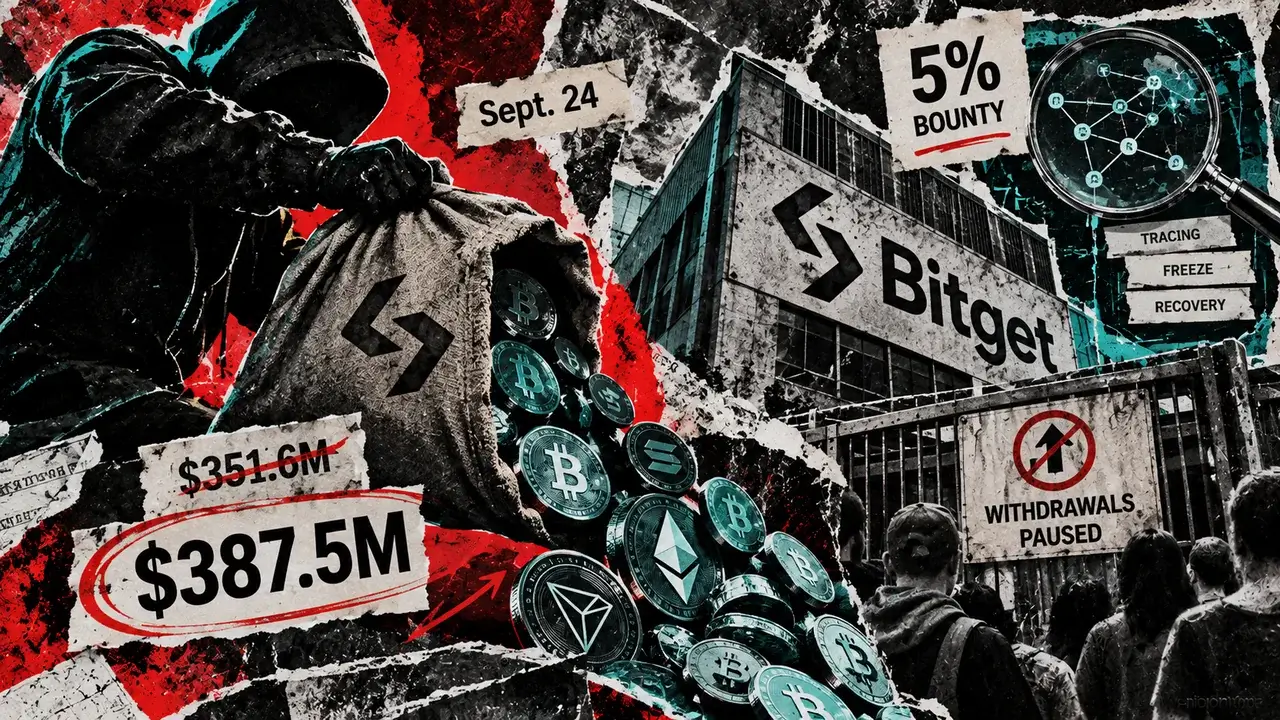
Bitget’s hack just got $36 million bigger, and now there’s a bounty on the stolen crypto
Bitget has raised the estimated value of assets taken in its Sept. 24 breach to $387.5 million as exchanges and security firms mob...

Kalshi must lock out state users after major court loss
The Sixth Circuit ruled Sept. 25 that Ohio and Tennessee can apply their gambling laws to Kalshi's sports contracts. The court rej...

Crypto Hacks: Three Projects Hacked in One Day as Losses Hit Over $11M
Three crypto projects were attacked on September 24, suffering combined losses of more than $11M. Attackers drained around $1.8M f...