Tornado Cash Developer Challenges U.S. Sanctions in Landmark Legal Battle
Defense lawyers for Tornado Cash developer Roman Storm are accusing federal prosecutors of concealing important evidence that could damage the government’s case as the high-profile legal dispute moves toward a decisive s...
Archive context
Older archive item. Useful for background and entity history, but not a fresh market-moving signal.

Defense lawyers for Tornado Cash developer Roman Storm are accusing federal prosecutors of concealing important evidence that could damage the government’s case as the high-profile legal dispute moves toward a decisive stage.
Allegations of Withheld Evidence in Tornado Cash CaseRoman Storm, co-founder of the cryptocurrency mixing service Tornado Cash (TORN), has accused U.S. federal prosecutors of withholding exculpatory evidence that could significantly impact his ongoing criminal case.
Tornado Cash is a non-custodial swapping solution built on Ethereum. It seeks to improve transaction privacy by obfuscating the on-chain links between the recipient and destination addresses. It utilizes Zero Knowledge Proof technology. Tornado Cash has been sanctioned by the U.S. government, who allege that it has been used by the North Korean hacking group Lazarus and terrorist organizations.
It is alleged that Tornado Cash Roman Storm operated a money laundering business and violated the Emergency Economic Powers Act (EEPA).
In a letter dated May 16, 2025, Storm’s attorneys informed Judge Katherine Polk Failla that prosecutors failed to disclose 2023 communications with the Financial Crimes Enforcement Network (FinCEN). These documents reportedly indicate that non-custodial crypto mixers like Tornado Cash do not qualify as “money transmitting businesses” under federal law.
The evidence has emerged from another case in the Southern District of New York (SDNY). Keonne Rodrigues and William Loneran Hill, the co-founders of another crypto mixing service, Samourai Wallet, are also accused of knowingly creating a tool that allows criminals to launder proceeds.
In the Samourai Wallet case, prosecutors have admitted to having a conversation with two FinCen officials in 2023. This was before any charges were levied against the founders of Tornado Cash or Samourai Wallet. During this conversation, the two FinCen employees said they didn’t believe the Samourai Wallet mixing service would qualify as a money transmitting business under their guidelines and didn’t need a license to operate. Lawyers for the Samourai Wallet co-founders said that by not immediately disclosing its pre-indictment consultation with FinCEN, the prosecutors have already prejudiced the case. They say, like Stom’s lawyers do, that prosecutors failed to meet their Brady obligations — A constitutional requirement for prosecutors to turn over any potentially helpful evidence to the defense pre-trial.
Last week, the judge overseeing the Samourai Wallet case denied a motion for a hearing on the FinCen meeting with prosecutors and instead told the defence to include their concerns in their pre-trial motion at the end of the month.
Prosecutors’ ResponseIn a Wednesday letter to the court, prosecutors pushed back against the assertions that they failed to meet their Brady requirements. They say Tornado Cash was not a part of the 2023 conversations and that “while Samourai Wallet and the Tornado Cash service may share some superficial similarities, they operated quite differently.”
Broader Implications for Open-Source DevelopmentThis case is pivotal in the ongoing debate over the legal responsibilities of open-source developers and the regulation of privacy-focused cryptocurrency tools. The outcome could set a significant precedent, potentially affecting how developers are held accountable for the misuse of their software by third parties.
Upcoming Trial and Potential OutcomesFederal prosecutors continue to pursue the case against Storm. His trial is scheduled to commence in July 2025
On November 26th, 2024, a Fifth Circuit Appeals Court’s three-judge panel said the US Office of Foreign Asset Control (OFAC) exceeded its authority when sanctioning Tornado Cash’s immutable smart contracts. This reversed a lower court’s decision. The appeals court said that while some Federal agencies have the power to take action against property, Tornado Cash’s immutable smart contracts were not property under the International Emergency Economic Powers Act (IEEPA) as they cannot be controlled and owned. While this decision did not involve Roman Storm directly, it challenged the legality of the sanctions that partially form the basis for his prosecution.
Why this matters
This security story adds another data point to the current market tape and is useful when read alongside nearby source coverage.
Original source
Read on Brave New CoinRelated market context

US Charges Man After Crypto Scam Wallets Received More Than $53M
TL;DR U.S. prosecutors have charged a Vietnamese national with money laundering tied to alleged cryptocurrency “pig butchering” sc...
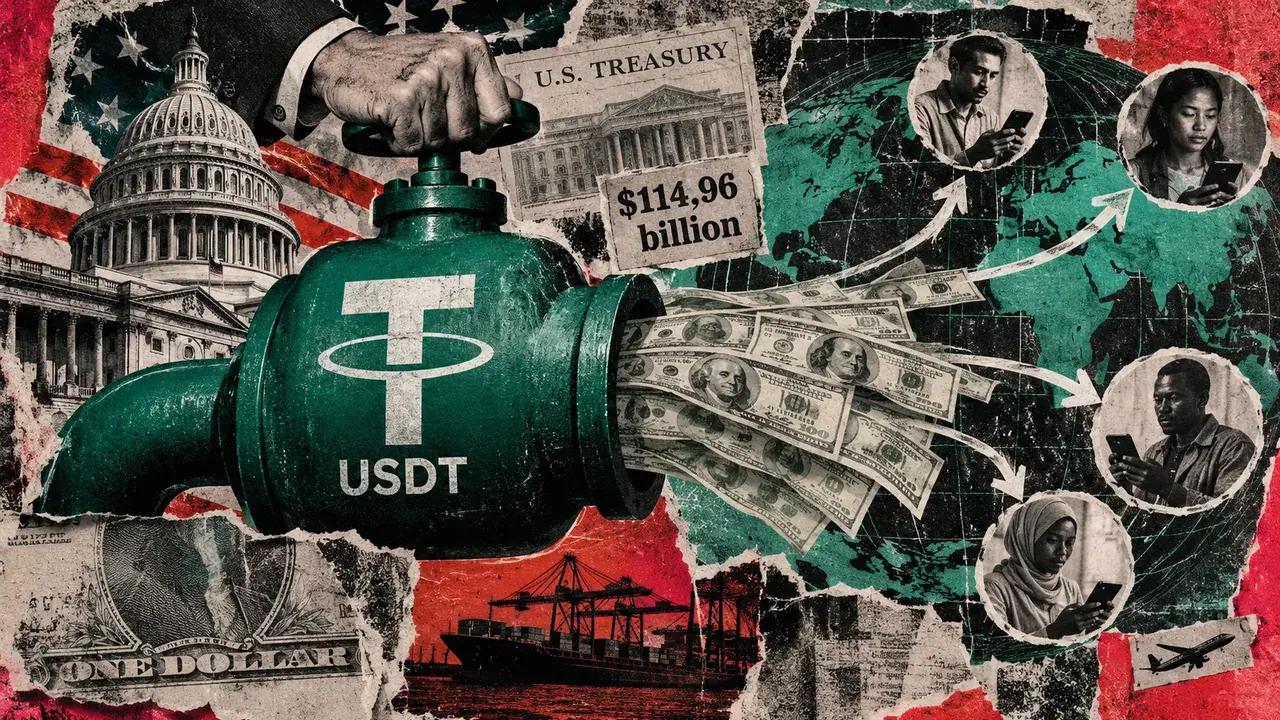
Washington has $114 billion reasons to want Tether around
Not that long ago, Washington fined Tether for misleading people about the dollars behind its tokens. Today, the company's insatia...

Bitget raises breach losses to $387.5 million after on-chain tracing uncovers Zcash and TRON transfers
Bitget raises breach losses to $387.5 million after tracing reveals Zcash and TRON transfers. Cold wallets secure, protection fund...
Bitget Confirms $351.6M Hot Wallet Breach And Pauses Withdrawals
Bitget says unauthorized transfers affected approximately $351.6 million held across parts of its hot and warm wallet infrastructu...

Binance Wallet lets users pay gas fees in USDT across four major networks
Binance Wallet's USDT gas fee option simplifies crypto transactions, potentially increasing user adoption and reducing reliance on...

1,700 Bitcoin valued at $142M moved off Coinbase Institutional to unknown wallet
Institutional Bitcoin movements suggest strategic asset management and highlight the evolving role of crypto in traditional financ...