U.S. Banking Groups Urge SEC to Scrap Cyber Disclosure Rule, Citing National Security Risks
On January 31, 2024, leading U.S. banking trade groups, including the American Bankers Association (ABA), the Bank Policy Institute (BPI), and the Securities Industry and Financial Markets Association (SIFMA), sent a for...
Archive context
Older archive item. Useful for background and entity history, but not a fresh market-moving signal.

On January 31, 2024, leading U.S. banking trade groups, including the American Bankers Association (ABA), the Bank Policy Institute (BPI), and the Securities Industry and Financial Markets Association (SIFMA), sent a formal petition to the U.S. Securities and Exchange Commission (SEC) requesting that it withdraws a controversial cybersecurity incident disclosure rule.
The petition, submitted on May 22, 2025, calls for the rescission of Item 1.05 in Form 8-K and the corresponding Form 6-K requirement for foreign private issuers, which mandate the disclosure of material cybersecurity incidents within four business days of determining their significance, citing deep concerns over national security, investor harm, and operational disruption.
The groups argue that these requirements have proven burdensome, confusing, and counterproductive to cybersecurity and investor protection.
“Premature disclosure of material cyber events has jeopardized incident containment, interfered with law enforcement coordination, and triggered market and legal chaos,” the petition states.
U.S. Banking Groups Warn SEC Cyber Disclosure Rule Aids HackersThe SEC’s Cybersecurity Risk Management, Strategy, Governance, and Incident Disclosure rule, adopted in July 2023, was intended to enhance transparency and standardize how public companies communicate cybersecurity threats to investors.
But critics say it is achieving the opposite. The petition emphasizes that registrants are forced to report incidents even when they remain ongoing, investigations are incomplete, and systems have not been fully remediated, thus potentially handing attackers an advantage.
The rule has led to significant confusion over how and when companies should disclose incidents. Despite the SEC’s attempts to clarify through Compliance & Disclosure Interpretations, comment letters, and commissioner guidance, registrants are still struggling to determine whether to report under Item 1.05 and Item 8.01.
Source: SIFMAAccording to the trade groups, this uncertainty has made the rule ineffective and legally risky, exposing firms to litigation and reputational harm while failing to generate actionable information for investors.
Notably, the groups warned that ransomware gangs and other cybercriminals have started weaponizing the SEC’s disclosure timeline, using the threat of public exposure as leverage to extort victims.
“The incident disclosure requirement has been exploited by ransomware criminals to further malicious objectives,” the petition notes, adding that it may even increase the likelihood of follow-up attacks once firms are known to be vulnerable.
The petition’s core is a warning that the SEC’s disclosure rule undermines federal cybersecurity strategy.
The groups further argue that releasing details of material cyber incidents into the public domain too early may conflict with confidential reporting requirements under laws like the Cyber Incident Reporting for Critical Infrastructure Act (CIRCIA).
Investors Better Served by Existing Disclosure FrameworksDespite the SEC’s intent to enhance investor protection, the petition insists that the current cyber incident disclosure rule fails to provide “decision-useful” information to the market.
Instead, it risks creating misleading narratives based on incomplete facts while harming the institutions it seeks to regulate.
The banking groups argue that existing disclosure obligations such as Regulation S-K Item 105 and the pre-existing materiality framework already compel companies to report significant risks, including cybersecurity threats, in a way that preserves investor interests without compromising national security or company resilience.
They assert that investors will still be protected without Item 1.05.
“We believe they would be better served through the pre-existing disclosure framework for reporting material information—which may include material cybersecurity incidents—while better mitigating the concerns raised above,” the letter concludes.
The SEC has yet to respond to the May 22 petition publicly.As the SEC weighs its next move, the outcome could reshape how U.S. companies balance transparency with cybersecurity resilience in an increasingly hostile ecosystem.
The post U.S. Banking Groups Urge SEC to Scrap Cyber Disclosure Rule, Citing National Security Risks appeared first on Cryptonews.
Why this matters
This security story adds another data point to the current market tape and is useful when read alongside nearby source coverage.
Original source
Read on CryptonewsRelated market context

EU Banking Regulator Urges Crypto Lending Rules, Floats Leverage Caps and DeFi Certification
The European Banking Authority (EBA) recommended on Sept. 24 that the European Commission consider regulating crypto borrowing and...
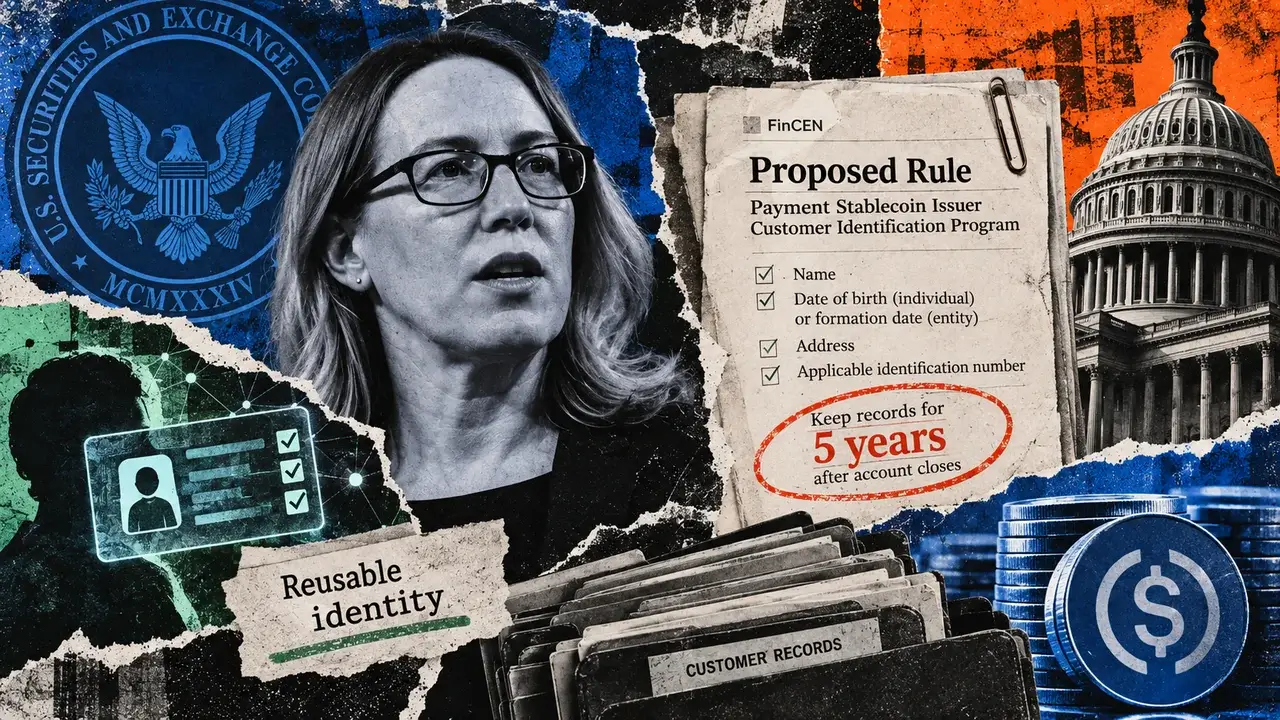
SEC’s Hester Peirce wants to end crypto’s KYC honeypots before stablecoin rules create more of them
US Securities and Exchange Commission (SEC) Commissioner Hester Peirce wants financial firms to stop stockpiling customer data aft...

Fed proposed stablecoin rule could trigger a 48-hour liquidation run
The Federal Reserve's proposed rules for the payment stablecoin issuers it supervises include a crisis clock measured in hours. An...
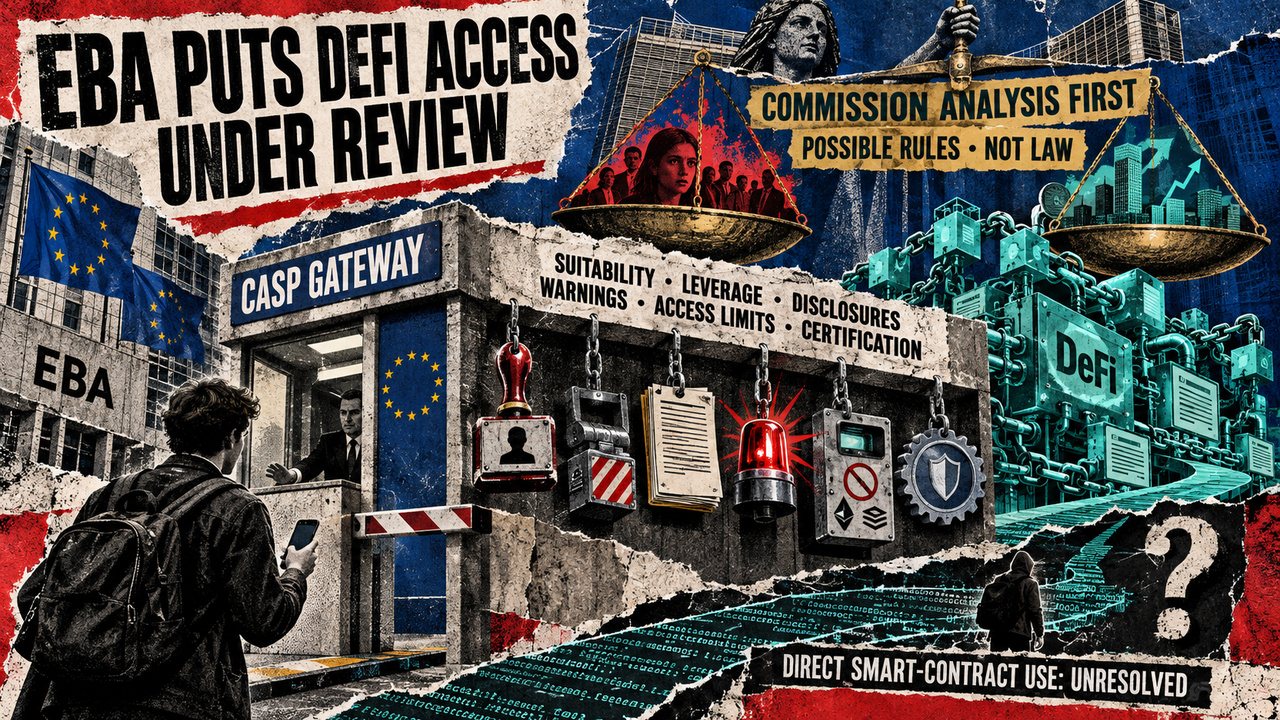
EU faces September 30 clock to decide future of DeFi loans
The European Banking Authority has asked the European Commission to examine new MiCA rules for crypto firms that connect customers...

Bitget Halts Withdrawals After $351.6M Hot Wallet Incident Hits Crypto Exchange
Key Takeaways: Bitget reported unauthorized transactions of about $351.6 million that occurred in a portion of its hot & warm wall...
SEC Staff Says Token Buybacks Don't Make Crypto a Security—If the Network Works
New SEC staff guidance says announcing a token buyback on a functional network isn't a promise that turns the token into a securit...