US Senators Press Meta CEO Mark Zuckerberg on Crypto Scam Policies for Facebook, Instagram, Whatsapp
Six U.S. senators have demanded answers from Meta CEO Mark Zuckerberg about how his company is handling cryptocurrency scams on its social media platforms, including Facebook, Instagram, and Whatsapp. “We are concerned t...
Archive context
Older archive item. Useful for background and entity history, but not a fresh market-moving signal.

Six U.S. senators have demanded answers from Meta CEO Mark Zuckerberg about how his company is handling cryptocurrency scams on its social media platforms, including Facebook, Instagram, and Whatsapp. “We are concerned that Meta provides a breeding ground for cryptocurrency fraud that causes significant harm to consumers,” the lawmakers wrote.
Senators Want Answers From Mark Zuckerberg and Meta Platforms
U.S. Senators Robert Menendez, Sherrod Brown, Elizabeth Warren, Dianne Feinstein, Bernard Sanders, and Cory A. Booker jointly sent a letter on Thursday to Mark Zuckerberg, chairman and CEO of Meta, about his company’s “efforts to combat cryptocurrency scams on its social media platforms, including Facebook, Instagram, and Whatsapp.”
Citing “recent reports of scams on other social media platforms and apps,” including data from the Federal Trade Commission (FTC), the senators wrote:
We are concerned that Meta provides a breeding ground for cryptocurrency fraud that causes significant harm to consumers.
“While crypto scams are prevalent across social media, several of Meta’s sites are particularly popular hunting grounds for scammers,” the letter describes. “Among consumers who reported being scammed out of cryptocurrency on a social media website, 32% identified the scam as having originated on Instagram, 26% on Facebook, and 9% on Whatsapp.”
The lawmakers asked Zuckerberg seven questions concerning Meta’s current policies pertaining to cryptocurrency scams. They request that the Meta CEO responds with detailed information by Oct. 24.
For each of Meta’s social media platforms, the questions include how the company finds and removes crypto scammers, educates and warns users about crypto scams, and assists victims of fraudulent crypto schemes. The senators also asked how Meta verifies that crypto ads are not scams and what regulatory licenses are required to advertise on its platforms. Moreover, they asked to what extent Meta collaborates with law enforcement to track down scammers.
U.S. authorities have been warning that scammers are increasingly using social media to defraud investors. In August, the U.S. Securities and Exchange Commission (SEC) warned investors of fraudsters exploiting their fear of missing out (FOMO) on social media.
Have you come across any scams on Meta’s platforms, including Facebook, Instagram, and Whatsapp? Let us know in the comments section below.
Why this matters
This security story adds another data point to the current market tape and is useful when read alongside nearby source coverage.
Original source
Read on Bitcoin NewsRelated market context

Superplanet targets $16B Bitcoin-backed preferred stock market with Metaplanet’s backing
Superplanet's move into Bitcoin-backed securities could reshape capital markets, highlighting the growing intersection of crypto a...

Metaplanet to acquire Superplanet in $134.6M Bitcoin-funded deal, stock surges ahead of Q4 2026 close
Metaplanet's Bitcoin-funded acquisition strategy could redefine corporate treasury management, enhancing global market access and...

South Korea blocks Polymarket, citing illegal crypto gambling
South Korea's ban on Polymarket highlights increasing global scrutiny on crypto platforms, potentially stifling innovation in pred...
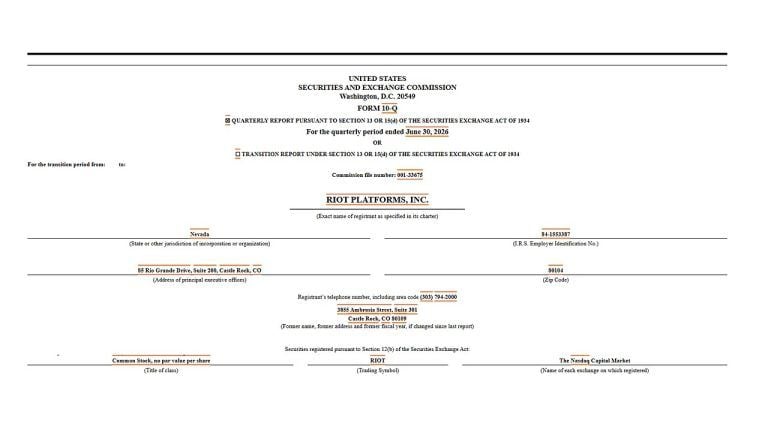
Riot Platforms Sold 9,665 Bitcoin in H1 2026 to Fund AI Pivot
Riot Platforms sold 4,300 BTC in the second quarter of 2026, pushing its six-month total to 9,665 bitcoin as the Texas-based miner...

Strategy’s Bitcoin sales put markets on edge
Strategy's Bitcoin sales shift market dynamics, potentially altering investor sentiment and impacting Bitcoin's supply-demand equi...

Tokenized funds add $2.7B in market cap over 90 days as JPMorgan and Ondo lead the charge
The rapid growth of tokenized funds signals a shift towards blockchain integration in traditional finance, enhancing liquidity and...