US Treasury Report Warns of Defi’s Threat to National Security, Authors Conclude Fiat Is Used in Illicit Finance More Than Crypto
The U.S. Treasury has released a 42-page report assessing the risks of decentralized finance (defi). The report states that specific nation-state adversaries, cybercriminals, ransomware attackers, thieves, and scammers a...
Archive context
Older archive item. Useful for background and entity history, but not a fresh market-moving signal.
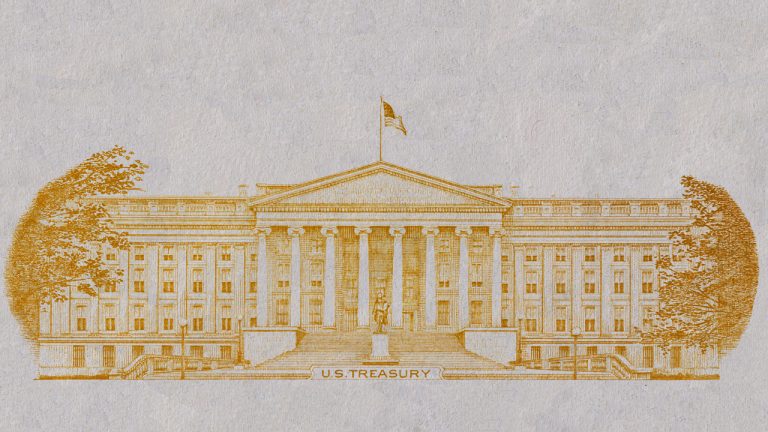
The U.S. Treasury has released a 42-page report assessing the risks of decentralized finance (defi). The report states that specific nation-state adversaries, cybercriminals, ransomware attackers, thieves, and scammers are using defi to “transfer and launder their illicit proceeds.” The Treasury’s report warns that defi could threaten national security and calls for policymakers to increase oversight.
U.S. Treasury Report Assesses Risks Associated With Decentralized FinanceThe U.S. Treasury released a report on April 6, 2023, that assesses the purported risks of defi. “The risk assessment explores how illicit actors abuse defi services and vulnerabilities unique to defi services to inform efforts to identify and address potential gaps in the United States’ AML/CFT regulatory, supervisory, and enforcement regimes,” said the national treasury and finance department. The report was written by Treasury officials, including Brian Nelson, the Treasury’s undersecretary for terrorism and financial intelligence.
“Defi services at present often do not implement AML/CFT controls or other processes to identify customers, allowing layering of proceeds to take place instantaneously and pseudonymously, using long strings of alphanumeric characters rather than names or other personally identifying information,” the report adds. It also acknowledges that some firms are providing AML/CFT controls and that onchain surveillance companies exist. However, Nelson and the report’s authors maintain that these controls and monitoring practices “do not adequately address the identified vulnerabilities on their own.”
The defi report also discusses how the Treasury intends to strengthen federal oversight and regulatory policies. The authors emphasize that “centralized virtual asset service providers (VASPs) and industry solutions can partially mitigate some of these vulnerabilities.” The Treasury Department stated that regulations that cover traditional finance should also apply to decentralized finance, and regulators must close specific gaps that cybercriminals, money launderers, and scammers currently exploit. Interestingly, despite the report’s 42-page length, the Treasury report authors conclude by stating that illicit finance “remains a minor portion of the overall virtual asset ecosystem.”
On page 36 of the report, which covers the conclusion, recommended actions, and posed questions, the researchers emphasize that most nation-state adversaries and cybercriminals do not typically use crypto assets or defi for illicit financing. “Moreover, money laundering, proliferation financing, and terrorist financing most commonly occur using fiat currency or other traditional assets rather than virtual assets,” the report’s authors conclude.
What do you think about the U.S. Treasury report that assesses the purported risks associated with defi? Share your thoughts about this subject in the comments section below.
Why this matters
This security story adds another data point to the current market tape and is useful when read alongside nearby source coverage.
Original source
Read on Bitcoin NewsRelated market context

Curve founder says FATF pressure could make DeFi safer and more decentralized
Curve founder Michael Egorov said FATF pressure could push DeFi protocols toward greater decentralization and stronger security.

SEC Shelved Crypto Fundraising Rulemaking After Wall Street Group Weighed Legal Challenge: Report
The Securities and Exchange Commission abruptly canceled an open meeting Friday that would have started the formal rulemaking proc...
U.S. Treasury Unveils GENIUS Act Stablecoin Rules With 2027 Licensing Deadline Ahead
Key Takeaways: The Treasury proposed rules to implement the GENIUS Act for payment stablecoins. U.S. issuers will typically have t...

Securitize, J.P. Morgan, Franklin Templeton drive $65M in tokenized Treasury market cap growth in one week
The rise of tokenized Treasuries enhances DeFi's stability by integrating traditional finance, offering new collateral options and...

Centrifuge reports 300% growth in tokenized assets to nearly $4B
Centrifuge's growth highlights tokenization's potential to bridge traditional finance and DeFi, offering stability amid crypto vol...
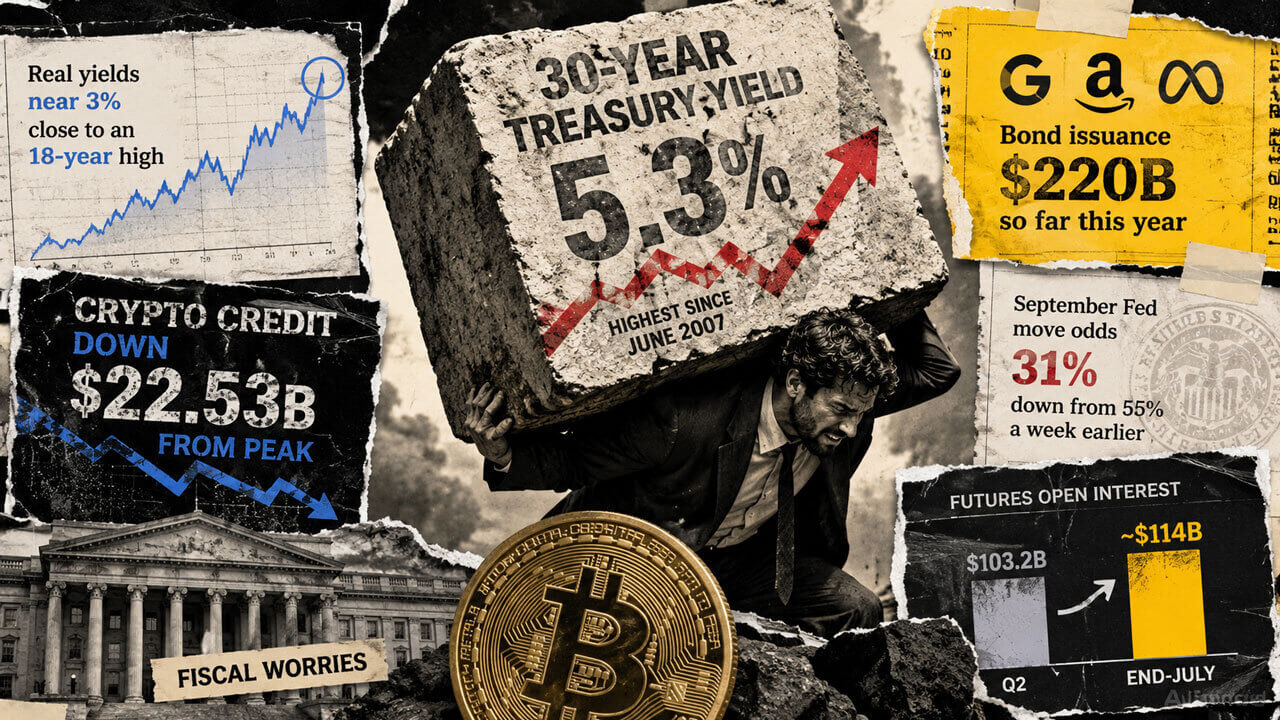
Bitcoin faces its highest Treasury hurdle since 2007 with $22.5B less crypto credit to unwind
The US 30-year Treasury yield crossed 5.3% on Aug. 17 for the first time since June 2007, the same day Galaxy published a report s...