US Treasury Sanctions First Crypto Mixer
The U.S. Department of the Treasury’s Office of Foreign Assets Control (OFAC) has issued its first-ever sanctions on a crypto mixer. The mixing service was used by Lazarus Group to process illicit proceeds from the $620...
Archive context
Older archive item. Useful for background and entity history, but not a fresh market-moving signal.
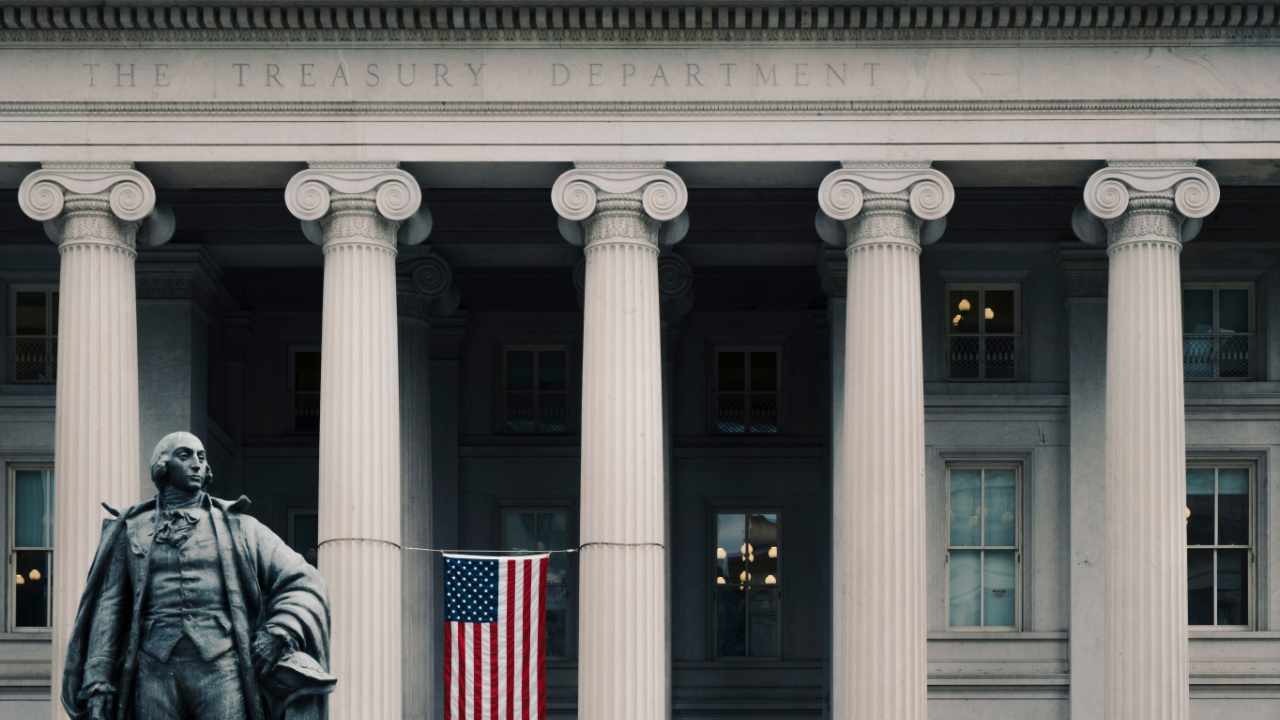
The U.S. Department of the Treasury’s Office of Foreign Assets Control (OFAC) has issued its first-ever sanctions on a crypto mixer. The mixing service was used by Lazarus Group to process illicit proceeds from the $620 million crypto heist of the online game Axie Infinity, said the Treasury Department.
Treasury Department Sanctions Crypto MixerThe U.S. Department of the Treasury’s Office of Foreign Assets Control (OFAC) announced Friday that it has sanctioned crypto mixer Blender.io (Blender). According to the OFAC, this mixing service is used by the Democratic People’s Republic of Korea (DPRK) “to support its malicious cyber activities and money-laundering of stolen virtual currency.”
The announcement explains that on March 23, Lazarus Group, a DPRK state-sponsored cyber hacking group, carried out the largest cryptocurrency heist to date, worth almost $620 million, of a blockchain project linked to the online game Axie Infinity. The OFAC added:
Blender was used in processing over $20.5 million of the illicit proceeds.
The OFAC sanctioned the Lazarus Group on Sept. 13, 2019, and “identified it as an agency, instrumentality, or controlled entity of the government of the DPRK,” the announcement adds. The designation is based on the group’s “relationship to the U.S.- and UN-designated Reconnaissance General Bureau, the DPRK’s premiere intelligence organization.”
Under Secretary of the Treasury for Terrorism and Financial Intelligence Brian E. Nelson commented:
Today, for the first time ever, Treasury is sanctioning a virtual currency mixer.
The investigation by the OFAC also found that Blender facilitated money laundering for Russian-linked malign ransomware groups including Trickbot, Conti, Ryuk, Sodinokibi, and Gandcrab.
The U.S. Treasury Department clarified:
While most virtual currency activity is licit, it can be used for illicit activity, including sanctions evasion, through mixers, peer-to-peer exchangers, darknet markets, and exchanges.
“This includes the facilitation of heists, ransomware schemes, and other cybercrimes,” the Treasury noted.
The announcement details that as a result of the sanctions, all property and interests in property of Blender.io, in the U.S. or in the possession or control of U.S. persons, are blocked and must be reported to the OFAC. Moreover, any entities that are 50% owned or more by one or more blocked persons are also blocked, and all transactions by U.S. persons or within the U.S. involving designated or blocked persons are prohibited.
What do you think about the OFAC sanctioning the crypto mixer? Let us know in the comments section below.
Why this matters
This security story adds another data point to the current market tape and is useful when read alongside nearby source coverage.
Original source
Read on Bitcoin NewsRelated market context

US Justice Department, business groups and DeFi firms challenge Illinois crypto tax
Industry groups argued in court filings that Illinois’ crypto tax, which applies even when a transaction yields no profit, could r...

Ethereum Dancing on Two Fronts as Quantum Upgrade Advances and Treasury Leverage Bites
Ethereum developers want to upgrade the network to be quantum-ready by 2027, potentially accelerating one of its biggest security...

MSCI Cuts Strategy From Global Indexes, Putting Bitcoin Treasury Model Under Pressure
Key Takeaways: Under new classification rules instituted by MSCI, Strategy will be phased out of the global equity index. The chan...

US seizes $1.2 billion frozen after North Korean Binance hack
The US Department of Justice (DoJ) yesterday announced the seizure of $1.2 billion in cryptocurrency stolen from Binance last mont...

New US report reveals yen rescue used euros, not dollars. That matters for Bitcoin
The November 12 report confirms a Treasury reserve-currency trade, leaving leveraged yen borrowing as a potential Bitcoin risk. Re...

USDC Treasury mints 250M USDC on Solana, boosting network liquidity
The increased USDC supply on Solana may alter liquidity dynamics, potentially affecting asset prices and market sentiment on the n...