Yemenis Turn to DeFi as Sanctions Cut Off Traditional Banking: Report
As financial sanctions and conflict continue to destabilize Yemen’s economy, ordinary citizens are increasingly turning to decentralized finance (DeFi) as an alternative to traditional banking systems, according to a new...
Archive context
Older archive item. Useful for background and entity history, but not a fresh market-moving signal.

As financial sanctions and conflict continue to destabilize Yemen’s economy, ordinary citizens are increasingly turning to decentralized finance (DeFi) as an alternative to traditional banking systems, according to a new report by blockchain intelligence firm TRM Labs.
The report, published on April 17, highlights how U.S. sanctions targeting the Houthi group—designated a terrorist organization by Washington—are driving the shift toward crypto.
Conflict Drives Yemenis Toward DeFI Amid Banking CollapseWhile Yemen has historically seen limited adoption of crypto due to weak internet infrastructure and low financial literacy, the ongoing conflict has pushed many to explore new ways of maintaining financial access.
“There are signs of growing interest and usage driven primarily by necessity rather than speculation,” TRM Labs noted.
As many banks in Yemen are inoperable or inaccessible due to the war, cryptocurrencies are providing some residents with a form of financial lifeline.
Yemen has been engulfed in civil war since 2014, pitting the internationally recognized government against the Houthis.
Sanctions by the U.S., most recently targeting the International Bank of Yemen on April 17, have further restricted access to financial services for the general population.
TRM’s data shows that DeFi platforms dominate Yemen’s crypto activity, accounting for over 63% of related web traffic.
In contrast, global centralized exchanges make up just 18%. Peer-to-peer transactions are also playing a key role, especially for cross-border transfers and remittances.
“While these activities may not represent high volumes, they underscore the utility of decentralized systems for individuals facing banking restrictions,” the report explained.
The appeal lies in the ability to transact without intermediaries, which is particularly valuable in areas where local banks are non-functional or distrusted.
Lack of Crypto Regulation in Yemen Could Accelerate Adoption Amid Rising SanctionsCurrently, Yemen lacks any formal regulation on cryptocurrency use.
However, the report suggests that intensifying sanctions could serve as a catalyst for broader crypto adoption in the country.
Following the U.S. government’s reclassification of the Houthis as a Specially Designated Global Terrorist group in January 2024, a Yemen-based crypto exchange monitored by TRM Labs saw a 270% surge in volume.
Although that volume normalized, it spiked again by 223% after Donald Trump’s election and the group’s subsequent relisting as a foreign terrorist organization.
“As traditional financial avenues become increasingly restricted, decentralized digital currencies offer an alternative that is less susceptible to oversight and harder to trace,” TRM concluded.
The firm expects both the scale and sophistication of crypto use in Yemen to increase amid ongoing geopolitical tensions.
This week, the Secret Service seized domains linked to Russian crypto exchange Garantex, freezing $26 million in criminal funds, striking a serious financial blow to cybercriminals worldwide.
Read more: https://t.co/9gcbI0on0p#SecretServiceInvestigates #Cybercrime pic.twitter.com/2qa0QvOsEE
Earlier this month, the U.S. Department of the Treasury imposed fresh sanctions aimed at dismantling the financial networks supporting Yemen’s Houthi movement, with a specific focus on digital currency channels.
In a coordinated move, the Office of Foreign Assets Control (OFAC) blacklisted eight cryptocurrency addresses allegedly controlled by the Houthis, a group officially designated as a Specially Designated Global Terrorist (SDGT) entity.
The post Yemenis Turn to DeFi as Sanctions Cut Off Traditional Banking: Report appeared first on Cryptonews.
Why this matters
This security story adds another data point to the current market tape and is useful when read alongside nearby source coverage.
Original source
Read on CryptonewsRelated market context

EU Banking Regulator Urges Crypto Lending Rules, Floats Leverage Caps and DeFi Certification
The European Banking Authority (EBA) recommended on Sept. 24 that the European Commission consider regulating crypto borrowing and...

Iran’s crypto mining consumes 14% of the country’s electricity deficit, parliamentary report finds
Iran's crypto mining exacerbates energy shortages, impacting citizens' access to essential services and highlighting resource allo...

EU faces September 30 clock to decide future of DeFi loans
The European Banking Authority has asked the European Commission to examine new MiCA rules for crypto firms that connect customers...

Jupiter Exchange COO says DeFi needs 5-10x improvement, not incremental tweaks, to attract real capital
DeFi must significantly outperform traditional finance to attract institutional capital, potentially reshaping financial systems a...

Visa cuts reported stablecoin volume but there’s no proof payments fell
Visa’s September 18 data refresh lowered its adjusted stablecoin volume measure, while its adjusted transaction count fell by less...
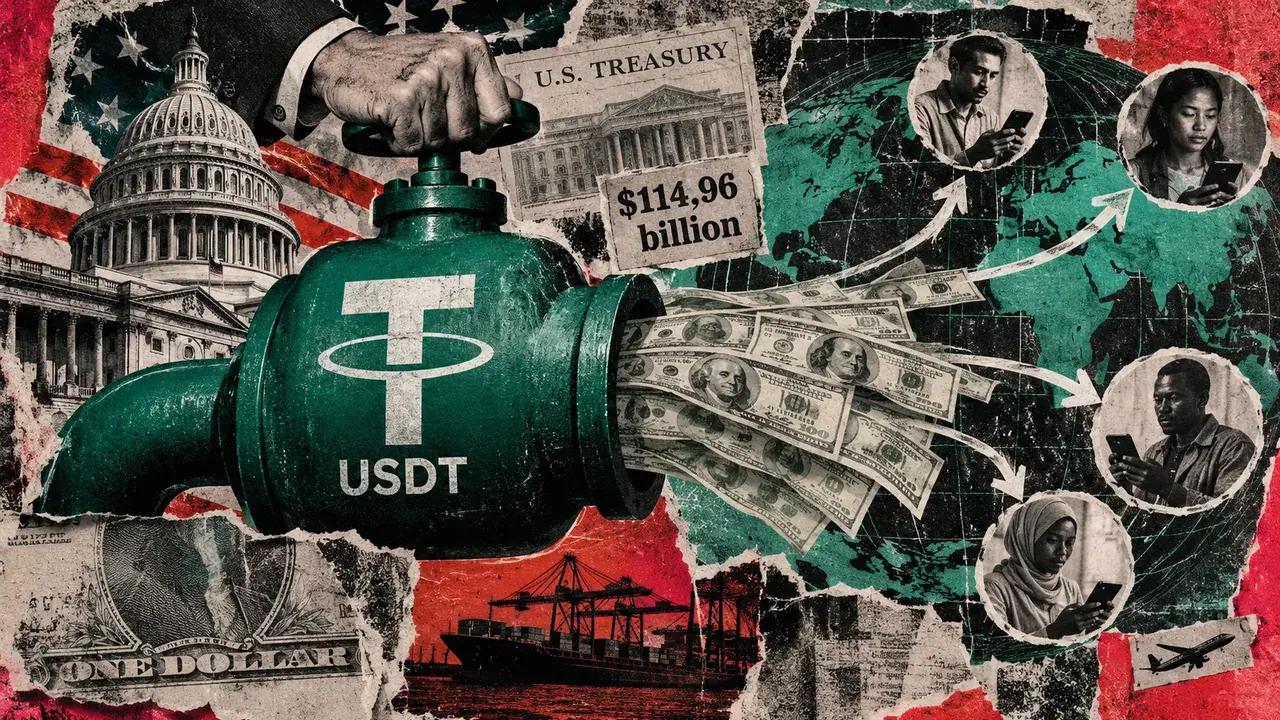
Washington has $114 billion reasons to want Tether around
Not that long ago, Washington fined Tether for misleading people about the dollars behind its tokens. Today, the company's insatia...