Cardano Founder Hoskinson Says Ethereum Is Doomed To Fail: Here’s How
In a wide-ranging CoinDesk interview released yesterday, Cardano founder Charles Hoskinson sharpened a years-long critique of Ethereum’s long-term viability, arguing that the network’s reliance on rollups and external sc...
Archive context
Older archive item. Useful for background and entity history, but not a fresh market-moving signal.
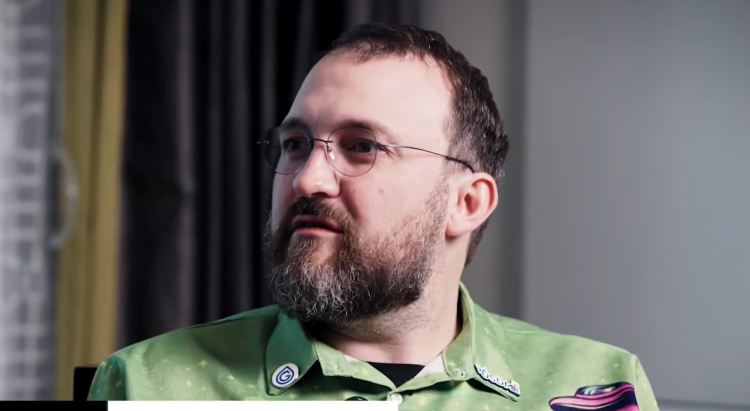
In a wide-ranging CoinDesk interview released yesterday, Cardano founder Charles Hoskinson sharpened a years-long critique of Ethereum’s long-term viability, arguing that the network’s reliance on rollups and external scaling layers has created economic incentives that will ultimately hollow out the base chain. While acknowledging Ethereum’s technical progress, he contended that “as a general-purpose, smart-contract ledger,” the project has nurtured an ecosystem that “will slowly but surely eat [it] alive.”
Why Ethereum Is Doomed To Fail: Cardano FounderHoskinson framed the core problem as one of misaligned incentives between Ethereum’s L1 and its expanding constellation of L2s. “To make Ethereum better, they’ve had to embrace layer twos,” he said. “The layer twos are not strong allies… they’re partners of necessity.”
In his view, rollup teams “don’t particularly care if they’re attached to Solana or they become a layer one,” so if better economics or user growth lie elsewhere, “they could simply migrate or go multi-chain.” New applications and liquidity, he added, are already “outside of the Ethereum ecosystem,” eroding the network’s historical network effects.
“So if they’re gobbling up the transaction volume and gobbling up the users and they’re gobbling up the token appreciation, if there’s a more attractive target, they could simply migrate or go multi-chain,” Hoskinson said, adding that this trend is already observable with LayerZero and Espresso.
That erosion, Hoskinson argued, is set to accelerate as two external forces gather momentum. First, he described Bitcoin DeFi as a “sleeping giant” that could attract “hundreds of billions” in total value once primitives such as stablecoins, DEXs and lending are built with credible security assumptions. “When Bitcoin wakes up… its TVL will be… larger than the market cap of Ethereum,” he said, noting that sovereigns and major asset managers would likely prefer to build around Bitcoin exposure.
Second, he expects large technology platforms and traditional financial institutions to enter with their own infrastructure, adjacent to public chains but not economically dependent on Ethereum’s base layer—“Microsoft… Google… Amazon… have no incentive to go boost Ethereum or deploy on Ethereum,” he said.
The technological arc, in Hoskinson’s telling, also tilts away from shared-state blockchains. As zero-knowledge proofs and “proof-carrying code” mature, more computation can be executed off-chain—in secure enclaves, on devices, or within MPC systems—leaving the chain to verify succinct proofs. “Why… spend billions of dollars a year maintaining this very weak computer that’s shared and replicated,” he asked, “when you can turn it into a distributed problem that runs everywhere?”
Like Microsoft missing mobile and pivoting from Windows dominance to Azure, he suggested, Ethereum may ultimately need to “pivot to a new McGuffin” to retain relevance even if it remains present in the stack.
Notably, Hoskinson’s assessment was not unqualified dismissal. He credited Ethereum for “keeping up with the times,” investing in rollups and zero-knowledge technology, and building a “Goliath” ecosystem that survived early funding scares and the DAO crisis. “They’ve done some really incredible things,” he said, and he allowed that “it’s entirely possible that Ethereum could pivot… and get very good at that” new role. The nub of his skepticism is not competence but structure: in his view, the more rollups succeed, the less compelling the L1 becomes as the economic hub.
The remarks reprise and elaborate on a stance Hoskinson aired earlier this year, when he said during an AMA: “I don’t think Ethereum will survive more than 10 to 15 years,” predicting that L2s would “suckle out all of the alpha.”
Hoskinson’s analysis also folds into his own current bets for Cardano. He cast Bitcoin-centric DeFi as a three-rule design target—security derived from Bitcoin, fees paid in Bitcoin, and yields returned in Bitcoin—and argued that companion chains and trust-minimized bridges will be necessary to make it work. He presented Cardano’s extended-UTXO design and its privacy sidechain Midnight as infrastructure positioned to serve that market while offering selective-disclosure compliance for institutions.
At press time, ADA traded at $0.89.
Why this matters
This altcoin story adds another data point to the current market tape and is useful when read alongside nearby source coverage.
Original source
Read on NewsBTCRelated market context

Binance Founder CZ Backs BNB Chain’s New High-Speed Layer 1 Network
BNB Chain is preparing a new EVM-compatible Layer 1 that will run alongside the main network, using BNB for gas, staking, and gove...

BNB New Layer 1 Puts CZ’s Ecosystem Strategy in Focus as ASTER Builds Its Own Chain
Changpeng Zhao’s vision for a multi-chain crypto ecosystem is coming into sharper focus as BNB Chain develops a new Layer 1 blockc...

Elon Musk’s Grok AI Predicts When Bitcoin Will Finally Hit its Ultimate Price Target
X and SpaceX CEO Elon Musk’s Grok AI predicts something potentially historic could be brewing for Bitcoin by January 1, 2027. This...

Akash Network to migrate from Cosmos to Solana with 98% approval
Akash's migration to Solana may enhance Solana's ecosystem appeal, potentially influencing developer interest and investor confide...

Akash Network proposal to leave Cosmos for Solana shows ~98% support, AKT to become SPL token
Akash Network's shift to Solana could boost AKT's liquidity and integration within a vibrant ecosystem, impacting DePIN sector dyn...

How Solana Supports Fast Crypto Payments in Digital Gaming
Picture a SOL holder on a quiet evening, watching the token tick sideways on a chart that hasn’t done much all week. Rather than r...