Expert Says XRP ‘Haters’ Miss The Bigger Picture: Here’s What It Is
A prominent XRP commentator is pushing back on a familiar critique of Ripple’s business model, arguing that skeptics have the causality backwards when they claim the company sells XRP merely to amass traditional assets....
Archive context
Older archive item. Useful for background and entity history, but not a fresh market-moving signal.

A prominent XRP commentator is pushing back on a familiar critique of Ripple’s business model, arguing that skeptics have the causality backwards when they claim the company sells XRP merely to amass traditional assets. In a post on X on Wednesday, CryptoInsightUK founder Will Taylor said the “haters” are “so close to being right,” but miss what he framed as the single step that changes the entire equation.
What ‘Haters’ Get Wrong About XRPTaylor’s central claim is that Ripple’s token sales are not designed to swap out a volatile crypto asset for safer, conventional holdings. Instead, he described the sales as a means of funding infrastructure and integrations that ultimately increase the token’s long-term utility and value.
“Haters say Ripple sell XRP so they can buy real-world companies and assets, because that’s how Ripple ‘makes money’,” Taylor wrote. “In my opinion, that completely misunderstands the business model and more importantly, the direction of causality. Yes, Ripple monetises some XRP. But not to replace XRP with traditional assets.”
In Taylor’s telling, the misunderstanding starts with treating XRP like operating cash rather than a strategic, asymmetric asset. He argued that a large holder of an asset with outsized upside potential would not logically liquidate it simply to “stack normal companies,” especially if that asset could become worth more than the firm’s balance sheet at scale.
“If you hold roughly 40% of an asset that, at scale, could be worth more than your entire balance sheet, you don’t treat it like operating cash,” he wrote. “You don’t say: ‘Let’s sell the most asymmetric asset we own just to stack normal companies.’ That would be insane.”
From there, Taylor reframed Ripple’s acquisitions, integrations, and buildout efforts not as a pivot away from XRP but as “multipliers” that increase the odds XRP becomes a viable global settlement instrument. Traditional assets, he argued, are inputs to expand distribution, compliance, and liquidity: conditions that would make a bridge asset more useful at institutional scale.
“When Ripple acquires or integrates with firms like Hidden Road, stablecoin infrastructure, or tokenised treasury rails, those assets are not the end goal,” Taylor wrote. “They are multipliers. Those companies are not replacing XRP. They are building the pipes that require XRP to function efficiently.”
Taylor positioned this as a flywheel: XRP sits at the “strategic core” on the balance sheet, Ripple builds a full stack around payments and liquidity, institutions adopt because the rails are complete, and the token becomes a neutral settlement layer whose demand compounds over time. Under that framework, he said, short-term monetization is better understood as capital deployment in service of a long-term network effect rather than straightforward dilution.
“That’s not dilution. That’s capital deployment,” Taylor wrote, adding that if Ripple simply wanted to be “a profitable TradFi-style company,” it would not “obsess over neutral settlement,” keep XRP “architecturally central,” or push it into “regulated institutional rails.”
The distinction matters because it changes how observers interpret Ripple’s incentives. In Taylor’s model, the objective is not to sell the token in order to accumulate off-chain assets; it is to use off-chain assets—licenses, liquidity venues, compliance infrastructure, and institutional integrations—to increase XRP’s necessity as a settlement tool.
“The endgame is not: ‘Sell XRP to buy assets,’” he wrote. “The endgame is: ‘Use assets to make XRP unavoidable.’”
At press time, XRP traded at $1.8773.
Why this matters
This altcoin story adds another data point to the current market tape and is useful when read alongside nearby source coverage.
Original source
Read on NewsBTCRelated market context

Tokenized assets need reliable settlement and ownership rights to win over institutions, says Brickken CEO
Institutional adoption of tokenized assets hinges on robust legal frameworks, reliable settlement systems, and liquidity managemen...

Morgan Stanley projects tokenized assets market could hit $10T by 2030
The projected growth in tokenized assets could revolutionize financial markets, driving innovation and increasing institutional pa...

XRP Price Prediction: Can Ripple Hold $1.40 or is $1.20 Next?
Today’s XRP price prediction centers on Ripple’s expansion into Wall Street financing, reigniting a familiar concern for XRP holde...
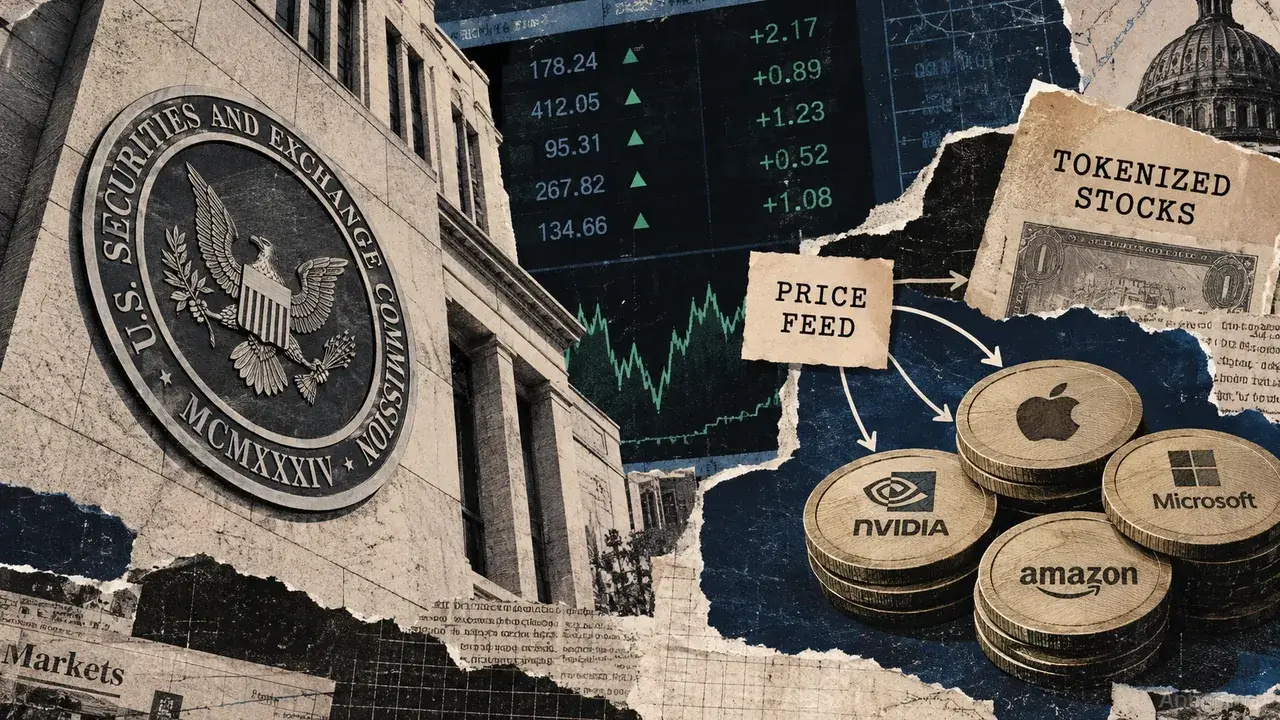
Tokenized stocks can carry the same rights without the same trading protections
Tokenized stocks eligible for the SEC’s September exemption must carry equivalent shareholder rights, yet their trading venues can...
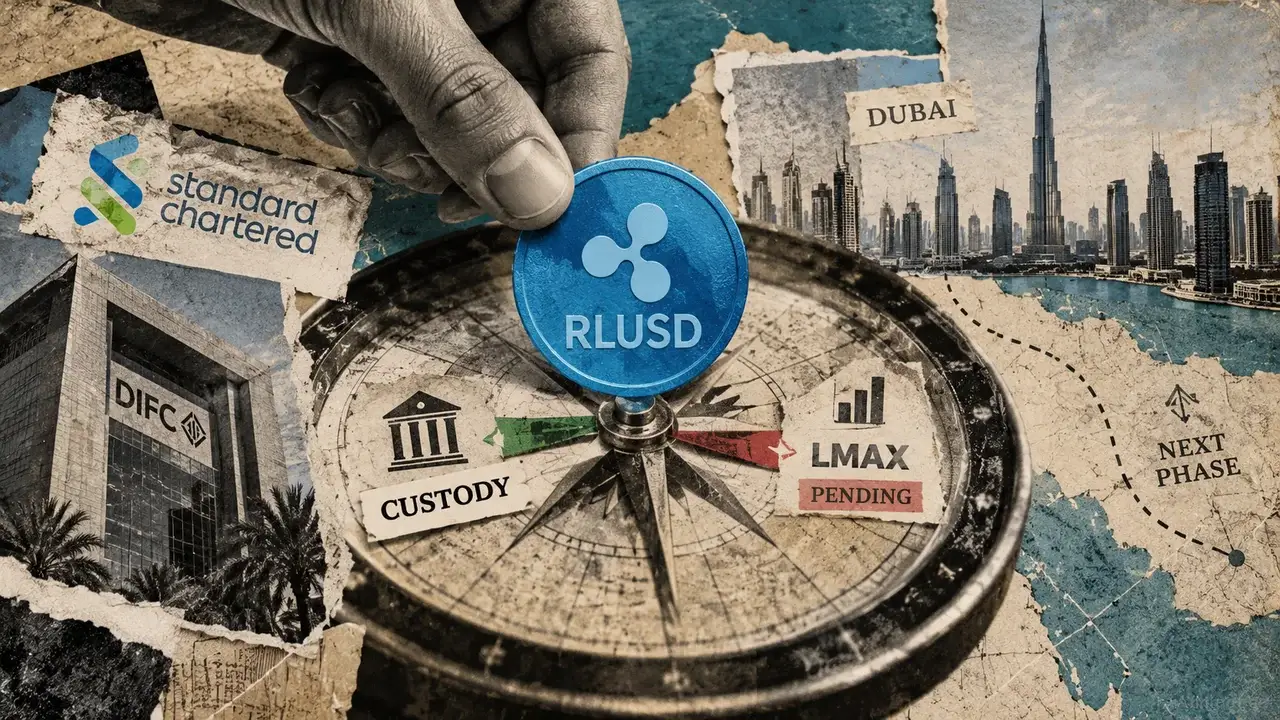
Standard Chartered brings Ripple’s RLUSD into banking custody after $765 million quarterly surge
Standard Chartered has launched custody for Ripple's RLUSD stablecoin as it prepares to expand its use as collateral for instituti...

From TOKEN2049 to Ecosystem Co-Building: HTX Advances Its Multifaceted Engagement Across the Global Crypto Industry
Singapore, October 12, 2026 – From October 6 to 8, the global crypto industry turned its attention to Singapore for TOKEN2049, a m...