Ripple CTO Explains XRP Ledger Crash—Here’s What Happened
Ripple’s Chief Technology Officer, David Schwartz, explained that a “silent network” failure likely caused validators to stop publishing validations, disrupting the consensus process. While the issue was resolved without...
Archive context
Older archive item. Useful for background and entity history, but not a fresh market-moving signal.
Ripple’s Chief Technology Officer, David Schwartz, explained that a “silent network” failure likely caused validators to stop publishing validations, disrupting the consensus process. While the issue was resolved without any loss of user funds, the incident highlighted potential vulnerabilities in XRPL’s infrastructure.
Understanding the Technical FailureAccording to Schwartz, the outage was not caused by a single point of failure but rather a breakdown in communication among validators. The XRPL relies on a federated consensus mechanism where independent validators confirm transactions and maintain the network’s integrity. However, during the incident, validators seemingly stopped publishing their validations, leading to a network-wide drift and an eventual halt in ledger processing.
The XRP ledger outage resulted from a communication breakdown among validators rather than a single point of failure. Source: David Schwartz via X
Schwartz described this as a rare case of a “silent network” failure, where nodes recognize a problem but fail to signal the necessary chatter to reestablish consensus. The network eventually recovered when validator operators manually intervened, setting a stable starting point to allow the system to regain synchronization. Despite the temporary halt, no validated ledgers were lost, as the system’s safety mechanisms prevented unverified transactions from being processed.
Impact on XRP and Market ReactionsFollowing the outage, XRP’s price nosedived for a brief period during the outage, shedding more than 6% as traders reacted to the disruption. The cryptocurrency, which had put up a relatively strong performance prior to this, struggled to immediately regain momentum afterward. The price later stabilized at around $2.50, but the incident revived conversations about how resilient blockchain networks are in processing transactions uninterruptedly.
XRP was trading around $2.53, down 4.31% in the last 24 hours as of press time. Source: XRP Liquid Index (XRPLX) via Brave New Coin
The failure also provided ammunition for XRP’s critics, particularly within the Bitcoin community. Some Bitcoin maximalists were quick to ridicule the outage, claiming that it demonstrated deep-seated weaknesses in XRPL’s architecture.
Technical analysts suggest XRP must survive the $2 support to avoid broader price decline. Source: TheTraderEdge on TradingView
However, Schwartz was quick to counter these claims, pointing out to critics that Bitcoin itself had suffered similar network-level failures in the past. Indeed, there were two such incidents in 2010 and 2013 that resulted in long delays in transactions.
Watch – XRP Price Analysis Lessons from the Outage and Future PrecautionsAlthough XRPL passed the test of failure, the incident showed that blockchain is yet to get more work in order to become absolutely reliable. Schwartz said that “the actual cause of the failure is currently being researched,” but according to the preliminary analysis, a lot of validators probably stopped working just as a precaution rather than because of their technical failure.
The XRP Ledger has resumed processing and validating transactions. Source: Vet on X
In the aftermath of this failure, the development team at Ripple is working towards improving network safeguards to prevent such failures from recurring in the future. The solutions might involve enhanced failover mechanisms among the validators or even improved coordination protocols for reconvergence in case of unexpected splits.
Moving ForwardThe recent XRP Ledger failure serves as a reminder that even well-established blockchain networks are not immune to technical hiccups. However, the network’s ability to recover without any loss of funds demonstrates its inherent resilience. As investigations continue, Ripple’s focus will likely remain on strengthening XRPL’s infrastructure to minimize risks and enhance the reliability of its consensus mechanism. For now, the incident serves as both a learning opportunity and a testament to the ongoing evolution of blockchain technology.
Why this matters
This altcoin story adds another data point to the current market tape and is useful when read alongside nearby source coverage.
Original source
Read on Brave New CoinRelated market context

Ripple Extends NYU Abu Dhabi Blockchain Partnership Through 2027 for XRP Ledger
Key Takeaways: Through 2027, Ripple’s UBRI will provide funding for blockchain research at NYU Abu Dhabi. The funding will increas...

Coinbase Unveils AiFi After $100M in x402 Transactions, Targeting AI Agent Payments
Key Takeaways: Coinbase has announced the launch of its financial infrastructure initiative, AiFi, centered on the new AI agent ec...

Ripple Confirms 75+ Speakers for Swell 2026, Expects 1,500+ Attendees
Ripple has expanded its Swell 2026 speaker lineup with executives from Robinhood, BNY, and Intercontinental Exchange as the compan...
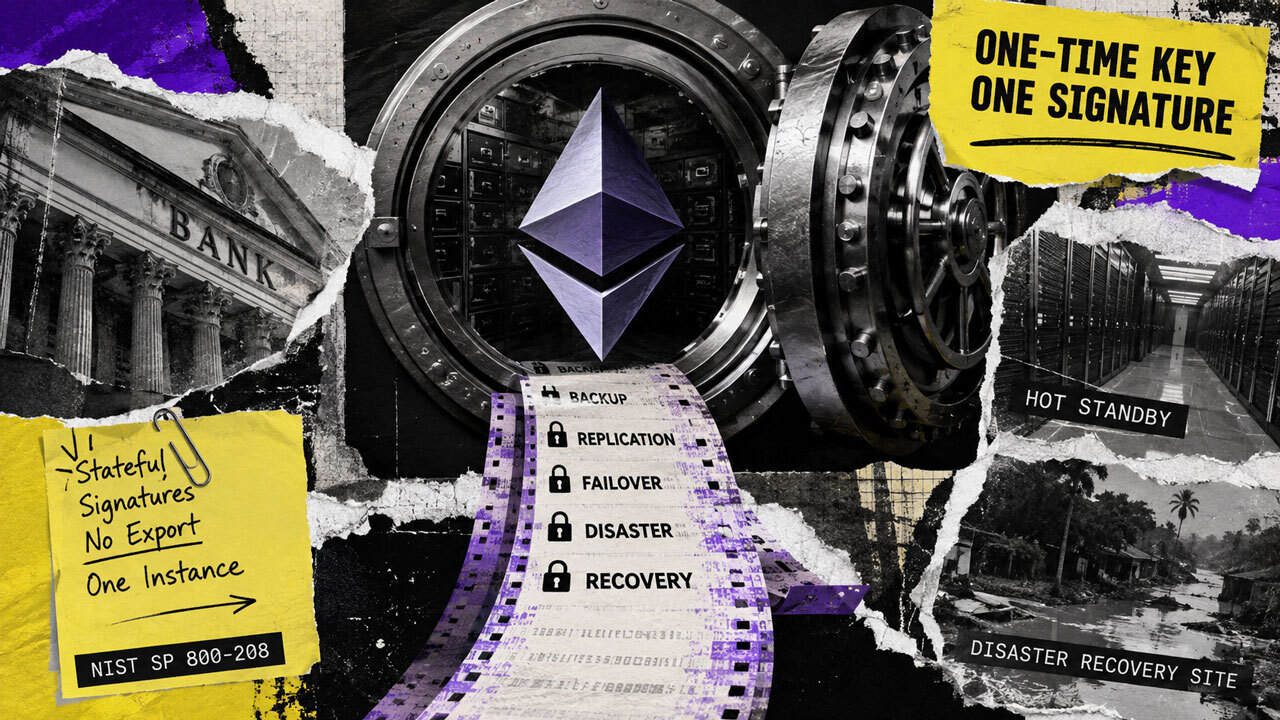
Ethereum’s post-quantum roadmap puts banks on a 2027 deadline nobody is talking about
Ethereum's post-quantum migration could create a problem for regulated banks years before any quantum computer poses a real threat...

MoneyGram’s 60M-Customer Network Goes Live on Solana
Key Takeaways: MoneyGram Ramps has now launched on Solana via a single API. Multi-country services include cash to crypto and cryp...

Navi Protocol introduces NAVI Prime lending framework on Sui Network
NAVI Prime's tailored risk frameworks could enhance capital efficiency and market resilience, potentially reshaping DeFi lending d...