Ripple-Hidden Road Deal: Crypto Prime Brokers Leave Banks Behind
Ripple has agreed to buy Hidden Road, a crypto prime broker, in a deal worth $1.25 billion. It is one of the largest acquisitions in the crypto sector—behind only Kraken’s $1.5 billion purchase of NinjaTrader and slightl...
Archive context
Older archive item. Useful for background and entity history, but not a fresh market-moving signal.

Ripple has agreed to buy Hidden Road, a crypto prime broker, in a deal worth $1.25 billion. It is one of the largest acquisitions in the crypto sector—behind only Kraken’s $1.5 billion purchase of NinjaTrader and slightly ahead of Stripe’s $1.1 billion deal for Bridge. A separate $1.2 billion deal, involving Galaxy Digital’s interest in BitGo, was discussed but never finalised.
The Ripple-Hidden Road agreement highlights two key points: the rising dominance of crypto prime brokers and the growing role of stablecoins.
While the stablecoin side involves enabling Ripple’s stablecoin to be used as collateral across Hidden Road’s services, the real takeaway is the increasing importance of prime brokers.
You may also like: “The Knee on Crypto's Neck is Lifting”—Hidden Road's Higgins on MiCA, Industry's Future
Institutions Drive Demand for Prime Brokers
Prime brokers play a key role in financial markets, including the growing crypto sector, by offering a full range of services such as trading, custody, and lending to major institutions like hedge funds, banks, and private equity firms.
Banks are major players in the prime brokerage industry. Their global reach, access to capital, and strong risk systems make them well-suited to support institutional trading needs. However, when it comes to crypto, banks are hesitant to act as prime brokers due to regulatory uncertainty, high market volatility, and concerns around custody and compliance. The lack of clear rules and the risk of exposure to unregulated assets make traditional banks cautious about entering the crypto prime brokerage space. Goldman Sachs is a classic example which re-launched its traditional prime brokerage services in 2020 but has been slow to expand into crypto.
As traditional banks have been slow to engage with crypto risks, crypto-focused prime brokers have stepped in to meet growing institutional demand. Hidden Road, founded in 2018 by Marc Asch, offers clearing, prime brokerage, and financing across foreign exchange, digital assets, derivatives, swaps, and fixed-income markets.
🚨 Here is the full speech of @MonicaLongSF about @Ripple acquiring Hidden Road for $1.25B👇How RLUSD will be used ?!Will XRP be involved in this deal ?Is volume on the XRPL going to explode ?Check and repost the video guys 👇 pic.twitter.com/knOQ1WP7aM
— Arthur (@XrpArthur) April 8, 2025Because these services need large amounts of capital, Ripple has agreed to inject billions into Hidden Road to provide immediate scale and meet market demand.
Hidden Road currently clears $3 trillion annually across all markets and serves over 300 major institutional clients. With Ripple’s backing, the broker plans to grow its capacity to serve even more clients in the future.
You may also like: “Demand from Very Large Institutions” Drives Hidden Road's Fixed Income Launch in 2025
A Growing Group of Prime Broker Unicorns
Hidden Road is not the only billion-dollar crypto prime broker. FalconX, backed by GIC, leads the pack with an $8 billion valuation. It posted record growth in Q2 2024, with revenue increasing 2.5 times compared to the same period in 2023. According to its website, FalconX had completed over $1.5 trillion in trading volume by the end of 2023 and serves more than 600 institutional clients.
Matrixport is another unicorn in the space, valued at over $1 billion. Last September, it acquired the asset management arm of Crypto Finance, which is owned by Deutsche Börse Group.
New firms are also entering the space. Last year, Tim Grant—former CEO of SIX Digital—launched a crypto prime brokerage and now leads the $1 billion investment firm Deus X Capital as its CEO.
“Traditional banks will eventually offer crypto prime brokerage services after regulatory clarity,” Grant told Financial News. “But that’s not happening in the next two to three years. It will take time. Crypto-native brokers now understand how far behind the traditional players are, and they’re making the most of that.”
Meanwhile, established names like Coinbase are also focusing on institutional clients. In Q4 2024, the Nasdaq-listed exchange earned $141 million in institutional transaction revenue, a 156 per cent rise from the previous quarter.
In its shareholder letter, Coinbase added that its “onboarding pipeline remains strong” as more top clients adopt its Prime services across custody, trading, financing, and staking.
This article was written by Arnab Shome at www.financemagnates.com.Why this matters
This altcoin story adds another data point to the current market tape and is useful when read alongside nearby source coverage.
Original source
Read on Finance MagnatesRelated market context

Uphold survey shows 75% of US banks are building blockchain services
Blockchain adoption in US banks signals a transformative shift towards digital finance, promising enhanced efficiency and customer...

PrimeXBT Adds 15 New Crypto Futures, Taking the Total to Over 170
Castries, Saint Lucia, September 29th, 2026, Chainwire PrimeXBT, a global multi-asset broker and crypto assets service provider, h...

Brazil’s CSD BR partners with Ripple to mirror securities records on XRP Ledger
This integration could pave the way for broader blockchain adoption in traditional finance, enhancing transparency and efficiency...
Soluna And Bitdeer Add 7 MW To Texas Bitcoin Mining Deal
TL;DR Soluna and Bitdeer have expanded their Project Kati 1 agreement by approximately 7 MW. Bitdeer’s total deployment at the win...
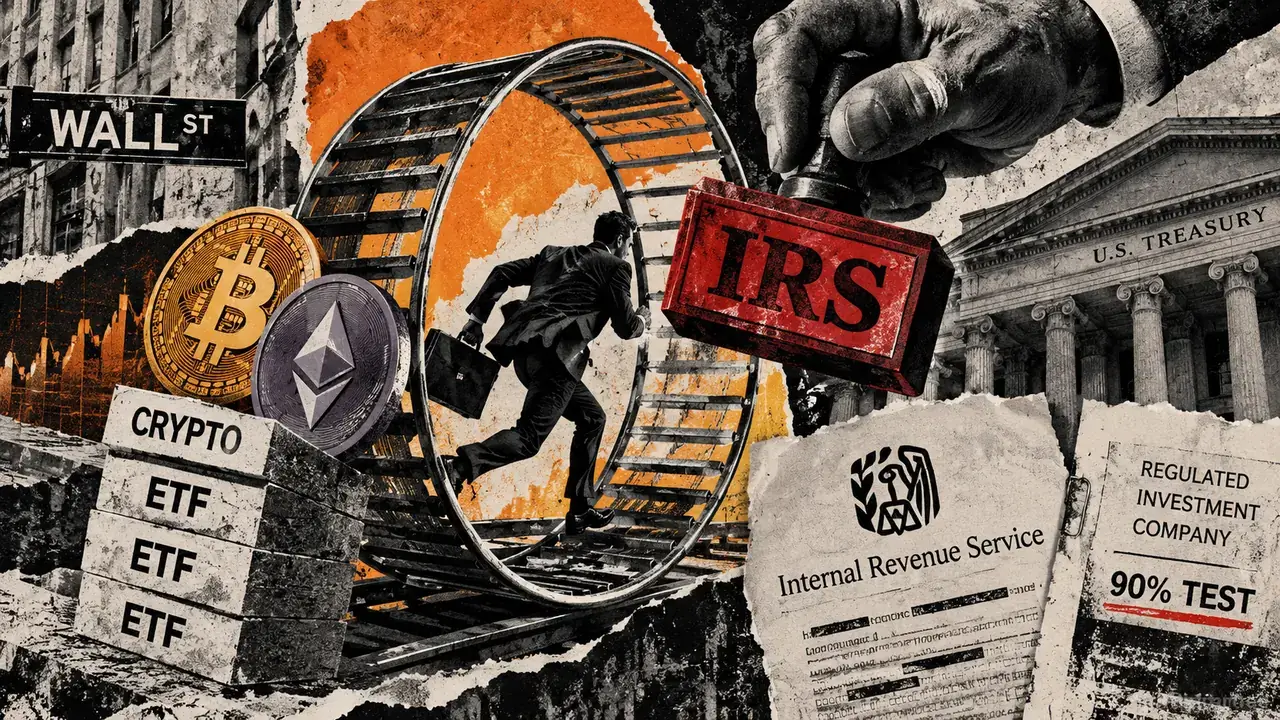
A $7 billion crypto ETF plumbing boom just ran into the IRS
The Internal Revenue Service (IRS) is scrutinizing a crypto-linked ETF tax strategy as Washington intensifies its campaign against...

Spot Bitcoin ETFs see $3B in purchases over 9 days as institutional appetite returns
Institutional interest in Bitcoin ETFs signals renewed confidence, potentially stabilizing the crypto market and encouraging furth...