Solana-based Perpetual Swaps Exchange Drift Raises $3.8M
Imagine BitMEX was decentralized and built on Solana, and you begin to understand Drift Protocol’s North Star. And with $3.8 million in fresh capital in hand, the project is inching closer to its objective. The funding r...
Archive context
Older archive item. Useful for background and entity history, but not a fresh market-moving signal.

Imagine BitMEX was decentralized and built on Solana, and you begin to understand Drift Protocol’s North Star. And with $3.8 million in fresh capital in hand, the project is inching closer to its objective.
The funding round was led by Multicoin Capital, with Alameda Research, QCP Capital, Robot Ventures, Jump Capital, Not3Lau, and a host of other angel investors joining.
Despite the similarities to heavyweights BitMEX, there are some key differences between the emerging DeFi project and the crypto exchange which, at press time, has processed nearly $2 billion trading volume in the last 24 hours.
What is Drift?First, Drift uses a variation of an automated market maker (AMM) rather than an orderbook to fill traders’ orders. The design choice is found throughout crypto, but most decentralized exchanges (DEXs) opt for an AMM. Despite AMMs gaining popularity, there is still a trade-off.
Each time a trade is made on an AMM platform like Uniswap or Drift, traders must be mindful of pesky slippage. Slippage refers to the difference in price between the order placed and the order which is executed. During times of volatility, for example, the gap between these two figures can be large, leaving traders in the lurch. Slippage is particularly noticeable on exchanges that use the AMM model and may not have deep enough liquidity.
Total Value Locked in DeFi on Solana Hits Record High of $12.7BThough order book exchanges still suffer from slippage, the effects are dulled due to the presence of third-party market makers. Oftentimes though, market makers will take a small fee for ensuring trades are executed as accurately as possible.
Herein lies the tradeoff: Should traders bear the brunt of slippage, potentially losing a percentage of their trade, or should market makers be compensated for ensuring slippage is limited?
The latter is what Cindy Leow, co-founder of Drift, calls “market maker extractible value.” What’s more, Leow and her team have opted for a Dynamic Automated Market Maker (DAMM) to try and achieve the best of both worlds. “It delivers the capital efficiency of a deep, robust market with the always-on extensibility of an AMM while giving traders the features they want, like cross-margining and leverage,” she said. “In our DAMM testnet, Drift created at least 10x better capital efficiency over the existing options in the market.”
A percentage of any slippage that does inevitably occur will be put towards the platform’s insurance fund, Leow told Decrypt. “Slippage fees will make up most of the fund’s contributions,” she said. “But trading fees and liquidation fees will also be added to the fund.”
4/ Community Q #1
How does the funding rate mechanism work?
The insurance fund will fill funding imbalances between longs and shorts. Every time a user interacts with the AMM, it pays out the funding each user owes from the user’s collateral account.
— Drift Protocol (@DriftProtocol) July 26, 2021
The latest funding round will assist with providing initial liquidity to cushion any major slippage risks as well as secure the insurance fund.
Drift launched yesterday on an alpha mainnet, but only those who hold a Drift Alpha Ticket non-fungible token (NFT) are able to access the platform. These NFTs were distributed to early Discord users as well as other members of Solana’s DeFi ecosystem.
Why this matters
This altcoin story adds another data point to the current market tape and is useful when read alongside nearby source coverage.
Original source
Read on DecryptRelated market context

Solana Perps Exchange Drift Opens Recovery Token Claims for Users Who Lost Over $290 Million
The Drift Foundation opened claims and redemptions on Thursday for DFX, a Solana token issued to users of the perpetuals exchange...

Cardano’s DeFi has shrunk by more than half and RealFi is betting credit can revive it
Cardano’s “bank the unbanked” push went live with RealFi, putting real-world credit behind a new dollar-token system. On Oct. 1, R...
Ethereum Layer 2 Blast Is Shutting Down, Saying Costs Now Exceed What the Chain Earns
Blast, the Ethereum layer 2 network created by Blur founder Tieshun “Pacman” Roquerre, is shutting down, its team announced on X o...
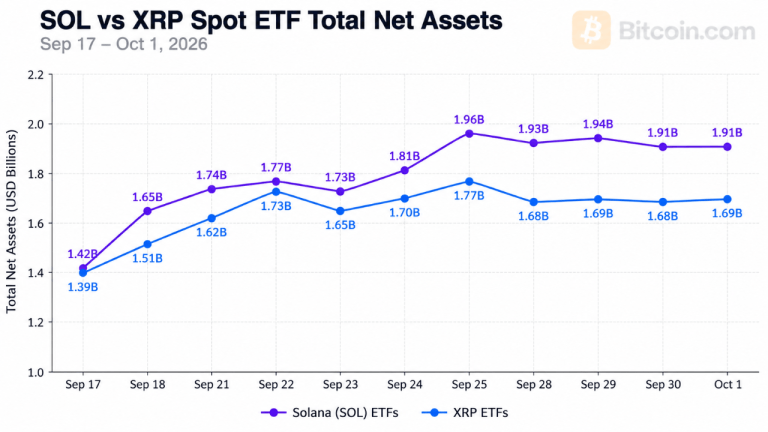
Solana ETFs Overtake XRP Funds With $1.91 Billion in Assets
Solana ETFs have overtaken XRP products in total net assets after an eight-day inflow streak brought in nearly $254 million. The s...

Following the Bitget Hack: BitOK Traces 87.8 BTC as Stolen Funds Reach Mixers
Research and reporting by Alexander Manev, BitOK. Reporting and adaptation by Brave New Coin. Investigators following the Bitget h...

XRP Price Prediction: Ripple Range-Bound at $1.50, Breakout Soon?
XRP price prediction shows Ripple entering October still trading within a broad range. XRP is currently around $1.50, with key res...