Solana Hits All-Time High of $260
Solana set another all-time high last night. Just two days after the Ethereum competitor crossed the $250 threshold, prices surged yet again, taking Solana to $260 by 9.39PM UTC. At the time of writing, it trades for $25...
Archive context
Older archive item. Useful for background and entity history, but not a fresh market-moving signal.

Solana set another all-time high last night. Just two days after the Ethereum competitor crossed the $250 threshold, prices surged yet again, taking Solana to $260 by 9.39PM UTC. At the time of writing, it trades for $251.53, a 3.32% pullback, but still 35% higher than it was seven days ago.
Today’s news adds further excitement to what has been a momentous week for the rising currency. On Tuesday, Solana flipped Cardano to become the fourth-largest cryptocurrency by market capitalization, and then on Thursday it reached prices of $250.
It’s also worth noting that the total value locked in decentralized finance protocols on Solana is also sailing at a record high of $15.14 billion, according to DeFi data aggregator DeFiLlama.
All these great tidings come just in time for the first day of the Solana’s Foundation’s inaugural conference. Breakpoint is on in Lisbon until Wednesday. Guest speakers include Solana CEO Anatoly Yakovenko, Coinshares CSO Meltem Demirors and FTX CEO Sam Bankman-Fried.
What is Solana?Solana was founded in 2017, and the mainnet officially launched in March 2020. Designer Anatoly Yakovenko enabled smart contract technology (self-executing financial contracts, initially popularized by Ethereum) on the Solana blockchain to support the creation of decentralized finance products and decentralized applications (dApps).
Solana claims to be a much more scalable and cheaper alternative to Ethereum. Ethereum currently suffers from what’s known as a ‘transactions bottleneck’, meaning that the network can only handle about 12-14 transactions a second. Solana claims to be able to handle 50,000 TPS, which makes it one of the speediest blockchains on the market.
Moreover, Solana has pretty fast block times too. In cryptospeak, ‘block time’ is a measurement of time indicating how long it takes to produce a ‘block’. A block is a file containing a list of transactions on the network over a given period. Solana claims it can finish a block in a little over 400 milliseconds.
In addition to dapps, Solana is also capable of hosting NFTs. NFTs on Solana aren’t as big as Ethereum NFTs, but there’s plenty of room for growth. Last month, sales of a Tungsten Cube NFT on Solana raised $100,000 for crypto lobbying organization Coin Center.
Solana is faster and cheaper than its competitors, and it’s constantly getting lots of TLC from its developers. This week’s news positions Solana as the solid frontrunner for the title of “Ethereum killer.”
The views and opinions expressed by the author are for informational purposes only and do not constitute financial, investment, or other advice.Why this matters
This altcoin story adds another data point to the current market tape and is useful when read alongside nearby source coverage.
Original source
Read on DecryptRelated market context

Ethereum Layer 2 Blast Is Shutting Down, Saying Costs Now Exceed What the Chain Earns
Blast, the Ethereum layer 2 network created by Blur founder Tieshun “Pacman” Roquerre, is shutting down, its team announced on X o...
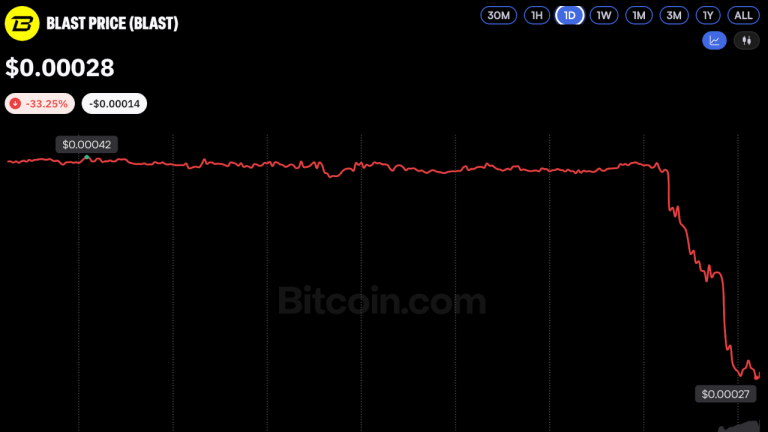
Ethereum Layer 2 Network Blast to Shut Down After Revenue Collapse
Blast, a once-buzzy Ethereum Layer 2 network, is set to shut down later this month after a dramatic decline in activity left the s...

Once a $2 billion Ethereum layer-2, Blast is shutting down after assets plunge 98%
Once home to more than $2 billion in crypto assets, Blast is shutting down as activity fades, costs rise, and bigger platforms lik...

Cardano’s DeFi has shrunk by more than half and RealFi is betting credit can revive it
Cardano’s “bank the unbanked” push went live with RealFi, putting real-world credit behind a new dollar-token system. On Oct. 1, R...

Following the Bitget Hack: BitOK Traces 87.8 BTC as Stolen Funds Reach Mixers
Research and reporting by Alexander Manev, BitOK. Reporting and adaptation by Brave New Coin. Investigators following the Bitget h...

XRP Price Prediction: Ripple Range-Bound at $1.50, Breakout Soon?
XRP price prediction shows Ripple entering October still trading within a broad range. XRP is currently around $1.50, with key res...