XRP’s role in US Digital Asset Stockpile raises questions on token utility — Does it belong?
Ripple’s XRP (XRP), the third-largest cryptocurrency by market cap, gained national recognition after President Donald Trump mentioned the “valuable cryptocurrency” alongside BTC, ETH, SOL, and ADA as part of a planned U...
Archive context
Older archive item. Useful for background and entity history, but not a fresh market-moving signal.

Ripple’s XRP (XRP), the third-largest cryptocurrency by market cap, gained national recognition after President Donald Trump mentioned the “valuable cryptocurrency” alongside BTC, ETH, SOL, and ADA as part of a planned US strategic crypto reserve.
Trump’s executive order on March 6 established a new structure for the altcoins — the Digital Asset Stockpile, managed by the Treasury.
While the crypto community remains divided on whether XRP is truly as valuable as President Trump suggests, a closer look at the altcoin’s utility is warranted.
XRP’s potential role in bankingLaunched in 2012 by Ripple Labs, the XRP Ledger (XRPL) was designed for interbank settlements. It initially offered three enterprise solutions: xRapid, xCurrent, and xVia, all later rebranded under the RippleNet umbrella. XCurrent is real-time messaging and settlement between banks, xVia is a payment interface allowing financial institutions to send payments through RippleNet, and xRapid, now part of On-Demand Liquidity (ODL), facilitates cross-border transactions.
Only ODL actually requires XRP; the other services allow banks to use RippleNet without ever holding the token. This means bank adoption of Ripple technology does not always drive XRP’s price.
Some of the world’s largest banks have used xCurrent and xVia, including American Express, Santander, Bank of America, and UBS. There is less data on the entities that use XRP-powered ODL service. Known adopters include SBI Remit, a major Japanese remittance provider, and Tranglo, a leading remittance company in Southeast Asia.
XRP’s role in Web3XRP is also used as a gas token. However, unlike the Ethereum network, where fees go to validators, a small amount of XRP is burned as an anti-spam mechanism.
XRP’s role in Web3 is minimal. Unlike Ethereum, Ripple does not support complex smart contracts or DApps. It offers only basic Web3 functionality, such as a token issuance mechanism and native NFT support under the XLS-20 standard, introduced in 2022.
The XRPL Web3 ecosystem is small. Its modest DeFi sector holds $80 million in total value locked (TVL), according to DefiLlama. XRPL’s tokens have a combined market cap of $468 million, according to Xrpl.to. Most of them are DEX tokens (SOLO) and memes (XRPM), as well as wrapped BTC and stablecoins.
So far, XRPL’s Web3 sector remains niche and trails true smart contract platforms like Ethereum and Solana.
Related: SEC delays decision on XRP, Solana, Litecoin, Dogecoin ETFs
Crypto pundits split hairs on XRP’s role in a strategic reserveRipple Labs representatives have long advocated for equal treatment of cryptocurrencies, with CEO Brad Garlinghouse reiterating this on Jan. 27.
Garlinghouse said,
“We live in a multichain world, and I’ve advocated for a level-playing field instead of one token versus another. If a government digital asset reserve is created—I believe it should be representative of the industry, not just one token (whether it be BTC, XRP or anything else).”However, not all cryptocurrencies serve the same purpose. Bitcoin’s primary role is to be a “geopolitically neutral asset like gold,” in the words of crypto analyst Willy Woo. XRP’s purpose remains less clear, but few in the crypto space would argue that it could qualify as independent money.
This is primarily due to one of Ripple’s most uncomfortable aspects—its permissioned nature. Unlike Bitcoin or Ethereum, Ripple does not rely on miners or staked tokens to secure the network. Instead, it uses a Unique Node List—a group of trusted validators responsible for approving transactions. While this optimizes speed and efficiency, it raises concerns about censorship, corruption, and security risks.
Bitcoin proponent and co-founder of Casa Jameson Lopp didn’t hold back when discussing XRP’s potential:
“There’s Bitcoin, then there’s Crypto, then there’s Ripple. Ripple has attacked Bitcoin at a level rivaled only by BSV’s lawsuits. Ripple explicitly wants to power CBDCs. They have always been focused on servicing banks. Few projects are as antithetical to Bitcoin.”There’s no love lost between Bitcoiners and Ripple supporters, especially after Ripple co-founder Chris Larsen partnered with Greenpeace to fund an anti-Bitcoin campaign.
However, Lopp’s comparison to CBDCs holds some weight, given XRPL’s permissioned nature. It reflects a common view in the crypto community that XRP functions more like a banking tool than a truly independent cryptocurrency.
While the XRPL blockchain sees widespread use in banking, XRP’s utility remains a point of concern. It is underscored by the fact that approximately 55% of the 100 billion pre-mined coins are still held by Ripple Labs. This concentration raises concerns about potential market manipulation and the coin’s long-term stability.
This article is for general information purposes and is not intended to be and should not be taken as legal or investment advice. The views, thoughts, and opinions expressed here are the author’s alone and do not necessarily reflect or represent the views and opinions of Cointelegraph.
Why this matters
This altcoin story adds another data point to the current market tape and is useful when read alongside nearby source coverage.
Original source
Read on CointelegraphRelated market context
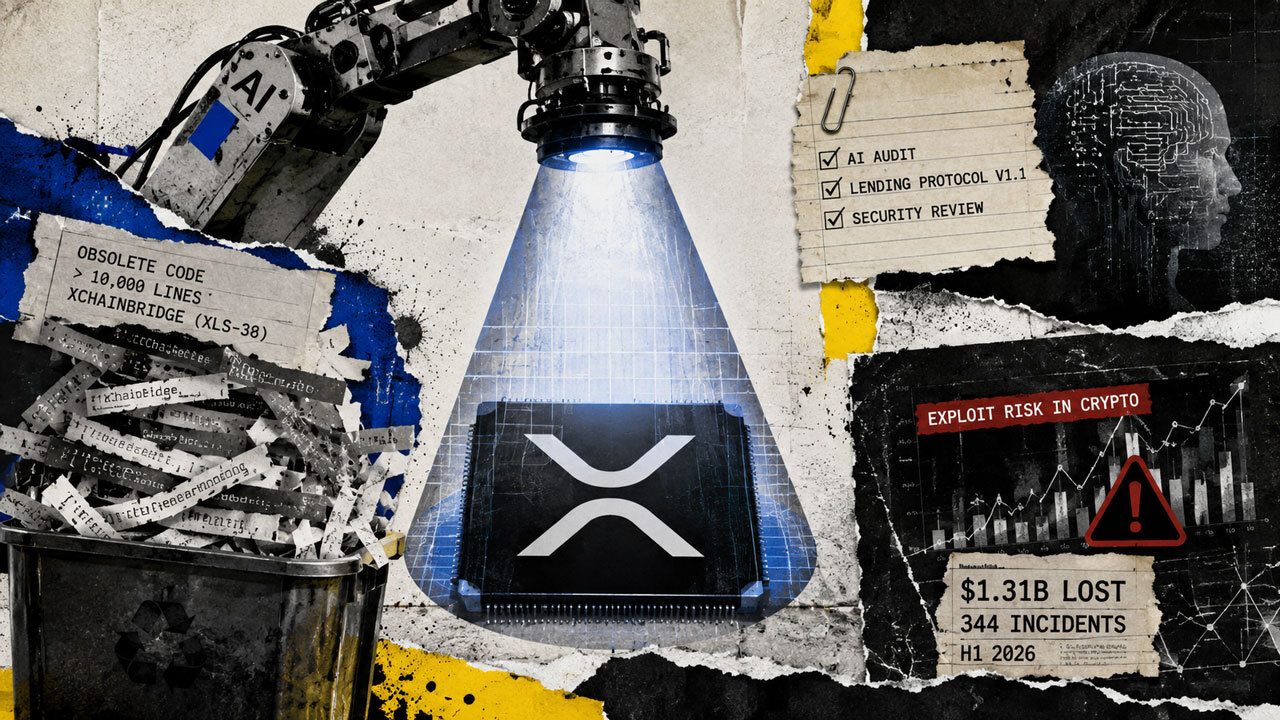
Ripple moves to shrink XRP Ledger attack surface as AI audit tests lending push
Ripple is moving to shrink the XRP Ledger’s (XRPL) attack surface as it prepares to expand native lending. The company has recomme...
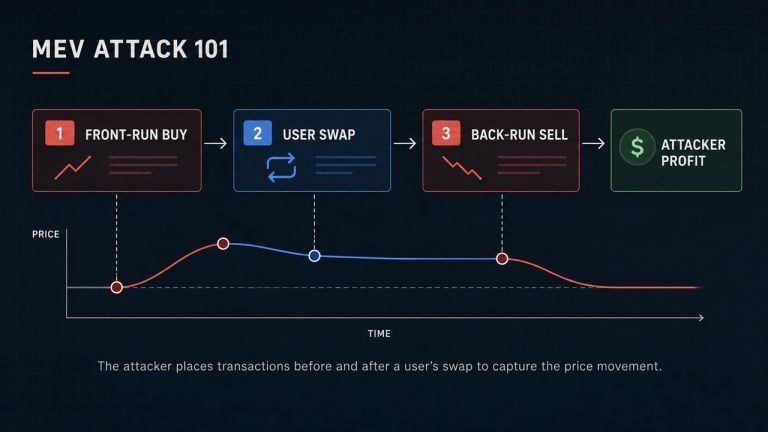
MEV Explained: Ethereum’s Top Sandwich Bot Made $295M, Then Lost $7.5M
A single Ethereum contract has pulled in more than 117,000 ETH, roughly $295 million at current prices, sandwiching other traders...

Sberbank plans crypto-backed loans using Bitcoin, Ethereum and Tether
Sberbank's crypto integration signals a major shift in Russia's financial landscape, potentially challenging global regulatory nor...

Ethereum core developers schedule EIP-8141 for Hegotá upgrade
EIP-8141's inclusion in the Hegot upgrade enhances Ethereum's competitiveness by simplifying user transactions and future-proofing...

Ethereum ETFs see 10 straight days of net inflows as Bitcoin streak snaps
Ethereum's sustained ETF inflows highlight growing institutional confidence, potentially shifting investment dynamics and competit...

Stanford’s Dan Boneh warns quantum computers could crack Bitcoin and Ethereum sooner than expected
The potential for quantum computers to compromise current cryptographic systems could necessitate urgent, careful adaptation in bl...