Adam Back’s 30,021 BTC Bitcoin treasury deal just lost the funding structure holding it together
Cantor Equity Partners I and BSTR said they will not close Adam Back's 30,021-BTC treasury deal under the July 2025 agreement. One of the market’s most visible Bitcoin treasury launches is now stuck rebuilding its financ...
Archive context
Older archive item. Useful for background and entity history, but not a fresh market-moving signal.

Cantor Equity Partners I and BSTR said they will not close Adam Back's 30,021-BTC treasury deal under the July 2025 agreement.
One of the market’s most visible Bitcoin treasury launches is now stuck rebuilding its financing before BSTR can reach public investors.
In a July 8 Form 8-K, Cantor Equity Partners I said it and BSTR are discussing a revised structure and amended terms for the proposed business combination. The filing said the companies will not complete the deal under the terms in the original agreement, and that the pending private placements tied to the transaction will not be required to be consummated.
The accompanying company update said the revised structure and terms are intended to better reflect current market conditions. The same update said the shareholder meeting scheduled for July 10 has been postponed indefinitely, while any public shares submitted for redemption will be returned and will not be redeemed.
The financing reset is where the Bitcoin treasury trade meets reality. Before BSTR can worry about how its shares perform, it has to prove investors will still fund the launch on workable terms.
Related Reading Bitcoin treasury investors are turning on companies diluting them to keep buying For two years, buying more Bitcoin was enough to lift a treasury stock. Strategy's BTC Yield is now sliding, Metaplanet sits below the value of its coins, and Europe's new entrants are asking investors to fund them on terms nobody has priced yet. Jun 29, 2026 · Andjela Radmilac The old deal was built around scaleBSTR's original pitch rested on size and access to financing. A July 2025 SEC-filed company release said BSTR was expected to launch with 30,021 Bitcoin on its balance sheet, up to $1.5 billion of fiat PIPE financing, 5,021 Bitcoin in an in-kind PIPE, 25,000 Bitcoin from founding shareholders, and up to about $200 million from Cantor Equity Partners I, subject to redemptions.
The same release tied the vehicle to Adam Back as BSTR's chief executive and co-founder of Blockstream. It also framed BSTR around a Bitcoin-per-share mandate, not just a passive holding-company model.
The detailed business-combination filing shows that the 30,021 BTC figure is made up from separate components: a 25,000 BTC seller contribution, a 4,156.11 BTC CEPO Bitcoin equity PIPE, and an 865 BTC Newco equity PIPE. The same filing described cash equity, convertible notes, preferred stock, and Bitcoin-denominated commitments that depended on the transaction reaching closing.
Those commitments did the heavy lifting, turning a large Bitcoin stack into a vehicle built for public-market funding. The original structure combined common equity, convertible notes, preferred stock, Bitcoin-funded subscriptions, and a SPAC shareholder base with redemption rights across several investor groups.
Once the July 8 update said the existing private placements do not have to close, the question changed from whether BSTR had announced enough capital to whether fresh terms can pull that capital back in.
That also changes the role of the postponed shareholder meeting. Postponing the vote would be procedural in itself. Returning the shares submitted for redemption while the parties renegotiate is more consequential because the public float, CEPO cash contribution, and shareholder base remain unresolved. Those variables are exactly what a Bitcoin treasury company needs to settle before it can credibly promise expansion.
That structure made BSTR more than another company saying it wanted Bitcoin. It was a test of whether Bitcoin treasury promoters could combine stock-market access, PIPE capital, in-kind Bitcoin commitments, and public shareholders into a single funding machine.
Now the old machine has to be rebuilt or replaced.
Related Reading A US Bitcoin treasury company sold every BTC because debt and Nasdaq pressure just closed in New SEC filing ties a full BTC liquidation to debt repayment, collateral language, Nasdaq pressure and an AI pivot. Jul 2, 2026 · Liam 'Akiba' Wright The reset puts investors back in controlBSTR and Cantor are still negotiating, with the original terms now off the table.
If the parties reach a revised agreement, additional SEC filings are expected to amend or supplement the registration statement and proxy materials. The next filings will show how much of the original deal is still standing, including the Bitcoin stack, the PIPE commitments, and the price investors now demand to fund it.
They will also show how much demand remains for a digital asset treasury company, even as Bitcoin is not making the launch easy.
CryptoSlate's Bitcoin market page showed BTC trading near $63,688 on July 12, with a market capitalization of roughly $1.27 trillion and about 58% dominance in the broader crypto market. That backdrop is not catastrophic for Bitcoin, but it is very different from a market that treats treasury vehicles as automatic upside.
CryptoSlate readers have already seen the pressure points in other treasury structures. Recent coverage has focused on dilution and Bitcoin-per-share economics, preferred-stock stress at Strategy, and the broader point that treasury companies are really funding stacks with Bitcoin wrappers.
BSTR raises the same question in the process. Instead of asking whether the stock will trade at a premium after trading begins, the reset asks whether the premium assumptions still finance the company before investors ever receive a listed share.
Related Reading Strategy bought time but Bitcoin’s next cycle may need buyers beyond Saylor Strategy may not become a major seller, but its ability to keep driving Bitcoin demand is under fresh scrutiny. Jul 3, 2026 · Oluwapelumi AdejumoFor a company that measures success in Bitcoin per share, that distinction is central. Capital that arrives at a lower valuation, with higher yield demands, heavier dilution, or fewer Bitcoin commitments can change the economics, even if the deal still closes. The amended filing will therefore be read less like a relaunch notice and more like a market-clearing document.
That makes the forthcoming terms more important than the vehicle's branding. Investors do not have to reject Bitcoin to demand a different price for balance-sheet exposure, redemption risk and future capital calls.
The next filing is the testThe companies' own risk language points to the variables that now matter. The July 8 filing and release cite risks related to public-shareholder redemptions, public float, liquidity, exchange listing, Bitcoin price volatility, competition, regulatory uncertainty, and the difficulty of scaling Bitcoin accumulation and treasury operations.
Those are the terms of the next negotiation.
If a revised BSTR deal preserves the 30,021-BTC launch scale, keeps meaningful investor commitments, and avoids shifting too much cost onto new shareholders, the digital asset treasury company trade will have a stronger answer. It would show that the market can reprice a large Bitcoin treasury deal without killing the model.
If the revised terms reduce the Bitcoin stack, raise the cost of capital, weaken investor protections, or lean harder on dilution, the message changes. The reset would suggest that the next wave of Bitcoin treasury companies cannot rely on stale premiums from the last cycle.
BSTR has become a live price check for the whole Bitcoin treasury trade. The revised terms will show whether investors still want to bankroll expansion or whether shareholders are left paying for the reset.
The post Adam Back’s 30,021 BTC Bitcoin treasury deal just lost the funding structure holding it together appeared first on CryptoSlate.
Why this matters
Bitcoin is showing up inside the Regulation theme, so this story is worth tracking for follow-through rather than treating it as a one-off headline.
Original source
Read on CryptoSlateRelated market context

Evernorth XRP Treasury Merger Brings 473 Million XRP to Nasdaq as XRPN Debuts October 12
The transaction gives public-market investors another route to gain exposure to XRP through a company that actively manages its di...

Thailand wants a piece of the $120 billion Bitcoin and Ethereum ETF market, but on its own terms
Thailand has finalized rules allowing domestic Bitcoin and Ethereum ETFs while restricting retail access to competing overseas inv...

Willem Middelkoop: Bitcoin is the Fastest Horse – Why the Debasement Trade Takes it to $1M
Bitcoin Magazine Willem Middelkoop: Bitcoin is the Fastest Horse – Why the Debasement Trade Takes it to $1M Central banks are buyi...

Starknet considers leaving Ethereum for a quantum-resistant Layer 1
Starknet's STRK token more than doubled over seven days while developers considered leaving Ethereum to build an independent Layer...

XRP’s next Wall Street expansion comes with an unexpected complication from Ripple
Evernorth is preparing to begin trading on Nasdaq on Monday, bringing approximately 473 million XRP into a publicly traded treasur...
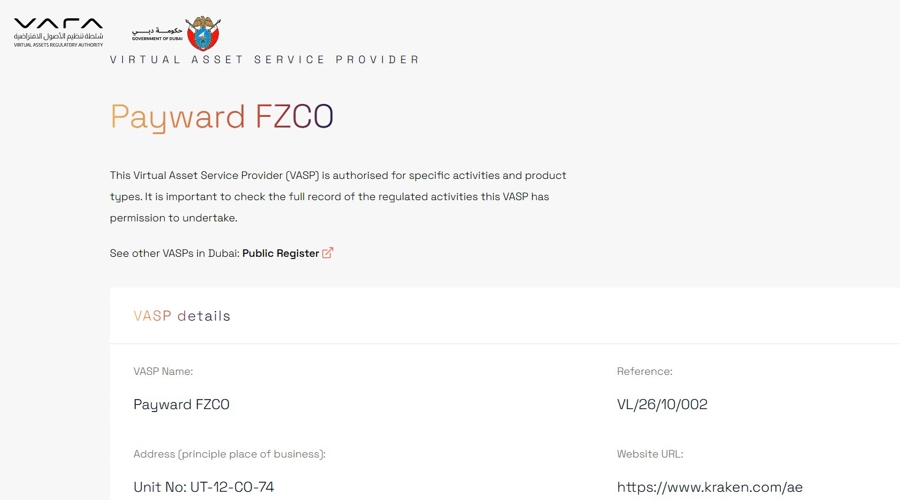
Kraken Gets Final Dubai Crypto License, Plans UAE Launch Within Weeks
Kraken's parent Payward received Full Market Approval from Dubai's Virtual Assets Regulatory Authority (VARA) today (Monday). Krak...