America’s Forgotten Seven Million — Unlocking Financial Freedom Through Bitcoin
Bitcoin education can empower those who have been left behind by legacy financial services.Bitcoin is about people, not price.While the U.S. continues to focus on bitcoin as an investment asset, other parts of the world...
Archive context
Older archive item. Useful for background and entity history, but not a fresh market-moving signal.
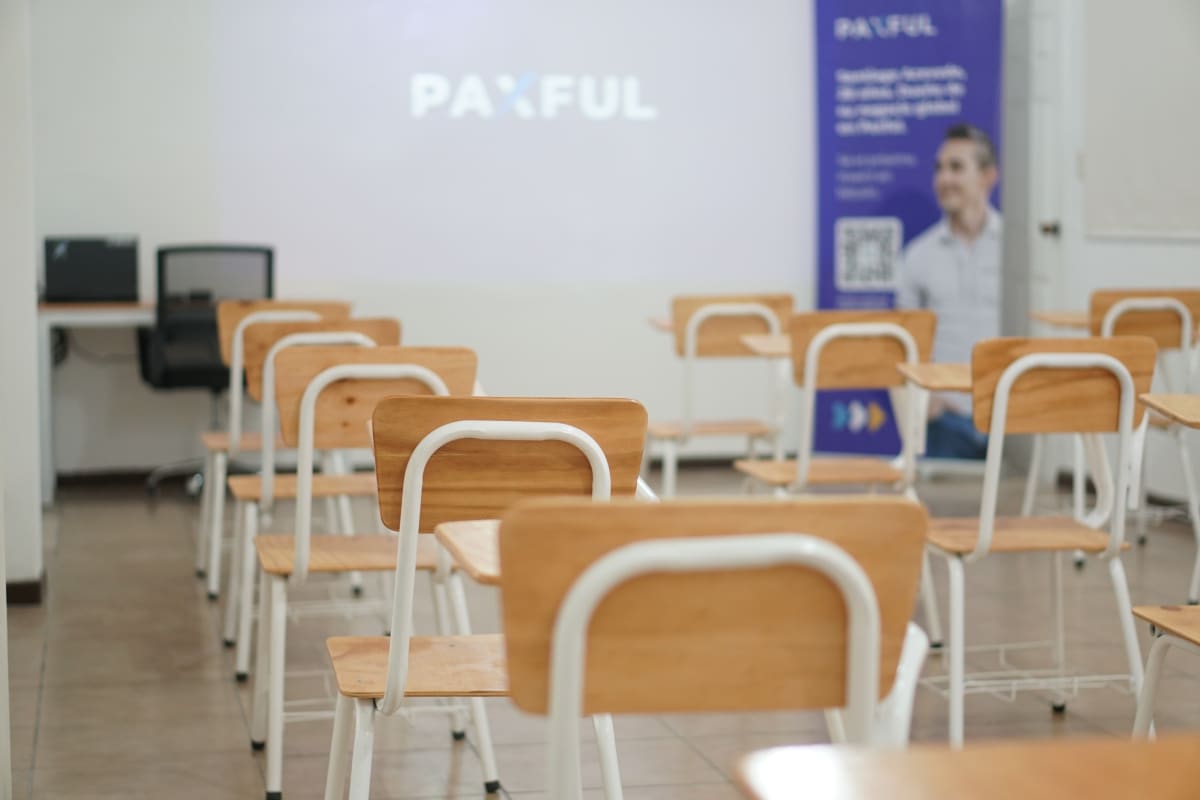
Bitcoin education can empower those who have been left behind by legacy financial services.
Bitcoin is about people, not price.
While the U.S. continues to focus on bitcoin as an investment asset, other parts of the world are showing us the true use cases of Bitcoin. In countries like Argentina, El Salvador and Nigeria, Bitcoin is a means to financial inclusion. The emerging markets demonstrate that Bitcoin has the power to connect the unbanked and underbanked to the larger global financial ecosystem. They are providing a strong foundation for the West, showing us how Bitcoin can reduce wealth inequality and solve some of the world’s greatest financial challenges.
In 2021, 18% of American adults were either unbanked or underbanked. The unbanked, often from underinvested communities, did not even have access to a basic bank account, while the underbanked were shut out from banking services based on income or a lack of education. Bitcoin finally changes this narrative, offering a solution for the millions ignored by today's financial system. Peer-to-peer finance provides a real and sustainable alternative to traditional finance for the 99% and beyond, giving the next generation a new chance at economic opportunity.
Education For The PeopleEducation on Bitcoin and its true use cases remain the biggest challenge in the U.S. Bitcoin has the power to reduce barriers to wealth for the forgotten seven million who remain unbanked. It is access to financial opportunity for the 100%, bridging the gap for the underrepresented. When mayors from cities like New York and Miami begin to call for Bitcoin education to be taught in schools, we know that our time is now.
We’re seeing progress happen across the country. In places like the Bronx, New York, students are being taught the value of peer-to-peer networks as a tool for financial freedom. And at universities, Bitcoin courses are being integrated into their curriculum. But, this is just the beginning of unlocking the true power of Bitcoin education. Through Bitcoin, the people have the opportunity to take financial power back into their own hands, and it’s our responsibility to do our part to fill this gap.
By staying connected to the streets, businesses and leaders in the space can utilize their platforms for good. Take El Salvador for example. At Paxful, we’re seeing the need for education on the ground. While the country became the first to roll out bitcoin as legal tender, the biggest challenge for the people remains education. In response, we’ve launched La Casa del Bitcoin, a new education and training center in San Salvador. The center is providing free, no-cost education to anyone interested in learning about the power of Bitcoin and giving them the tools they need to succeed.
Bitcoin In AmericaBitcoin is a borderless and permissionless technology that was built for the world. It is a tool that can move value across borders and change the way people access the global economy. For Renata Rodrigues, a Paxful user (and employee) in the U.S., bitcoin is a means for supporting her family overseas in Brazil. By buying and selling bitcoin, she is able to avoid expensive remittance fees while also earning a little in return. Addressing the issues of both price and speed in traditional methods of remittance, Bitcoin solves this.
The next wave of Bitcoin adoption has begun. With cryptocurrency making its debut at America’s biggest sporting event of the year, we know that we’re on our way to reaching mass adoption. But Bitcoin will never reach its full potential in the U.S. if we continue to view it solely for speculation and investment rather than connecting to its real use cases. Let’s not make the mistake of mirroring it after traditional financial systems and use education to drive financial freedom. Because global Bitcoin adoption begins and ends with education. It’s time to put the “greed is good” narrative to bed and start working for the people.
This is a guest post by Ray Youssef. Opinions expressed are entirely their own and do not necessarily reflect those of BTC Inc or Bitcoin Magazine.
Why this matters
This bitcoin story adds another data point to the current market tape and is useful when read alongside nearby source coverage.
Original source
Read on Bitcoin MagazineRelated market context

Powerus went public Thursday. By Friday, its shares were on Solana
Powerus' rapid transition to tokenized shares on Solana highlights the growing shift towards blockchain-enabled financial democrat...

El Salvador’s Bitcoin stash sits at $618 million despite IMF strings
El Salvador's Bitcoin strategy highlights the complexities of balancing national financial autonomy with international loan condit...

OpenWorld Begins Nasdaq Trading As VerifyMe Deal Creates Public Tokenization Company
TL;DR OpenWorld and VerifyMe have completed their business combination, with the combined company trading on Nasdaq under OPNW fro...

RWA Foundation report tracks 10,322 tokenized real-world assets
The growing tokenization of real-world assets signifies a shift towards more integrated and accessible financial markets, enhancin...
IMF Praises El Salvador — But Still Tries To Scale Back Its Bitcoin Project
Bitcoin Magazine IMF Praises El Salvador — But Still Tries To Scale Back Its Bitcoin Project The International Monetary Fund has p...

Powerus tokenized stock PUSA hits $8 million in volume on Solana in four hours
The rapid trading volume of $PUSA on Solana highlights the growing appeal and potential of tokenized stocks for 24/7 global market...