Are Many Bitcoin Treasury Companies Heading for Capital Erosion?
No investment is more volatile than cryptocurrency. Promising huge gains at the risk of large losses, Bitcoin has had a stellar year making many forget its inherent volatility. This has helped attract the attention of in...
Archive context
Older archive item. Useful for background and entity history, but not a fresh market-moving signal.

No investment is more volatile than cryptocurrency. Promising huge gains at the risk of large losses, Bitcoin has had a stellar year making many forget its inherent volatility. This has helped attract the attention of institutions and companies, who have begun to raise capital to acquire it. Yet in doing so, many are diluting their market value to take a punt on a risky asset.
Bitcoin Treasury CompaniesThe global investment firm, VanEck, recently issued a warning to companies who are turning to Bitcoin treasuries. There are many that have begun to accumulate these holdings over the past year. Yet VanEck believes many are not hedging their assets or diversifying their portfolio enough.
Bitcoin remains extremely volatile, and though it is currently in a boom period, it may not always be that way. When its price drops, so does the market value of a company that holds a Bitcoin treasury. This reduces the share value.
Many have been spurred on by the success of Microstrategy. Now known as strategy, it turned from a software firm to one that mainly focuses on acquiring Bitcoin. The value of USD to BTC has reached record highs of over $111,000 in the past year. Even at the time of writing, it has held stable at around $107,173. This has been despite global economic uncertainty and geopolitical tensions. Thus, it is now being viewed as a hedge and store of wealth, more a safe haven asset than a risky one. All of this has benefited Strategy greatly.
What is problematic is that many of these companies have used at the market share offerings (ATM) to raise the capital to buy Bitcoin. This is where shares are sold at prevailing market prices over time, often to a broker. When companies are experiencing capital erosion, more shares simply dilute the per-share value, as more are available.
What is Capital Erosion?Capital erosion is a gradual loss of value or wealth in an asset or business over a given period of time. Original capital invested in a company declines, such as its bonds, profits, or assets.
There are many different reasons this can happen, and more often than not it is a combination of a few factors all at once. Inflation, depreciation, mismanagement, or a company becoming obsolete can all cause it. It is a major issue, as it prevents a business from being able to raise more capital for investment. They may struggle to generate income and funding, meaning their long-term prospects are diminished.
One major reason for capital erosion is investments in high-risk assets, of which Bitcoin is one. These investments often need to be backed by a diversification of a portfolio to hedge against the inherent risks. Should these risky assets drop in value, the organization’s store of wealth goes with it. This then has an impact on the company’s value and its stocks.
Semler Scientific at RiskNowhere has this been more apparent than in the stock of Semler Scientific. A medical technology company, it has followed the same path as many organizations and invested heavily in Bitcoin. Yet despite the upward trajectory of its holdings, the stock price of the company has dropped. A fall of 45% in its shares has reduced its market capitalization to $434.7 million.
This has pushed their NAV into a dangerous place. This is the Net Asset Value, which is a measure of the market value calculated by deducting its liabilities from its assets. The company’s value is now below 1x, which means the market values the company at less than its Bitcoin assets.
By no means is capital erosion confined to companies that accumulate Bitcoin. It can happen in any type of business. In South Korea, this has become a major problem with around one in ten companies now at risk of capital erosion. According to the Federation of Korean Industries, 4,466 out of 37,510 companies in the country are at risk. This has increased by 2.7% between 2023 to 2024. It has been most apparent in construction firms, followed by professional and scientific services. There were no figures to state if any of these had Bitcoin treasuries.
This does not mean Bitcoin alone is responsible. Companies should always diversify and hedge their assets. More so, it seems to be down to mismanagement and a prevalence of viewing Bitcoin as a get-rich-quick scheme. Yet anyone who deals with cryptocurrency will understand and know its inherent volatility. How this is dealt with just depends on their own level of risk tolerance. Companies should be wary of this, however: It may only take a few share price crashes from these companies to have an adverse impact on the Bitcoin price.
Why this matters
This bitcoin story adds another data point to the current market tape and is useful when read alongside nearby source coverage.
Original source
Read on Brave New CoinRelated market context

CFTC Staff Let Futures Brokers Invest Customer Funds in Tokenized Assets, Keep Records Onchain
Futures brokers and clearinghouses regulated by the Commodity Futures Trading Commission can invest customer money in tokenized ve...
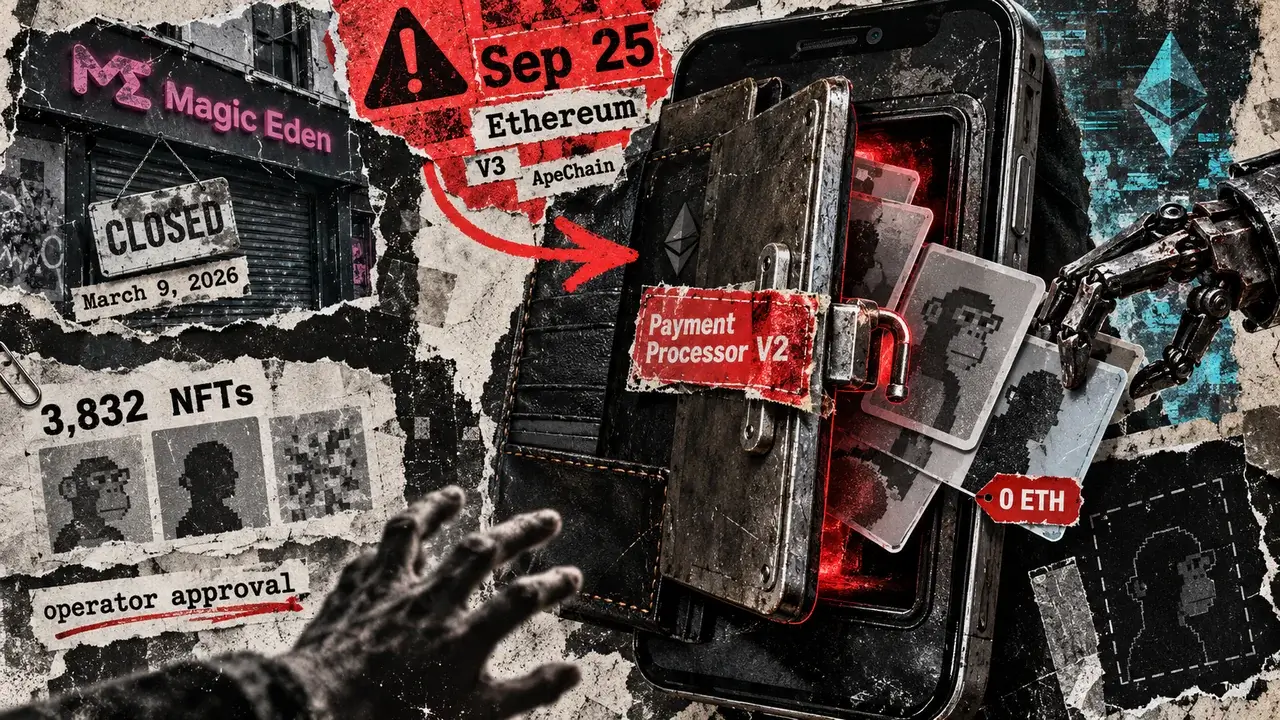
Old Magic Eden NFT approvals put users at risk after whitehat moves 3,832 NFTs
Old Magic Eden NFT approvals could still put some former users at risk months after the company closed its Ethereum marketplace. A...

Tether Says EQIBank Exposure Is Below 0.034% of Group Assets
Tether says assets held at EQIBank amount to less than 0.034% of its group assets, after The Information reported that some of the...

AI Crypto Coins Revenue Gap Puts Token Value to the Test
The AI coin crypto sector sits at $24-25 billion, with a total crypto market of approximately $2.86 trillion. Anthropic reportedly...

Bitcoin Treasury Strategy Proposes Daily Dividends For Preferred Stocks
Bitcoin Magazine Bitcoin Treasury Strategy Proposes Daily Dividends For Preferred Stocks Bitcoin treasury company Strategy wants t...
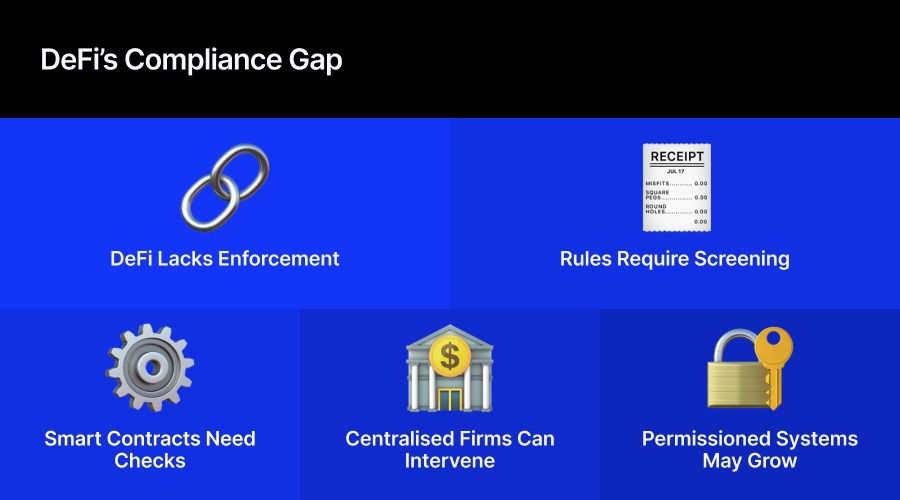
DeFi Was Never Going to Get Its Clarity from US Congress
Last week’s failed CLARITY Act cloture vote will be read as a setback for crypto. That reading misses where decentralized finance...