Bitcoin 21M Cap Under Fire From Zcash Founder
Eli Ben-Sasson, Zcash founder and and CEO of StarkWare, the company behind Ethereum Layer 2 scaling solution Starknet, publicly argued that Bitcoin 21 million supply cap “doesn’t make sense.” He is also proposing instead...
Archive context
Older archive item. Useful for background and entity history, but not a fresh market-moving signal.

Eli Ben-Sasson, Zcash founder and and CEO of StarkWare, the company behind Ethereum Layer 2 scaling solution Starknet, publicly argued that Bitcoin 21 million supply cap “doesn’t make sense.” He is also proposing instead that the network adopt a hard ceiling on the annual issuance rate.
Ben-Sasson’s core argument centers on key loss. Because private keys are permanently lost over time, the coins attached to those keys remain on the ledger but fall out of practical circulation, making the usable supply unknowable and trending downward. His proposed fix: replace the fixed total-coin ceiling with a fixed inflation rate ceiling. His specific figure was 4% per year, which he described as “a reasonable upper bound on human population expansion.”
Capping the supply of Bitcoin at 21M doesn't make sense. Beacuse over time, keys will be lost. In fact, as time goes to infinity, all keys will be lost.
I strongly support a clear monetary policy with an absolute upper bound on the # of Bitcoins in the future. Say, fix a max…
The shift is from capping the stock of coins to capping the annual flow of new issuance, a distinction that sounds technical but carries enormous structural implications for every holder who priced Bitcoin’s scarcity into their position.
Discover: The Best Token Presales
Zcash Co-Founder Right about Bitcoin?Alongside the lost-key argument, the Zcash co-founder, Ben-Sasson, flagged Bitcoin miner security as a compounding concern. The block reward currently stands at 3.125 BTC following the April 2024 halving, and it will continue to decline on schedule, eventually reaching zero around 2140. As the subsidy shrinks, miners depend increasingly on transaction fee revenue to stay economically viable, and a network that cannot sustain miner participation becomes progressively more vulnerable to attack. Ben-Sasson described this risk as “looming large on the horizon.”
Don’t Miss Out on Our $1,000 USDT Airdrop on ByBit
This part of the argument has genuine traction among protocol researchers, independent of whether one accepts the rest of Ben-Sasson’s thesis. Bitcoin’s long-run security model is a real open question – the assumption that fee revenue will fully compensate for the disappearing block reward is unproven at scale. Raising that issue does not require agreeing that the supply cap should change.
The lost-coin case is harder to quantify precisely. We estimated the effective circulating cap at roughly 18.5 million BTC once permanently inaccessible coins are excluded, with Ledger placing lost supply as high as 4 million BTC as of late 2024. Approximately 19.9 million BTC have already been mined, or around 95% of the eventual total, leaving only about 1.1 million BTC remaining to be issued over the next century-plus. The attrition from key loss is real.
Discover: The Best Crypto to Diversify Your Portfolio
This Won’t Go NowhereThe governance math is unambiguous. Changing Bitcoin’s supply cap would require a Bitcoin Improvement Proposal, new client software, and adoption by miners, nodes, and users. Approximately 97% of Bitcoin nodes currently enforce the existing supply schedule. A cap change is not technically impossible, but a fork that dilutes scarcity would split the chain and likely destroy much of the value it was ostensibly trying to preserve. The debate around Bitcoin’s role as a strategic reserve asset makes any hint of supply flexibility even more politically toxic in the current environment.
The community’s divisibility counterargument is also worth understanding precisely. Bitcoin’s 21 million coins subdivide into 2.1 quadrillion satoshis, providing more than enough unit granularity to accommodate adoption at any realistic price level. Ben-Sasson’s rebuttal, that “satoshis would also trend toward zero in absolute terms if key loss continues indefinitely,” is technically correct but operates on a timescale measured in centuries, not trading horizons.
This is a terrible idea. The fact that you can think of changing a protocol built around scarcity and decentralization. Once one major change like this is made then others will come on in and do the same. You're destroying the idea of what Bitcoin set out to be .Why don't you…
— Angel Akiyta (@AngelAkiyta) July 7, 2026What makes Ben-Sasson’s intervention notable is not its probability of success. It has none. What matters is who is raising the argument and why: a prominent ZK-proof technologist with credibility in the Ethereum ecosystem, citing miner security degradation as the mechanism that could eventually force the conversation.
Don’t Miss Out on Our $1,000 USDT Airdrop on ByBit
The post Bitcoin 21M Cap Under Fire From Zcash Founder appeared first on Cryptonews.
Why this matters
Bitcoin is showing up inside the Stablecoins theme, so this story is worth tracking for follow-through rather than treating it as a one-off headline.
Original source
Read on CryptonewsRelated market context
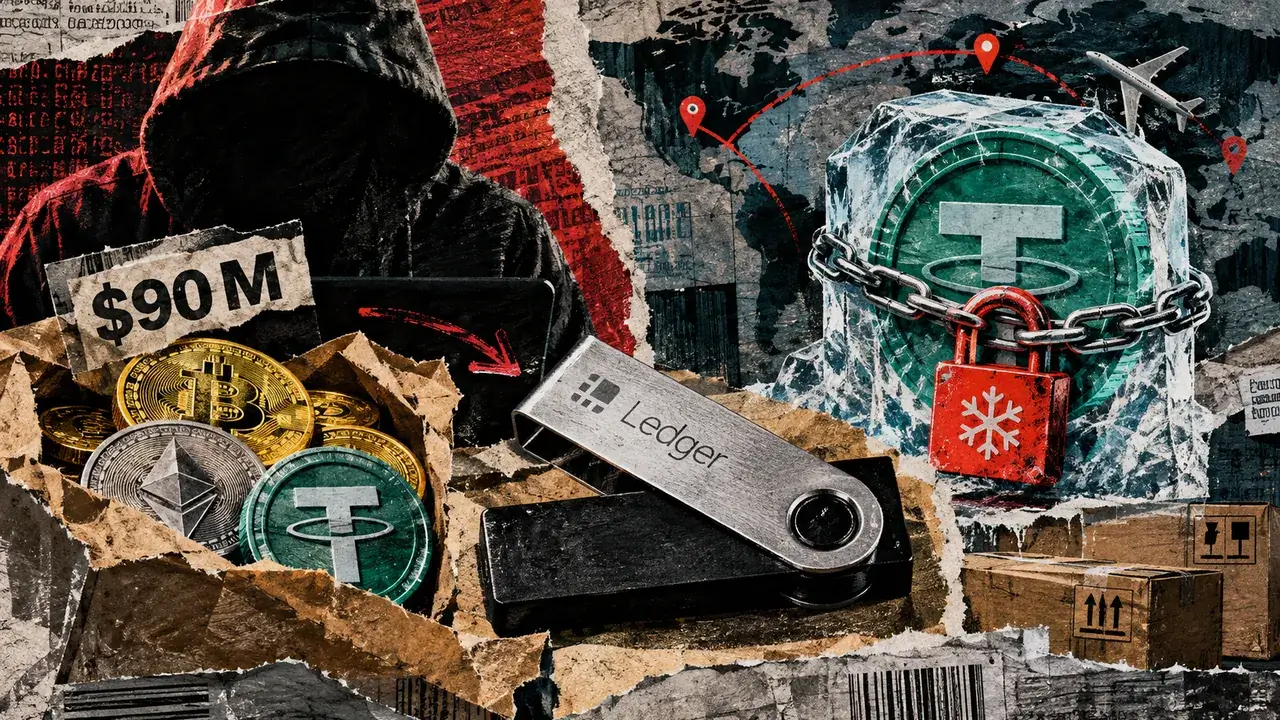
Ledger hack scare nears $90 million as Tether moves to freeze stolen USDT
Suspected Ledger wallet thefts are approaching $90 million as Tether freezes USDT stablecoin linked to the incident, according to...

Tether freezes USDT linked to Ledger user thefts near $90 million
The freeze highlights the need for robust supply chain security and raises concerns about the limitations of centralized control i...

Tether froze 1.45 million USDT in THORChain vaults, then reversed course three hours later
The incident highlights the vulnerability of DeFi protocols to centralized issuer actions, emphasizing the need for diversified as...
Tether Freezes $1.45M in THORChain USDT Vaults, Then Reverses Blacklist Hours Later
Key Takeaways: The amount of about $1.45 million in USDT was temporarily frozen in THORChain vault addresses. According to THORCha...
Tether Unfreezes Four THORChain Vaults Three Hours After Blacklisting 1.45 Million USDT
The four Tron addresses came off the USDT blacklist at 15:30 UTC with their balances intact, and THORChain has restarted Tron trad...

Stealing $1.5B in crypto is easy, cashing out is the trap
North Korean hackers stole around $1.5 billion from Bybit in February 2025. While the hack itself has been widely covered and anal...