SEC Publishes New Kalshi Security-Futures Filing as Perpetual Contracts Advance
TL;DR: The SEC published a November 6 notice on a KalshiEX rule change concerning listing standards for perpetual security-futures products. The filing takes effect under the exchange’s applicable self-regulatory process...
Watchlist
Published in the last two hours. Multiple named entities are involved.
TL;DR: The SEC published a November 6 notice on a KalshiEX rule change concerning listing standards for perpetual security-futures products. The filing takes effect under the exchange’s applicable self-regulatory process, with public comments invited; it should not be confused with approval of every future contract that a venue might want to list.
Kalshi’s expansion into security futures is now producing a steady stream of regulatory filings, rather than only statements about what the market might become. On November 6, the Securities and Exchange Commission posted notice of another change to the exchange’s listing standards.
The SEC’s KalshiEX rulemaking page identifies the filing as SR-KALSHIEX-2026-03, release 34-106841. It is described as a notice of filing and immediate effectiveness of a proposed rule change relating to security-futures listing standards, with a comment period tied to publication in the Federal Register.
What the new filing coversThe document concerns the standards applicable to underlying securities for perpetual security-futures contracts listed on Kalshi. The exchange is seeking to reduce the time required to bring products on certain newly public securities to market. The notice is narrower than a general declaration that securities trading rules no longer apply to perpetual derivatives.
Security futures occupy a distinct legal category. The name combines elements of futures markets and securities regulation for a reason: relevant products can fall under rules administered by both the CFTC and the SEC. A venue therefore cannot simply copy the structure of offshore crypto perpetual contracts and assume it will operate identically inside the United States.
The SEC’s publication is an important procedural event, but readers should avoid equating it with an endorsement of any particular investment or a judgment that a new product is suitable for all traders. Each contract still has trading, margin, disclosure and market-integrity considerations.
Why speed to listing mattersNewly public companies attract attention when their shares first start trading. A derivatives venue that can introduce a related contract faster may capture more activity from users seeking exposure or hedges. That creates commercial incentives, but it can also raise questions about liquidity, price discovery and manipulation controls when underlying shares have limited trading history.
Perpetual contracts are particularly sensitive because they do not expire like a standard quarterly futures contract. The mechanism that keeps a perpetual’s price connected to the underlying market becomes part of the product’s risk profile. Customers should understand how that mechanism works before comparing contracts across venues.
Crypto traders have seen similar complexities in the growth of derivatives and onchain financial products. As NewsBTC has discussed in connection with tokenized securities venue proposals, changing the trading infrastructure does not remove the need to define ownership, settlement and regulatory treatment.
What happens nextThe SEC has invited comments on the filing, and the precise provisions can be examined in the notice itself. Exchanges, clearing firms and professional traders will be watching how listing standards interact with broader coordination between the SEC and CFTC.
The bigger significance is institutional. Perpetual-style instruments, long associated with offshore crypto markets, are increasingly being discussed inside established US exchange regulation. This filing is one more specific step along that path, not evidence that every friction point has been resolved.
This article was written by the News Desk and edited by Samuel Rae.
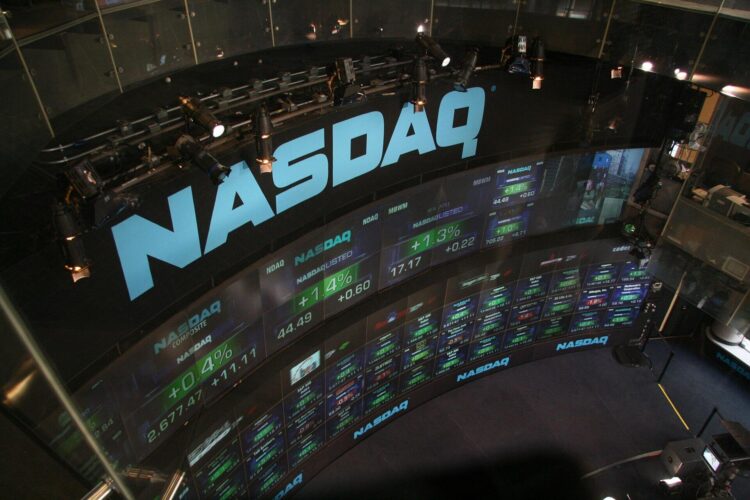
Featured image: Nasdaq stock market display at Times Square (illustrative US equity-market photograph; does not depict Kalshi). Photo: bfishadow on Flickr via Wikimedia Commons, licensed under CC BY 2.0.

Why this matters
SEC is showing up inside the Regulation theme, so this story is worth tracking for follow-through rather than treating it as a one-off headline.
Original source
Read on NewsBTCRelated market context

CFTC Says US-Regulated Exchanges Can Begin Trading Individual-Stock Perpetual Futures
TL;DR: CFTC chairman Michael Selig said on November 3 that individual-equity perpetual futures can begin trading on appropriately...

Binance leads Nvidia perpetual trading with $360.35 million in daily volume
Binance's dominance in Nvidia perpetual trading highlights the growing role of crypto exchanges in after-hours price discovery and...
Riot Sells More Than 20,000 Bitcoin as AI Data-Centre Contracts Reach $38B
TL;DR: Riot Platforms says it sold 20,264 BTC in the first nine months of 2026, raising about $1.5 billion primarily for data-cent...

Moscow Exchange sets Dec. 1 to launch Bitcoin and Ethereum trading
Non-qualified buyers face a 300,000-ruble annual cap per intermediary and testing, while Moscow Exchange plans a December pilot. R...

Kalshi, Polymarket face scrutiny from Democrats after midterms
Increased scrutiny on prediction markets could lead to tighter regulations, impacting their operation and the broader financial la...

Ethereum (ETH) Price Prediction: Whale Accumulation Builds as $2,350 Reclaim Could Restart the Recovery
Ethereum is starting November at an important point in its recovery. According to Brave New Coin, ETH is trading near $2,230, with...