Bitcoin DeFi Is Finding Product-market Fit With Runes
Over the past year, the Bitcoin Renaissance has brought significant attention to BTCfi, or “Bitcoin DeFi” applications. Despite the hype, very few of these applications have delivered on their promises or managed to reta...
Archive context
Older archive item. Useful for background and entity history, but not a fresh market-moving signal.

Over the past year, the Bitcoin Renaissance has brought significant attention to BTCfi, or “Bitcoin DeFi” applications. Despite the hype, very few of these applications have delivered on their promises or managed to retain a meaningful number of “actual” users.
To put things into perspective, the leading lending platform for Bitcoin assets, Liquidium, allows users to borrow against their Runes, Ordinals, and BRC-20 assets. Where does the yield come from, you ask? Just like any other loan, borrowers pay an interest rate to lenders in exchange for their Bitcoin. Additionally, to ensure the security of the loans, they are always overcollateralized by the Bitcoin assets themselves.
How big is Bitcoin DeFi right now? It depends on your perspective.
In about 12 months, Liquidium has executed over 75,000 loans, representing more than $360 million in total loan volume, and paid over $6.3 million in native BTC interest to lenders.
For BTCfi to be considered “real,” I would argue that these numbers need to grow exponentially and become comparable to those on other chains such as Ethereum or Solana. (Although, I firmly believe that over time, comparisons will become irrelevant as all economic activity will ultimately settle on Bitcoin.)
That said, these achievements are impressive for a protocol that’s barely a year old, operating on a chain where even the slightest mention of DeFi often meets with extreme skepticism. For additional context, Liquidium is already outpacing altcoin competitors such as NFTfi, Arcade, and Sharky in volume.
Bitcoin is evolving in real time, without requiring changes to its base protocol — I’m here for it.
Source: Liquidium Landing PageAfter a rocky start, Runes are now responsible for the majority of loans taken out on Liquidium, outpacing both Ordinals and BRC-20s. Runes is a significantly more efficient protocol that offers a lighter load on the Bitcoin blockchain and delivers a slightly improved user experience. The enhanced user experience provided by Runes not only simplifies the process for existing users, but also attracts a substantial number of new users that would be willing to interest on-chain in a more complex way. In contrast, BRC-20 struggled to acquire new users due to its complexity and less intuitive design. Having additional financial infrastructure like P2P loans is therefore marking a step forward in the usability and adoption of Runes, and potentially other Bitcoin backed assets down the line.
Source: Liquidium’s Dune DashboardThe volume of loans on Liquidium has consistently increased over the past year, with Runes now comprising the majority of activity on the platform.
Source: Liquidium’s Dune DashboardOk so Runes are now the dominant asset backing Bitcoin native loans, why should I care? Is this good for Bitcoin?
I would argue that, regardless of your personal opinion about Runes or the on-chain degen games happening right now, the fact that real people trust the Bitcoin blockchain to take out decentralized loans denominated in Bitcoin should make freedom lovers stand up and cheer.
We’re winning.
Bitcoiners have always asserted that no other blockchain can match Bitcoin’s security guarantees. Now, others are beginning to see this too, bringing new forms of economic activity on-chain. This is undeniably bullish.
Moreover, all transactions are natively secured on the Bitcoin blockchain—no wrapping, no bridging, just Bitcoin. We should encourage and support people who are building in this way.
This article is a Take. Opinions expressed are entirely the author's and do not necessarily reflect those of BTC Inc or Bitcoin Magazine.
Why this matters
This bitcoin story adds another data point to the current market tape and is useful when read alongside nearby source coverage.
Original source
Read on Bitcoin MagazineRelated market context

Bitcoin Price Prediction: Is the BTC Correction Over as It Defies September’s Red Trend?
Bitcoin price is near $83,100, a stable 24-hour movement after retreating from $87,400, and with its prediction still leaning bull...
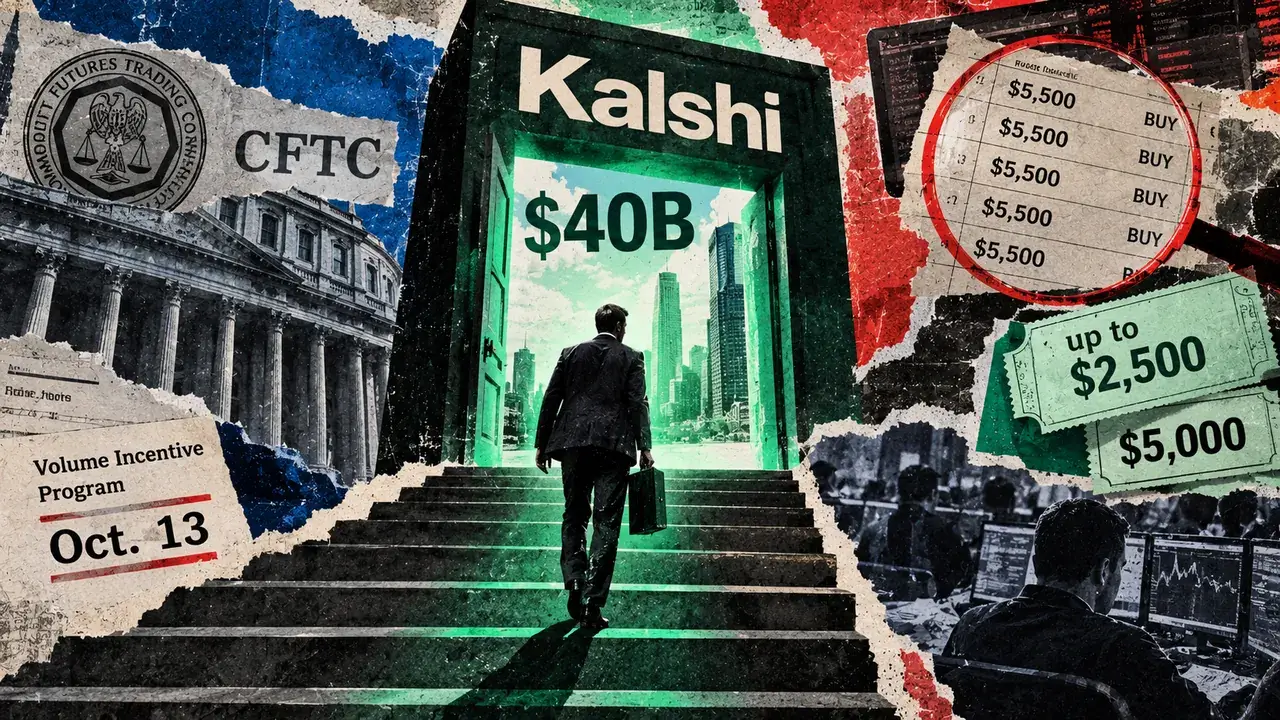
Kalshi’s $40 billion growth story hits tough questions about its trading volume
Kalshi is ending a trader-volume incentive program nearly a year early as scrutiny of activity in its crypto markets intensifies....

Bitcoin Price Tests $83,000 Ahead of Key PCE Inflation Release
Bitcoin price is trading at $83,000 ahead of the August core PCE release, just 0.71% above its $82,700 24-hour low, leaving a narr...

Anthropic tokenized pre-IPO volume hits $643M, but liquidity test looms
Anthropic’s planned IPO could force a fast-growing crypto derivatives market to reconcile its synthetic valuation with Wall Street...

SEC changes token buyback guidance as spending hits $638M
The US Securities and Exchange Commission tightened its guidance for crypto token buybacks just three days after publishing it. On...
Perplexity AI Predicts Insane $40 Price Target for XRP: How Did It Get There?
Perplexity AI predicts something that few analysts or other AI models do. It has produced an insanely wild bullish prediction for...