Bitcoin Halving Countdown Discrepancies
As the Bitcoin network’s halving event approaches, scheduled to occur in about seven days (April 19), the accuracy of online countdowns is coming into question. Various platforms display conflicting estimates of when the...
Archive context
Older archive item. Useful for background and entity history, but not a fresh market-moving signal.
As the Bitcoin network’s halving event approaches, scheduled to occur in about seven days (April 19), the accuracy of online countdowns is coming into question. Various platforms display conflicting estimates of when the halving will take place, creating confusion for those closely monitoring the event.
For example, Watcher Guru forecasts the halving in seven days, seven hours, and 20 minutes, while CoinMarketCap predicts it will happen two hours later. Similarly, the “Bitcoin Block Reward Halving Countdown” indicates it will occur in seven days and 15 hours. Despite these variations, they generally align, but discrepancies can frustrate traders looking to capitalize on the halving.
The Bitcoin halving occurs approximately every four years, triggered by reaching every 210,000 blocks, with the upcoming event slated for block height 840,000. Ideally, given Bitcoin’s 10-minute block time, determining the precise timing of the halving should be straightforward. However, practicalities complicate matters.
According to Simon Cousaert, director of data at The Block Research, the accuracy of countdowns depends on factors like the current block height and the average block time. While the target block is constant, fluctuations in the average block time due to varying miner activity make accurate predictions challenging.
Marko Tarman, lead mining manager at NiceHash, emphasizes the dynamic nature of block times, which can significantly affect predicted halving events. Shorter average block times suggest an earlier halving, while longer times delay it.
In essence, while the halving event is predetermined and highly anticipated, predicting its exact timing is more art than science due to the fluctuating nature of block times. Accuracy becomes increasingly crucial as the event approaches, highlighting the complexities involved in tracking this significant event in the Bitcoin ecosystem.
Featured Image: Freepik
Why this matters
This bitcoin story adds another data point to the current market tape and is useful when read alongside nearby source coverage.
Original source
Read on CryptoCurrencyNewsRelated market context

PUMP Crypto Surges +15%: Will Pump.Fun Explosion Boost SOL?
PUMP crypto is trading at $0.0058, up nearly +15% overnight after a +60% move over the past two weeks. Daily trading volume has al...

Fed guarantees 2-day stablecoin payouts, but $76B remains blocked
The Federal Reserve's stablecoin proposal would put a general two-business-day limit on redemption by issuers it supervises. For a...

Anthropic tokenized pre-IPO volume hits $643M, but liquidity test looms
Anthropic’s planned IPO could force a fast-growing crypto derivatives market to reconcile its synthetic valuation with Wall Street...

Alkanes Asian Market Drove 61% of Bitcoin Transactions for 90 Days, SUBFROST Data Shows
Bitcoin Magazine Alkanes Asian Market Drove 61% of Bitcoin Transactions for 90 Days, SUBFROST Data Shows A Bitcoin metaprotocol si...

Oracle Connects Bank Payment Systems To Swift’s Blockchain Ledger
TL;DR Oracle is integrating its banking and blockchain infrastructure with Swift’s shared ledger for tokenized deposits. Banks can...
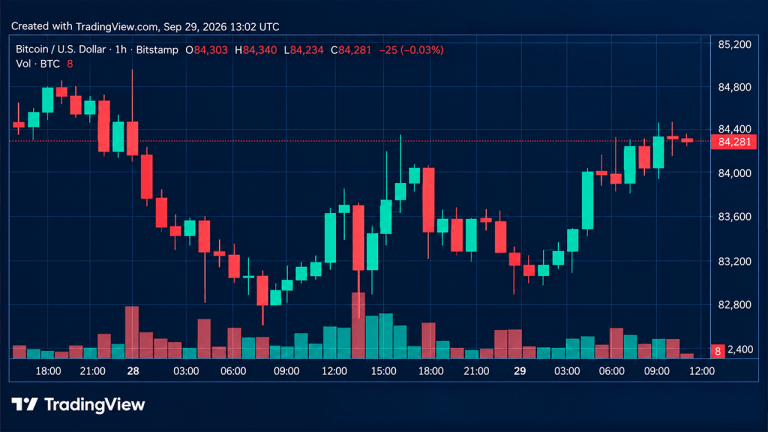
Bitcoin Price Bounces Back as 13 Moving Averages Flash Green
Bitcoin’s price reclaimed $84,000 on Tuesday, Sept. 29, climbing approximately 1% over 24 hours as buyers attempted to repair the...