Bitcoin Price Gap Widens as Kimchi Premium and ETF Flows Take Center Stage
Bitcoin traded at a 1% premium on Upbit, South Korea’s largest crypto exchange, over Binance’s dollar-denominated price today, marking the longest sustained positive spread since early May. The reappearance of the so-cal...
Archive context
Older archive item. Useful for background and entity history, but not a fresh market-moving signal.

Bitcoin traded at a 1% premium on Upbit, South Korea’s largest crypto exchange, over Binance’s dollar-denominated price today, marking the longest sustained positive spread since early May.
The reappearance of the so-called kimchi premium raises an immediate analytical question: Does this reflect a genuine revival of South Korean retail risk appetite? Or simply a temporary lull in local selling pressure that says little about where Bitcoin goes next?
The kimchi premium, the gap between Bitcoin prices on Korean exchanges and global markets, has functioned for years as a barometer of retail mood across Asia. Upbit, owned by Dunamu Inc, has held that positive spread for about a week now. That is a meaningful shift given where the spread stood as recently as June, and it arrives as macro conditions continue to shape Bitcoin’s price action.
Korean liquidity is coming back.
The Korea Premium just flipped from its longest negative stretch on record back into positive territory.
We’ve seen a similar signal with the Coinbase Premium before major $BTC moves higher.
If this premium stays positive it's a another sign… pic.twitter.com/ouF4gdnp1o
Rachael Lucas, an analyst at BTC Markets, said Korean retail tends to buy aggressively in risk-on phases and capital controls mean that buying shows up as a price gap rather than arbitrage flow. That distinction matters: unlike US markets, where price discrepancies get arbitraged away almost instantly, Korea’s regulatory structure lets demand imbalances persist visibly for days or weeks.
Markus Thielen, head of 10x Research, offered the counterweight. He said Korea is unlikely to be a major driver in the initial stage of a Bitcoin rebound without a corresponding pickup in spot volumes, noting many Korean traders remain focused on AI stocks rather than crypto. The premium turning positive is one data point; it is not confirmation that capital is rotating back into digital assets at scale.
Discover: The Best Crypto to Diversify Your Portfolio
The Case For and Against Reading Into ItLucas noted that discount-to-premium crossings have historically preceded stronger Bitcoin returns over the following weeks, and the premium’s reappearance has presaged further gains in the past. That historical pattern gives the signal some weight, but it competes directly with a much larger and better-documented flow: US spot Bitcoin ETF demand.
US-listed spot Bitcoin ETFs pulled in about $1.92 billion in the week of Aug. 17, their strongest weekly inflow in 10 months, followed by another $923 million the next week. A $203 million outflow on Aug. 28 then snapped a nine-day inflow streak, a sign institutional momentum was already cooling by month-end even as the Korean spread turned positive.
Bitcoin ETFs Flow, CoinglassThat contrast is the core of the analytical tension here. US ETF flows increasingly reflect institutional positioning with real capital behind them, while Korea’s price gap has historically been associated with domestic retail buying that local capital controls and financial regulations make difficult to arbitrage away quickly.
Lucas was direct about the scale mismatch: “Korea’s bitcoin-specific share of global volume remains modest, so this is a small signal, an easing of Korean selling pressure, not a new Fomo wave,” she said. “US institutional and ETF flows still dominate price action.”
Trade Bitcoin on Bybit and Get a Chance to Win Our $1,000 USDT Airdrop
Where Bitcoin Price Sits NowBitcoin entered September near $79,000 after briefly crossing $80,000 in August for the first time since May, capping the strongest monthly advance since November 2024.
The rally was driven in part by renewed crypto optimism alongside the US Treasury’s decision to increase buybacks of longer-dated government bonds, a macro tailwind unrelated to Korean retail behavior.
Bitcoin (BTC)24h7d30d1yAll timeThe turnaround in the Korean spread looks sharper against that summer backdrop. Bitcoin traded at as much as a 3.1% discount to international prices on Upbit in early June, and the average discount for August was still 0.25%.
The move to a roughly 1% premium by Sept. 1 represents a real reversal in sentiment, even if it remains modest in absolute terms and market conditions heading into September stay the more decisive factor for price.
The path forward hinges on confirmation that has not yet arrived. If the premium holds and Korean spot volumes rise in tandem, that would strengthen the case for a genuine retail-driven leg to the rebound rather than a passing shift in sentiment. If it fades without volume support, the more likely read is that this was a brief easing of Korean selling pressure rather than the start of anything larger.
Visit MEXCThe post Bitcoin Price Gap Widens as Kimchi Premium and ETF Flows Take Center Stage appeared first on Cryptonews.
Why this matters
Bitcoin is showing up inside the Bitcoin ETF theme, so this story is worth tracking for follow-through rather than treating it as a one-off headline.
Original source
Read on CryptonewsRelated market context

Four Korean Banks Join Ripple on the XRP Seoul Stage
Four South Korean lenders shared one panel with Ripple at XRP Seoul 2026 earlier today, in front of a crowd of more than 5,000 peo...

Stablecoin issuers have replaced 40% of China’s lost US Treasury demand
Stablecoin issuers are emerging as a new source of demand for US government debt as foreign official holdings lose ground. Tether...

American Bankers Sue OCC Over Crypto Bank Charters, Challenging Coinbase and Circle
The lawsuit, filed October 2 in the U.S. District Court for the District of Columbia, puts the growing role of crypto firms within...
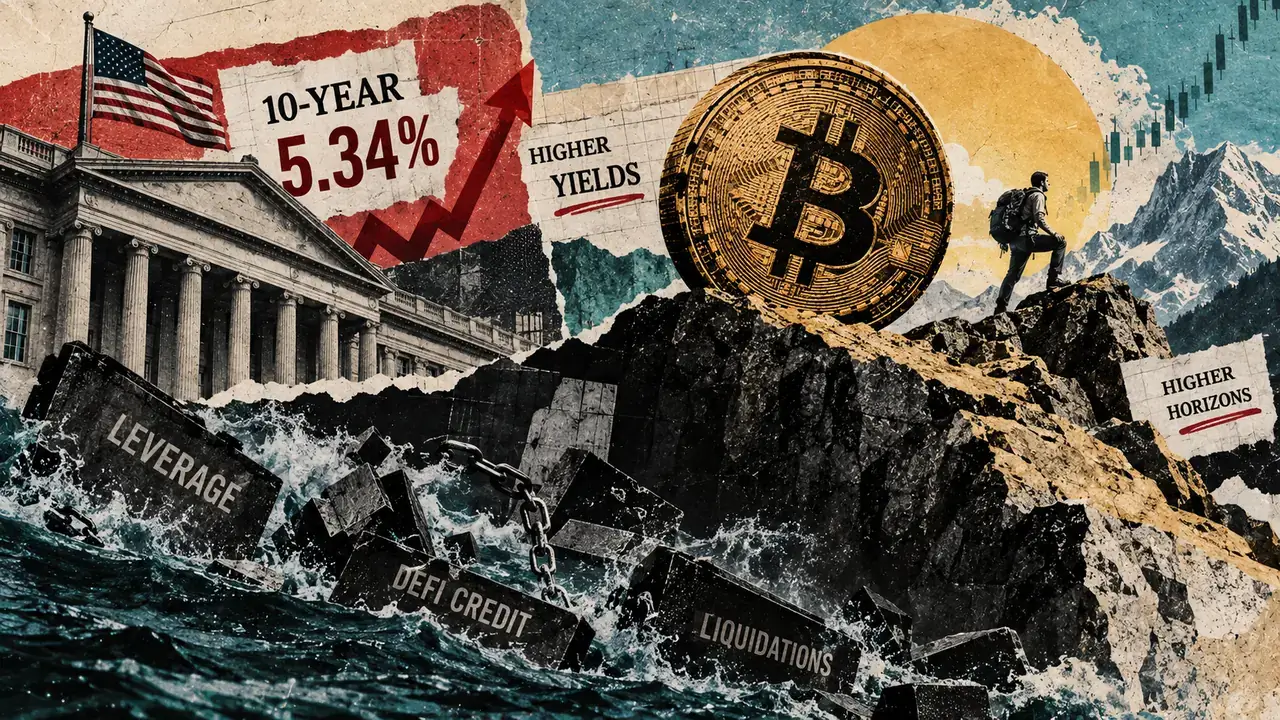
Bitcoin survived 5% yields but crypto’s cheap-money era did not
The US 10-year Treasury yield touched 5.34% on Oct. 1, its highest since 2002, capping a third quarter in which it climbed almost...

Binance will hold some Brazil crypto deposits until users explain where the money came from
Binance will require Brazilian users to provide additional information for cross-border crypto transfers starting Nov. 1. The exch...

Following the Bitget Hack: BitOK Traces 87.8 BTC as Stolen Funds Reach Mixers
Research and reporting by Alexander Manev, BitOK. Reporting and adaptation by Brave New Coin. Investigators following the Bitget h...