Bitcoin Recovery Lacks One Key Ingredient, Glassnode Warns
Bitcoin has clawed its way back toward $70,000 after a sharp slide to roughly $67,000, but Glassnode says the rebound still lacks the kind of demand profile needed to turn stabilization into a more durable recovery. In i...
Archive context
Older archive item. Useful for background and entity history, but not a fresh market-moving signal.

Bitcoin has clawed its way back toward $70,000 after a sharp slide to roughly $67,000, but Glassnode says the rebound still lacks the kind of demand profile needed to turn stabilization into a more durable recovery.
In its latest weekly report from March 25, titled Awaiting Liquidity, the on-chain analytics firm argued that several pressure points have eased at once, including sell-side intensity, ETF outflows and dealer-driven market imbalances. Even so, muted spot volumes, subdued leverage and a dense band of overhead supply suggest the market is not yet in a high-conviction breakout phase.
Weak Spot Bitcoin Demand Could Limit The UpsideGlassnode’s central point is that the structure has improved, but not enough to declare the correction finished. “Bitcoin is beginning to show some constructive signs after a sharp corrective move, with price stabilising, ETF flows improving, and derivatives positioning becoming less one-sided,” the report said. “The pressure that defined the recent selloff appears to be easing, and the market is starting to look more balanced than it did a week ago.”
That balance, however, sits inside a narrow and still fragile range. Glassnode said a new accumulation cluster is forming around current levels, with the 1-week to 1-month cohort carrying a cost basis near $70,200. That gives the market a developing support floor, but one the firm described as vulnerable because the current base of buyers remains modest.
Above the market, the resistance picture is heavier. The 1-month to 3-month holder cohort sits around $82,200, while Glassnode also flagged a larger cluster of short-term holder supply between roughly $93,000 and $97,000. Elsewhere in the report, it noted “a notably heavy concentration of short-term holder supply above $84k,” describing that inventory as a potential source of renewed sell pressure on any sustained recovery attempt.
The on-chain backdrop also points to a market under stress, but not one showing outright panic. Relative unrealized losses have stabilized above 15% of market cap over the past two months, a pattern Glassnode said resembles the fear seen in the second quarter of 2022, though still well short of capitulation episodes like the FTX collapse.
At the same time, realized profitability has thinned out dramatically. Entity-adjusted realized profit, using a 7-day moving average, has fallen from around $3 billion per day in July 2025 to below $100 million now, a decline of more than 96%. For Glassnode, that speaks to both sides of the current setup: fewer profitable sellers left to distribute coins, but also a weaker flow of fresh capital into the market.
“Spot market activity remains relatively muted following the sharp selloff into the $67k region, with aggregate exchange volumes showing only a modest response during the subsequent recovery,” the report said.
Compared to the stronger participation seen during prior impulsive advances, current spot volumes remain soft. This suggests the rebound back toward $70k has so far been supported more by selective dip-buying and short-term repositioning than by broad-based spot demand returning at scale.”
That is the missing ingredient in Glassnode’s view. ETF flows have improved, with the 7-day average turning modestly positive after an extended stretch of outflows, suggesting early institutional re-engagement. But the firm stressed that the scale of those inflows remains limited compared with earlier accumulation phases.
Derivatives markets tell a similarly cautious story. Perpetual funding rates remain negative, implying traders are still paying to hold downside exposure, while futures open interest has stayed relatively subdued rather than expanding alongside the bounce. Options markets are no longer flashing acute stress, but they are not pricing strong upside conviction either. Short-dated skew remains tilted toward puts, showing continued demand for downside protection, even as longer-dated positioning looks more balanced.
A major near-term variable is Friday’s weekly, monthly and quarterly options expiry. Glassnode said dealers remain concentrated in short gamma between $70,000 and $75,000, with around $10 billion of that positioning set to roll off. Once that mechanical influence clears, BTC may become more sensitive to broader macro and liquidity conditions.
At press time, BTC traded at $69,961.
Why this matters
Bitcoin is showing up inside the Market Structure theme, so this story is worth tracking for follow-through rather than treating it as a one-off headline.
Original source
Read on NewsBTCRelated market context

Dogecoin (DOGE) Price Prediction: Ichimoku Breakout and Whale Buying Set the Stage for a Move Towards $0.10
The latest recovery has not yet confirmed a broader bullish reversal. However, several on-chain and technical indicators suggest t...

Strategy and Strive buy $183 million in Bitcoin as $85,000 rally revives treasury trade
Bitcoin treasury companies Strategy and Strive bought about $183 million of BTC last week as the cryptocurrency’s rebound helped c...
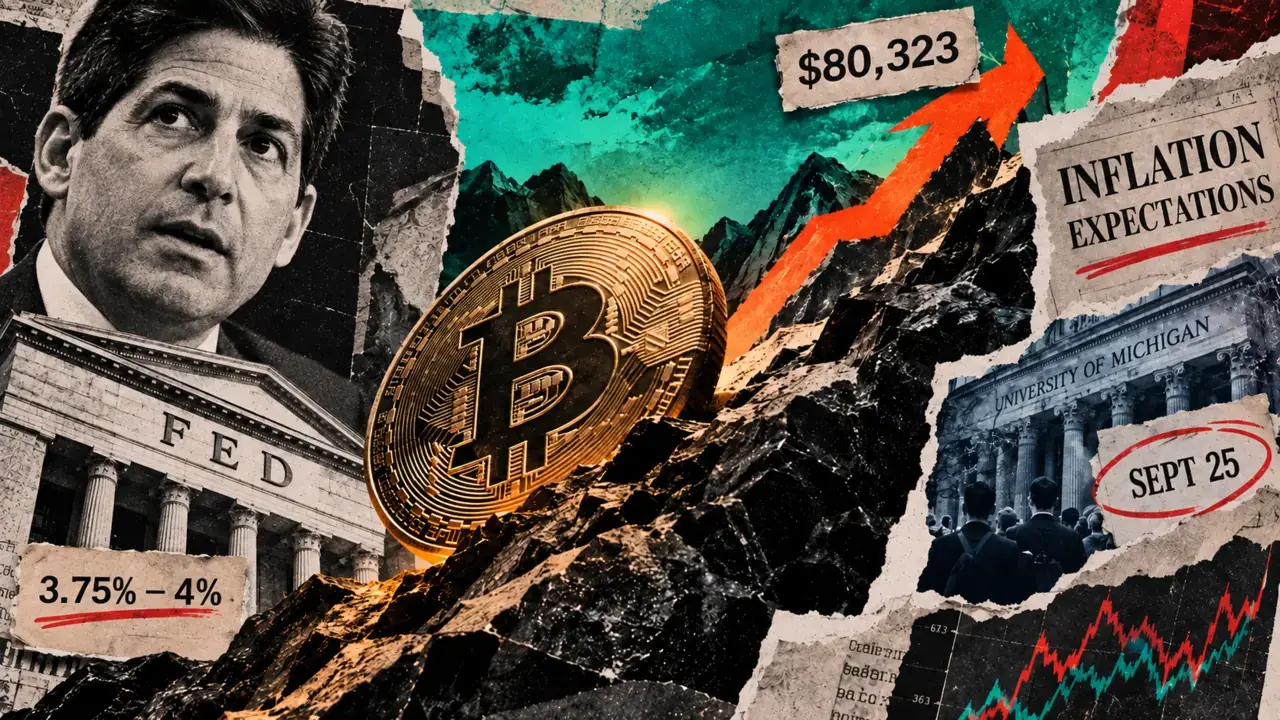
2 key economic reports threaten Bitcoin’s $80k rally as BTC price model predicts $95k incoming
Bitcoin entered this week (Sept. 21–27) above $80,000, but Friday's update on Americans' inflation expectations could test whether...

XRP Price Today: XRP Reclaims $1.40 as Whale Accumulation Hits $2.2B
Santiment-linked data cited by crypto analyst Ali Martinez shows large holders accumulated approximately 1.54 billion XRP, worth a...

This blockchain just voted to shut itself down for a Solana-powered AI pivot
ZetaChain's on-chain governance has approved retiring the network’s standalone blockchain and moving ZETA to Solana as the project...

CFTC Sent Crypto Market Structure Rulemaking to the White House Two Days After Clarity Act Failed
The Commodity Futures Trading Commission has begun writing crypto market rules without Congress. On Thursday, the agency filed “Re...