Bitcoin: Use It Or Lose It
Whenever concerns surrounding Bitcoin’s long term prospects’ going in a negative direction surface, a common refrain of dismissal is “Well tell us what to do about it then.” This is used to dismiss all concerns of regula...
Archive context
Older archive item. Useful for background and entity history, but not a fresh market-moving signal.

Whenever concerns surrounding Bitcoin’s long term prospects’ going in a negative direction surface, a common refrain of dismissal is “Well tell us what to do about it then.” This is used to dismiss all concerns of regulation leading to regulatory capture, of deeper involvement of certain entities leading to higher risks to the consensus process, of any type of failure mode that involves Bitcoin’s censorship resistance and ability to enable freedom eroding really.
“Well what’s your plan?”
Use Bitcoin. Bitcoin consensus orbits around two important variables, economic actors and miners. Economic actors decide whether a set of consensus rules has value by deciding whether to honor their side of a transaction based on whether it is valid according to their consensus rules. Miners decide which set of consensus rules they will mine within, choosing the one that presents the highest value to them.
Users who actually use Bitcoin, that is to transact and operate businesses, services, and other protocols to make use of blockspace, gain an influence through both mechanisms. A set of consensus rules needs two things, users who will value it, and miners who will mine it. Users buying blockspace attract miners with more revenue beyond what the block subsidy creates. To the degree that fees make up miners' revenue, users who generate those fees have that much proportionate “power” of a sort over miners. They decide in the event of a disagreement over consensus rules which side to give that revenue to, meaning miners would have to follow those rules to earn it.
The threat of institutional adoption and regulatory encroachment very much do present a risk to Bitcoin in the long term if people simply stop doing anything with bitcoin but hold it. In that type of environment, regulations can come down on miners and brokers and very much influence events around consensus changes. They can attempt to veto useful and valuable changes, and try to push useless or damaging ones.
So what do we do to counteract that? We actually use Bitcoin for more than holding and investing. That is why scalability is so important. Because it allows more people to directly interact with the system in that way, to directly exert their influence. The more we actually use Bitcoin, the more influence users collectively have to exert in the future over consensus.
If Bitcoiners relegate bitcoin to nothing more than an asset to hold, something to let sit idle, then we will eventually lose it. We will lose our say and influence in the markets bitcoin facilitates, we will lose our influence over the consensus rules that miners choose to mine, we will lose it all.
Bitcoiners need to be active, not passive. We need to transact, we need to build more businesses, consume more blockspace. With payment networks like Lightning or Ark, uncensorable derivatives markets using DLCs, even dumb things like Ordinals and Inscriptions. The demand for blockspace needs to come from distributed and diverse sources, not just massive institutions and companies easily subjectable to regulatory and government influence.
Bitcoin is very much a “use it or lose it” thing. I’d rather not see it lost to people who actually care about freedom due to apathy.
This article is a Take. Opinions expressed are entirely the author's and do not necessarily reflect those of BTC Inc or Bitcoin Magazine.
Why this matters
This bitcoin story adds another data point to the current market tape and is useful when read alongside nearby source coverage.
Original source
Read on Bitcoin MagazineRelated market context
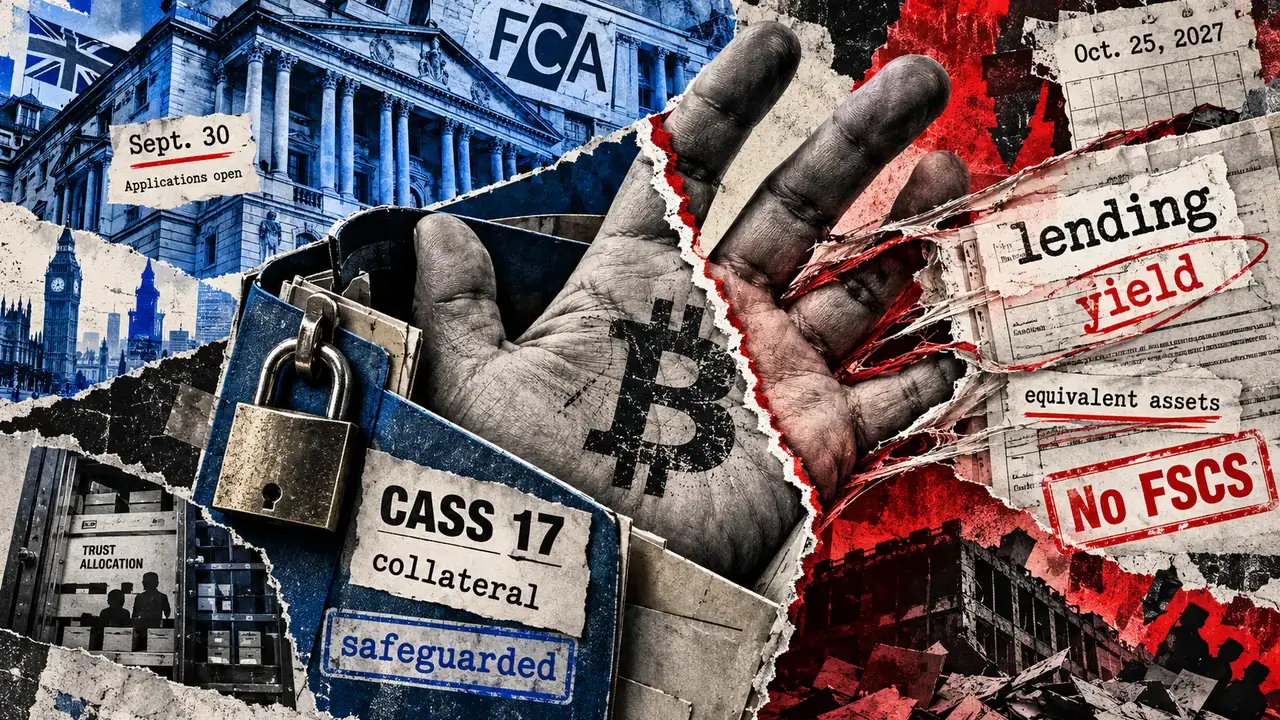
UK’s 2027 crypto rules let firms remove trust protection from Bitcoin lent for yield
UK crypto firms can now apply for authorization as of Sept. 30, bringing Bitcoin holders closer to a rulebook that will treat coin...

Aave’s $50 million lending plan could lose money without a single default
Aave’s proposed institutional lending business would put crypto collateral on both sides of the financing chain. Institutions woul...

CFTC sends prediction market rules to the White House for review
The CFTC's push for federal control over prediction markets could redefine state-federal regulatory boundaries, impacting legal an...

CFTC submits rules to define event contracts as swaps, defying states’ gambling claims
The CFTC's move to classify event contracts as swaps could centralize regulatory oversight, potentially reshaping prediction marke...

The SEC’s Buyback Guidance Is Narrower Than It Looks. Does Yours Pass the Test?
Crypto projects that buy back their own tokens have operated under a dour legal cloud within the US for nearly a decade. A buyback...

SEC Chair Paul Atkins Vows Onchain Rules Despite Failed CLAIRTY Act
Securities and Exchange Commission (SEC) Chair Paul Atkins told CNBC that “even though the CLARITY Act failed in Congress,” the ag...