Bitcoin’s Anticipated Retail Resurgence
Bitcoin's recent price action has been a rollercoaster of highs and lows. However, even though bitcoin has set a new all-time high and had two years of a near-constant positive trajectory, we're yet to see a consistent i...
Archive context
Older archive item. Useful for background and entity history, but not a fresh market-moving signal.

Bitcoin's recent price action has been a rollercoaster of highs and lows. However, even though bitcoin has set a new all-time high and had two years of a near-constant positive trajectory, we're yet to see a consistent influx of retail investors. The potential for a surge in retail participation and the possibility of elevating the bitcoin price to unprecedented levels are prospects that many investors are anxiously anticipating. In this article, we're going to explore when we might see these retail investors dive back into the bitcoin pool and whether their return could indeed propel BTC to even greater heights.
Active Address Growth and its ImpactTo anticipate this potential retail wave, it's important to scrutinize the trend of active address growth. Data sourced from Bitcoin Magazine Pro suggests a downward swing in the number of active network participants in recent months. The 365-day moving average (blue line), along with the 60-day (purple line) and 30-day averages (red line), tell a tale of decreased network activity. This drop takes the count of active users back to levels reminiscent of early 2019, following bitcoin's bear cycle, when prices hovered between $3,500 to $4,000.
This decline in active network users raises eyebrows about bitcoin's upside potential in the current cycle. Interestingly, despite bitcoin hitting a new record of roughly $74,000, there was no corresponding sustained uptick in network users, a stark departure from previous cycles.
Figure 1: Declining averages of Bitcoin daily active addresses. Access Live Chart 🔍 The Necessary Inflow of New CapitalThis trend could be a reflection of Bitcoin's evolving identity. Originally a digital peer-to-peer currency, Bitcoin is increasingly seen as a store of value. As a result, fewer people are using it for everyday transactions and are instead pouring capital into bitcoin as a long-term asset.
The Bitcoin HODL Waves & Realized Cap HODL Waves shed light on this shift. These metrics group Bitcoin network users based on the duration they've held their coins, as well as showing their influence on the accumulation price of BTC. Recent data reveals that about 20% of bitcoin has been held for three months or less, indicating that new users are entering the market, but as we can see from the average active addresses in the above data, not using Bitcoin as frequently as before.
The impact of these new users on the realized cap (the average accumulation price of all BTC) is considerable, with over 40% of recent influence coming from users holding Bitcoin for three months or less (indicated by the warmer red/orange colors in the chart below). This suggests that users are entering the market at higher prices and are behaving in a manner consistent with previous cycles (we’re recently seen the initial early bull cycle inflows at comparable levels to previous cycles, indicated by the red box), just not as frequently as we have previously seen.
Figure 2: We’ve recently seen the initial early bull cycle inflows at comparable levels to previous cycles, indicated by the red box. Access Live Chart 🔍 Understanding Market Forces and Retail InvolvementA look at Bitcoin’s past cycles shows that a surge in retail activity often precedes market peaks. For example, in the 2017 and 2021 bull runs, retail interest spiked around 6 months before the price peaks. The current absence of a significant increase in retail interest, as evidenced by Google Trends, suggests we’re experiencing a more measured, and more sustainable market growth.
Another key consideration is the Bitcoin Open Interest chart, which measures the total value of open bitcoin futures contracts. Since late 2022, this metric hasn't shown a significant increase; in fact, we’ve seen a steady decline since the bear cycle lows (indicated by the declining red line in the chart below). Revealing that investors are now preferring to trade actual bitcoin rather than merely participating in derivatives trading. This indicates a shift in narrative where investors are more interested in holding bitcoin for the long haul rather than chasing short-term speculative gains.
Figure 3: Declining trend of $BTC open interest indicating a decrease in coin denominated derivative traders since cycle lows. Access Live Chart 🔍 ConclusionGiven current trends, the lack of a retail frenzy could be seen as a positive sign for the market's long-term prospects. As bitcoin approaches new record highs, keeping a close eye on the arrival of retail investors will be essential. If retail investors start entering the market in large numbers, will they fall back into old habits of pure FOMO buying, or will they continue to favor long-term holding?
In short, despite a fall in Bitcoin's active user metrics, the market shows signs of stability and long-term investment. The absence of immediate retail interest might seem bearish, but it's more likely to be bullish as it indicates a more measured and sustainable growth trajectory.
For a more in-depth look into this topic, check out a recent YouTube video here:
Why this matters
This bitcoin story adds another data point to the current market tape and is useful when read alongside nearby source coverage.
Original source
Read on Bitcoin MagazineRelated market context

Short-term Bitcoin buyers see 13% profit as market mirrors past cycles
Short-term Bitcoin gains highlight market volatility, with potential for rapid shifts in investor sentiment and increased risk of...

Standard Chartered says Ethena’s ENA could crush Bitcoin and Ethereum returns by 2028
Standard Chartered expects Ethena’s ENA token to rise about sevenfold by 2028, provided the protocol can rebuild its shrinking syn...
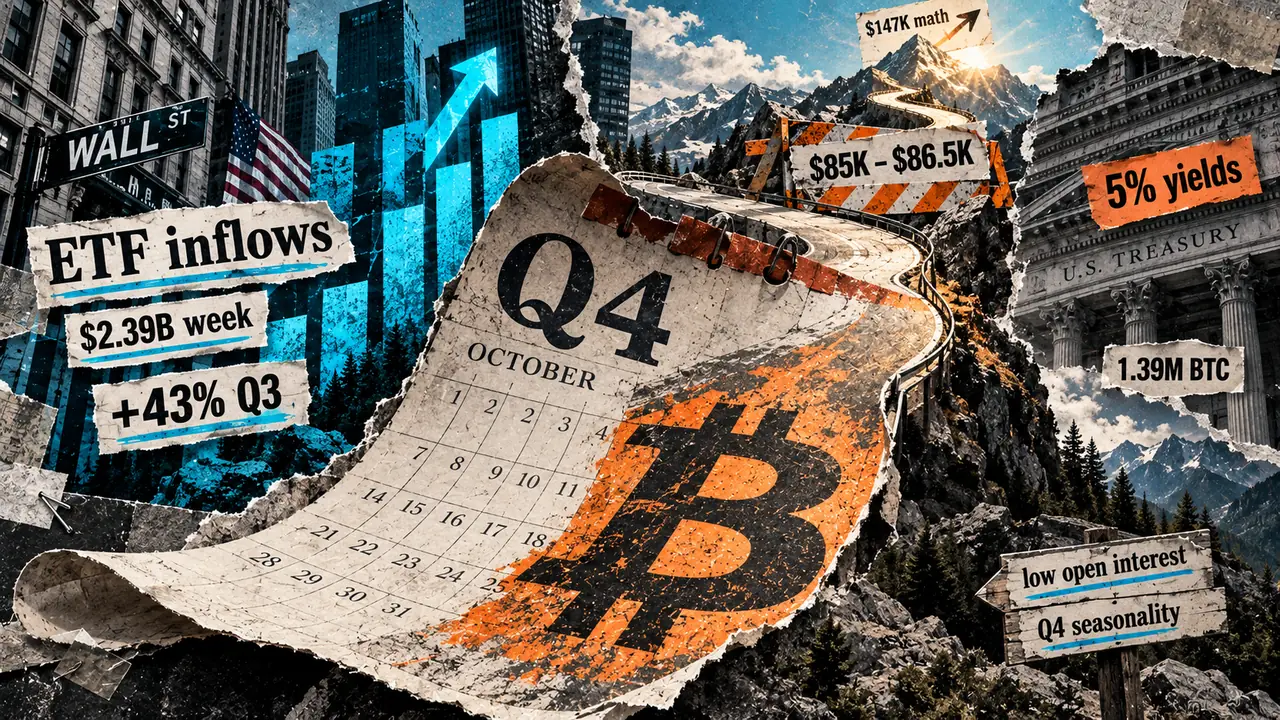
Bitcoin enters its best season after a 43% surge, with $147,000 suddenly on the math
Bitcoin is closing its strongest quarter since 2024 after leaving US stocks and gold far behind despite surging bond yields. The l...
Bitcoin Surges 40% in Its Best Quarter Since Late 2024
Bitcoin Magazine Bitcoin Surges 40% in Its Best Quarter Since Late 2024 Bitcoin is having one of its best quarters ever — another...

Japan’s biggest payment network opens its doors for crypto via Binance Pay
Japanese payment provider PayPay added Binance Pay on Sept. 30, letting eligible overseas visitors pay from their crypto balances...

Perplexity AI Predicts Insane $40 Price Target for XRP: How Did It Get There?
Perplexity AI predicts something that few analysts or other AI models do. It has produced an insanely wild bullish prediction for...