Bitcoin's High E-Waste Rate Worsens Environmental Concerns: Digiconomist
From Xinjiang to New York, controversy around Bitcoin's environmental impact has come to the doorsteps of those who mine Bitcoin. It is a commonly cited point in crypto circles that Bitcoin consumes large volumes of elec...
Archive context
Older archive item. Useful for background and entity history, but not a fresh market-moving signal.
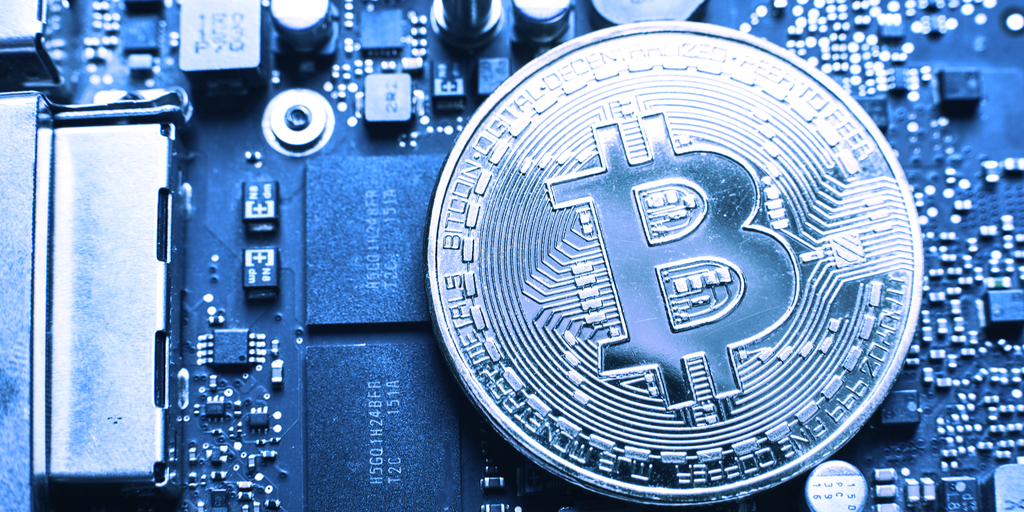
From Xinjiang to New York, controversy around Bitcoin's environmental impact has come to the doorsteps of those who mine Bitcoin.
It is a commonly cited point in crypto circles that Bitcoin consumes large volumes of electricity—oftentimes over the past year a higher total than some entire countries. Now, new research shines a light on a lesser known consequence of Bitcoin mining: e-waste generated by Bitcoin mining machines. The machines are large, expensive, use up a lot of electricity, and have a short shelf-life. When they get discarded, it creates e-waste.
According to Alex de Vries, founder of Digiconomist, Bitcoin’s annual e-waste generation is comparable to the equipment waste produced by the Netherlands. De Vries’ research also claims that—on average—every Bitcoin transaction generates 272 grams of e-waste.
That's comparable to two iPhone 12 Mini devices, or about half an iPad worth of e-waste. "I think many people will be able to relate to that,” de Vries told Decrypt in a recent interview.
The new research suggests that Bitcoin’s already well-documented impact on the environment expands beyond its carbon footprint resulting from reliance on non-renewable resources.
“I can imagine that it’s hard for media to cover everything at the same time, but it is something that we need to address,” de Vries added.
Bitcoin’s growing e-waste problem Bitcoin’s average annual e-waste generation was at 30.7 metric kilotons as of May, de Vries says. But at a price of $47,700, in the early months of this year, de Vries alleges Bitcoin mining could produce up to 64.4 metric kilotons of e-waste—in other words, when Bitcoin’s price pops, so does its e-waste. Is Seneca Lake Being Warmed By Bitcoin Mining? Not Quite.Per de Vries, one of the chief drivers of Bitcoin’s e-waste levels is reliance on ASIC (application-specific integrated circuit) mining hardware.
The life of these mining rigs is not long. According to Bitcoin mining firm Compass Mining, an ASIC rig—if well maintained—lasts between three to five years. De Vries’ research points to an even bleaker outlook, with these machines lasting 1.3 years on average before becoming “economically obsolete.”
“At that point, there’s nothing else you can do with them because they’re single-purpose machines,” de Vries told Decrypt. He added that this results in the mining industry having a “very big incentive” to produce new, more powerful equipment at the expense of older machines.
“That’s what leads to this pile of electronic waste at the end,” he said.
On the other hand, de Vries suggests in his study that it is “theoretically possible” for old devices to regain profitability should Bitcoin’s price increase and drive up mining income.
What can be done?Bitcoin’s carbon footprint has come under intense scrutiny in recent months, with NGOs like Earth Justice lobbying regulators to review the impact of Bitcoin mining in their communities.
But de Vries argues that the solution to Bitcoin’s e-waste—as well as its wider carbon footprint—should come from the Bitcoin community itself.
“Ideally, the change would come from within, and I personally believe that the only optimal solution is to just take out the proof of work mining entirely, and try to replace it with a more sustainable alternative,” de Vries said, adding that moving Bitcoin to a proof-of-stake consensus—instead of the energy intensive proof-of-work consensus it relies on—would help.
“If you make such a change, then the environmental impact will no longer be a concern,” he concluded.
Bitcoin Mining Showdown Puts New York on Front Lines of a Green FightOf course, there is almost no sign right now that Bitcoiners will voluntarily pivot their cryptocurrency to a proof-of-stake consensus mechanism as de Vries suggests, so solutions to curb Bitcoin’s e-waste must come from elsewhere.
Policymakers could help, de Vries suggests, in two ways. The first is by simply raising awareness on the issues surrounding e-waste. “Investor concerns over the energy-hunger of the Bitcoin network, for instance, have shown how transparency on environmental impacts may lower demand,” de Vries wrote. Second, policymakers can “enforce and improve recycling practices,” which in turn can limit the sheer volumes of e-waste collected in societies—if they're compelled to act.
Bitcoiners have their sayBitcoin advocates have sought to downplay the cryptocurrency's environmental impact, either by claiming the network mostly runs on renewable energy—a claim that is heavily disputed—or by setting out a path for Bitcoin's carbon footprint to shrink over time.
Earlier this week, Castle Island Ventures partner and popular Bitcoiner Nic Carter co-authored a report with Ross Stevens, founder and executive chairman of Bitcoin-focused financial firm NYDIG, entitled "Bitcoin Net Zero."
In the report, Carter and Stevens predict that Bitcoin's electricity consumption will "increase significantly within the next decade." Using de Vries' logic, this would mean Bitcoin's e-waste would increase, too. But Carter and Stevens also argue that Bitcoin miners can take steps to reduce emissions. This includes buying carbon offset plans (a strategy criticized by environmentalists), procuring renewable energy, and favoring mining locations where renewable energy is already available.
China's recent crackdown on crypto has led to an exodus of miners to new jurisdictions, but the environmental impact of that exodus is yet to be fully established.
"We'll have to see where these miners have moved," de Vries told Decrypt.
Why this matters
This bitcoin story adds another data point to the current market tape and is useful when read alongside nearby source coverage.
Original source
Read on DecryptRelated market context

Grayscale Sees Limited Bitcoin Impact From 25-Basis-Point Hike
The Federal Reserve raised its benchmark interest rate by 25 basis points to a target range of 3.75%–4.00%, and Grayscale Research...
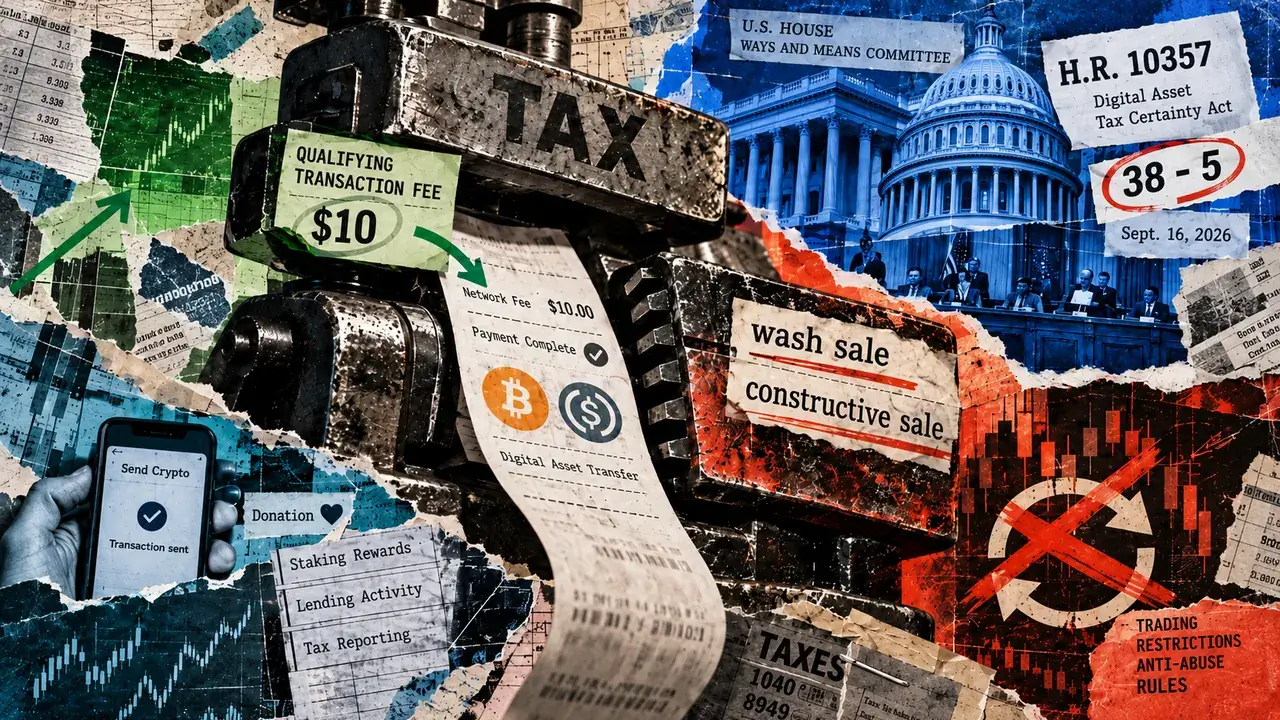
Crypto’s first big tax win comes with a catch for stakers and everyday payments
Crypto groups are pressing Congress to broaden tax relief after a House panel advanced the first digital-asset tax framework. The...

Hyperliquid surpasses Solana in total circulating USDC, becomes second only to Ethereum
Hyperliquid's rise highlights the growing specialization of blockchain ecosystems, impacting stablecoin distribution and market dy...

Your crypto hardware wallet can stay secure while everything around it fails
Two wallet incidents this week exposed a growing weakness in crypto self-custody: the systems surrounding hardware devices. D’CENT...

Ethereum (ETH) Price Prediction: $2,400 Support Holds as Bulls Eye $2,570 and $3,000
The latest recovery has pushed Ethereum price back towards $2,446 after buyers defended the important $2,400 support region. ETH p...

S&P Global Agrees to Buy OpenZeppelin and Fold Smart Contract Audits Into Ratings
S&P Global announced on Thursday that it has agreed to acquire OpenZeppelin, the smart contract security firm, and will run it as...