Bitcoin’s Quantum Transition Won’t Stop at Bitcoin
HONG KONG, October 18, 2026 – As quantum computing advances, the challenge extends beyond Bitcoin’s cryptography to the financial infrastructure built around it. Quantum computing is emerging as one of Bitcoin’s long-ter...
Archive context
Older archive item. Useful for background and entity history, but not a fresh market-moving signal.

HONG KONG, October 18, 2026 – As quantum computing advances, the challenge extends beyond Bitcoin’s cryptography to the financial infrastructure built around it.
Quantum computing is emerging as one of Bitcoin’s long-term security challenges. A sufficiently powerful quantum computer could theoretically compromise the digital signatures protecting Bitcoin transactions, potentially exposing funds associated with vulnerable public keys.
While no publicly demonstrated quantum computer is currently capable of such an attack at scale, the implications extend beyond Bitcoin itself. As Bitcoin becomes increasingly integrated into decentralized finance (DeFi) through tokenized assets such as Wrapped Bitcoin (WBTC), a future cryptographic transition would affect not only the Bitcoin network, but also the financial infrastructure built around it.
The question is no longer simply whether Bitcoin can become quantum-resistant, but whether the broader ecosystem can evolve alongside it.
Beyond the Bitcoin NetworkBitcoin’s transition to quantum-resistant cryptography would require more than introducing new signature schemes. Wallets, exchanges, custodians and infrastructure providers would need to adapt their systems, potentially migrating existing BTC holdings to new security standards.
Proposals such as BIP-360 reflect ongoing efforts to explore Bitcoin’s future cryptographic architecture. Yet coordinating adoption across a decentralized ecosystem could take years.
For tokenized Bitcoin, the challenge becomes more complex. Even if Bitcoin adopts quantum-resistant cryptography, the custody systems, smart contracts and networks supporting tokenized assets would still require independent security assessments.
Securing Bitcoin itself does not automatically secure everything built around it.
WBTC and the Next Generation of Bitcoin InfrastructureAs an established tokenized Bitcoin asset in DeFi, WBTC illustrates the scale and complexity of securing Bitcoin across multiple financial ecosystems.
With 116,000 WBTC in circulation, representing approximately $9.5 billion in Bitcoin-backed assets, WBTC’s infrastructure supports Bitcoin liquidity across lending protocols, decentralized exchanges and multiple blockchain networks.
Backed 1:1 by BTC held in custody, WBTC’s long-term resilience depends not only on Bitcoin’s underlying cryptography, but also on reserve security, custody operations and the infrastructure supporting minting and redemption.
A future quantum-resistant transition could require custodians to evaluate their key-management systems, migrate underlying BTC reserves and maintain operational continuity throughout the process.
Against this backdrop, WBTC is preparing to migrate to new Custodian Bitcoin Deposit Addresses (CBDAs) as part of its custody infrastructure management. Bitcoin address management is relevant to long-term security because public-key exposure can influence vulnerability to potential quantum attacks. However, the security implications depend on address types and transaction histories, and address migration alone does not establish quantum resistance.
WBTC has also publicly announced its exploration of a multi-custodian reserve model, aimed at reducing custody concentration risk and strengthening operational resilience. While diversification does not directly address quantum vulnerabilities, it could provide greater flexibility as security standards evolve, depending on implementation.
Together, these initiatives highlight the importance of both reserve security and operational resilience as Bitcoin’s financial ecosystem expands. Neither replaces the need for quantum-resistant cryptography, but both illustrate the infrastructure considerations involved in preparing for future changes.
Preparing for the Next EraThe timeline for quantum computing remains uncertain, but preparing for potential cryptographic changes is a long-term challenge for the entire Bitcoin ecosystem.
For WBTC, this means considering how custody arrangements, reserve management and supporting blockchain infrastructure could evolve alongside Bitcoin’s security standards.
Bitcoin’s quantum transition may begin with cryptography, but its success will depend on the resilience of the infrastructure connecting Bitcoin to the wider financial ecosystem.
About WBTC – Bitcoin’s Passport to DEFI WBTC is the new Bitcoin standard. A singular identity for Bitcoin across multiple chains. It brings Bitcoin into environments where speed, capital efficiency, and scale are essential, while maintaining fidelity to Bitcoin’s original principles. There is no second. WBTC stands alone in its role, trusted, verifiable, and engineered for a multichain world. Media Contact: [email protected] | Website: wbtc.network
Disclaimer: Information provided is for information purposes only and is not financial advice. No representation or warranty has been made as to the content, accuracy, timeliness, suitability or completeness of such information. Participation in DeFi carries risks, always do your own research.
Why this matters
Bitcoin is showing up inside the DeFi theme, so this story is worth tracking for follow-through rather than treating it as a one-off headline.
Original source
Read on NewsBTCRelated market context

Binance Blockchain Week puts AI infrastructure at center stage
The integration of AI and blockchain in finance could enhance efficiency but raises concerns about data integrity, security, and r...

Japan’s FSA floats cooling-off periods for self-custody transfers and DeFi curbs
Japan’s Financial Services Agency is weighing cooling-off periods on transfers from newly opened crypto exchange accounts to self-...

Keel Infrastructure sells entire Bitcoin treasury worth $192M
Keel's Bitcoin liquidation highlights a strategic pivot to AI, reflecting broader industry shifts and potential volatility managem...
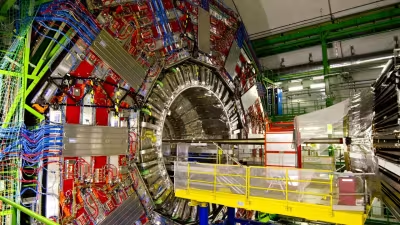
Khosla warns AI and quantum computing could threaten crypto security by 2030
The potential compromise of encryption by AI and quantum computing could destabilize cryptocurrency markets, prompting urgent secu...
Coinbase reassures client asset safety amid AI cryptography rumors
Coinbase's proactive stance on post-quantum cryptography highlights the industry's focus on long-term security amid evolving AI th...

China Unveils Blockchain Identity Rules, Paving the Way for Digital Yuan Integration
Key Takeaways: China’s blockchain identity regulations will go into effect on 1st March 2027. The framework encourages integration...