China Unveils Blockchain Identity Rules, Paving the Way for Digital Yuan Integration
Key Takeaways: China’s blockchain identity regulations will go into effect on 1st March 2027. The framework encourages integration with digital yuan services. New rules limit data collection and user profiling that is no...
Watchlist
Published in the last two hours. A tracked entity is involved.

Key Takeaways:
- China’s blockchain identity regulations will go into effect on 1st March 2027.
- The framework encourages integration with digital yuan services.
- New rules limit data collection and user profiling that is not necessary.
User Score
8.7
Follow us on Google NewsChina has introduced a regulatory framework for blockchain-based digital identities, establishing nationwide standards for cross-platform authentication and credential verification. The regulations were released on November 27, and they promote the interoperability of distributed digital identities with the country’s central bank digital currency (CBDC).
China Establishes a Nationwide Blockchain Identity FrameworkIt is jointly issued by 11 government departments, including the Cyberspace Administration of China (CAC) and the People’s Bank of China (PBOC).
In the framework, China’s national blockchain network is to be the underpinning infrastructure for distributed digital identity services. The authorized operators will collaborate with IDVIs and credential issuers for a common authentication process.
People, businesses, government agencies and even industrial equipment will be able to have a digital identity. Admission will be by selection, and it will be voluntary, applicants will have to be recognised by a designated institution.
It will include cryptographic primitives and verifiable credentials, enabling users to verify their identities, grant access permissions to data and prove certain abilities on participating platforms.
Cross Border Authenticity is possible also through recognized identities of eligible organizations and persons outside the country or region.
Read More: Swift Taps Chainlink and Five Tech Giants to Expand Blockchain Payments Across 6 Continents
Digital Yuan Integration Takes Center Stage in Blockchain AdoptionDigital yuan identities and distributed digital identity services are also encouraged to be compatible with each other, as stated in Article 29 of the regulations.
The integration would bring digital yuan identities in alignment with the national blockchain infrastructure, enabling the connection of China’s CBDC ecosystem to financial services used by users.
It also supports identity verification in taxation and customs, transportation and international trade via a blockchain.
Financial institutions might benefit from standardized digital credentials to ease identity verification and the need for repetitive checks with services that are participants.
But the regulations don’t bring a new cryptocurrency or permit free trading of cryptocurrencies. The identity infrastructure isn’t based on permissionless blockchain network identities, but on technically standardized, nationally coordinated entities and services.
China Explores Blockchain Identities for AI AgentsThe regulations go beyond financial use, supporting the possibility of distributed digital identities to verify AI agents.
This could enable the interactions between automated systems, as a way to set up and validate digital identity before sharing data or service.
China Introduces Strict Data Privacy RequirementsDigital identity providers must expediently collect information for its services. Platforms shall seek user consent to use a distributed digital identity and link it with other account information for legitimate business purposes. Profiling with identity verification data or targeted advertising is not allowed on a cross-context basis.
Users will still be able to control their private keys and selectively share information as verifiable credentials.
Emergency responses are essential for blockchain identity operators and they need to be able to monitor security and adhere to national cryptographic requirements 24 hours a day. The regulations will officially enter into force on March 1, 2027.
Read More: HKMA and Swift Link Tokenized Deposits to 24/7 Cross-Border Payment Infrastructure
The post China Unveils Blockchain Identity Rules, Paving the Way for Digital Yuan Integration appeared first on CryptoNinjas.
Why this matters
Chainlink is showing up inside the Institutional Adoption theme, so this story is worth tracking for follow-through rather than treating it as a one-off headline.
Original source
Read on CryptoNinjasRelated market context

China finalizes blockchain digital identity rules, effective March 1, 2027
China published final regulations on a national blockchain-based digital identity system on November 27, 2026, with the rules taki...

China sets March 2027 rollout for blockchain identity regulations
China's blockchain identity regulations may enhance state control over digital identities, impacting privacy and global tech stand...

Fidelity Files for Spot Chainlink ETF With Proposed Nasdaq Listing
Fidelity has filed with the US Securities and Exchange Commission to launch a spot Chainlink exchange-traded fund. The proposed Fi...
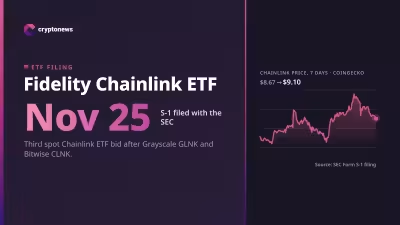
Fidelity Chainlink ETF: S-1 filing makes it the third US LINK fund
Fidelity filed an S-1 with the SEC on November 25, 2026 for a spot Chainlink ETF that would list on Nasdaq as FLNK, the filing sho...

China, Japan, South Korea and ASEAN form joint group on crypto and digital payments
The collaboration could enhance regional digital asset adoption and payment systems, but regulatory uncertainty may persist withou...

Bank of Japan maps stablecoin links to central bank money
Bank of Japan Executive Director Kazushige Kamiyama said on November 27, 2026 that stablecoins will need regulated reserves and “w...