CME Group to Sue CFTC Over Bitcoin Perpetual Futures Approval in Clash Over Dodd-Frank Classification
Bitcoin Magazine CME Group to Sue CFTC Over Bitcoin Perpetual Futures Approval in Clash Over Dodd-Frank Classification The CME Group said that it plans to file a lawsuit against the Commodity Futures Trading Commission (...
Archive context
Older archive item. Useful for background and entity history, but not a fresh market-moving signal.

Bitcoin Magazine
CME Group to Sue CFTC Over Bitcoin Perpetual Futures Approval in Clash Over Dodd-Frank Classification
The CME Group said that it plans to file a lawsuit against the Commodity Futures Trading Commission (CFTC) over the agency’s approval of crypto perpetual futures, setting up a direct legal confrontation between the world’s largest futures exchange operator and its own regulator.
Outgoing CME CEO Terrence Duffy made the announcement on CNBC’s “Fast Money,” saying the company would file litigation today. CME later confirmed the plans to Reuters. The lawsuit targets the CFTC’s decision in late May to allow prediction market platform Kalshi to offer bitcoin perpetual futures — a first for the United States.
At the center of the legal argument is a classification dispute under the Dodd-Frank Act. Duffy contends that perpetual futures, known as “perps,” are not futures at all but swaps, and therefore subject to a different set of clearing, reporting, and trading-venue requirements.
“Under the Dodd-Frank Act, it defines what a swap is and what a future is, and when there’s two parties exchanging payments to each other, that’s deemed a swap,” Duffy told CNBC.
Perpetual futures are derivatives contracts with no expiration date. Rather than settling on a fixed date, they rely on periodic funding payments exchanged between traders. The products can carry leverage of up to 50-to-1, magnifying both gains and losses. Long a fixture on offshore crypto exchanges, they have never before been offered through domestic, regulated venues in the United States.
Kalshi and Coinbase get CFTC clearanceThe CFTC changed that in late May when it approved Kalshi’s bitcoin perp contract. The agency then cleared Coinbase to connect U.S. customers to offshore perpetual futures trading. CFTC Chair Michael Selig has defended both decisions as a way to bring a major segment of crypto derivatives activity under domestic regulation.
“It’s time to approve regulated futures contracts that have no expiration date,” Selig told CNBC’s “Fast Money” earlier this week. “We’re going to make sure the product’s available, but it’s well regulated here in the U.S.”
The CFTC pushed back against CME’s legal threat. A spokesperson told Reuters the agency looked forward to addressing the claims and called the lawsuit “frivolous.”
Duffy said he had spent eight months preparing the challenge with CME’s board and made clear the company viewed the approval process itself as flawed, arguing the CFTC had cleared a novel instrument faster than typical review procedures would allow.
He also pointed to CME’s exclusive licenses on key market benchmarks, arguing that competing perpetual contracts would need to route through CME regardless of how the products are classified.
“We have an exclusive license with every single provider of the benchmarks,” Duffy said. “All of these would have to go through CME regardless of the perpetual.”
The announcement came the same day CME named Duffy’s successor. He will step down in March 2027, handing the chief executive role to President and CFO Lynne Fitzpatrick, who will become CME’s first female CEO.
CME’s lawsuit arrived on a day that proved difficult for the CFTC on another front. A federal judge in the Western District of Michigan, Paul L. Maloney, denied Polymarket’s request for a preliminary injunction against Michigan regulators and ruled that sports-related prediction market wagers are not swaps and therefore fall outside CFTC jurisdiction.
Maloney wrote that the agency’s interpretation of its own authority over derivatives was “so vast that it would encompass vast swaths of activity never understood to be associated with the financial industry.”
This post CME Group to Sue CFTC Over Bitcoin Perpetual Futures Approval in Clash Over Dodd-Frank Classification first appeared on Bitcoin Magazine and is written by Micah Zimmerman.
Why this matters
Bitcoin is showing up inside the Regulation theme, so this story is worth tracking for follow-through rather than treating it as a one-off headline.
Original source
Read on Bitcoin MagazineRelated market context

CFTC proposes a divide between prediction contracts and sportsbook wagers
The Commodity Futures Trading Commission announced two actions on Oct. 9 seeking to clarify the federal regulatory boundary betwee...
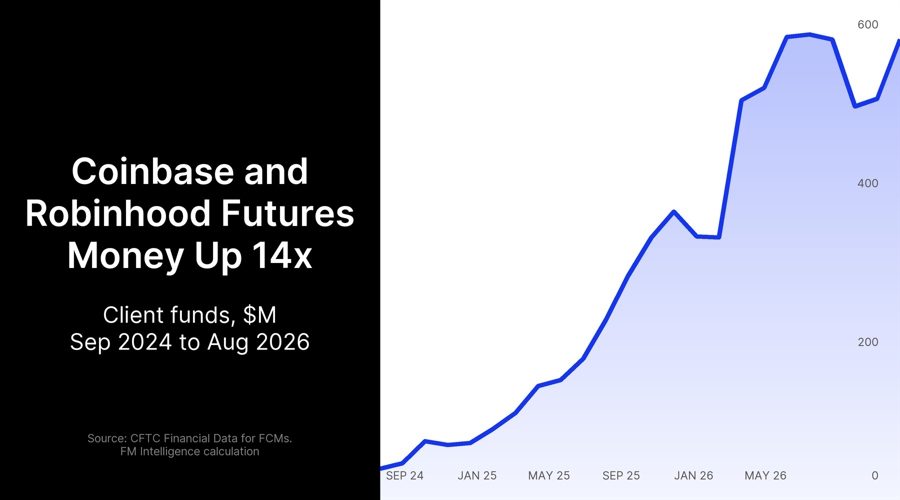
Coinbase and Robinhood Futures Arms Now Hold More Client Money Than the US Retail Forex Pool
The futures brokers of Coinbase and Robinhood held $581.4 million of segregated client money at the end of August. That is more th...

Kalshi Reviews Three Sub-$100 Bets That Called Trump’s Press Secretary Pick Early
None of the three wagers topped $100, but each backed Katie Zacharia for White House press secretary before her selection was repo...
Polymarket Gives Dems 62% Midterm Sweep Odds, CLARITY Act in Jeopardy
Prediction markets are flashing warning signs for the cryptocurrency industry ahead of the Nov. 3 midterms. Polymarket gives Democ...

Coinbase flags delayed Celestia transfers as trading continues normally
Delayed Celestia transfers highlight potential vulnerabilities in blockchain infrastructure, emphasizing the need for robust netwo...

Standard Chartered brings Ripple’s RLUSD into banking custody after $765 million quarterly surge
Standard Chartered has launched custody for Ripple's RLUSD stablecoin as it prepares to expand its use as collateral for instituti...