Core Developer Amiti Uttarwar Will Be Reinforcing Decentralization At Bitcoin 2023
“One of the many ways that Bitcoin is an experiment is in its decentralized development model,” explained Amiti Uttarwar. “Whether a non-profit or a private company, the vast majority of software projects have a centrali...
Archive context
Older archive item. Useful for background and entity history, but not a fresh market-moving signal.

“One of the many ways that Bitcoin is an experiment is in its decentralized development model,” explained Amiti Uttarwar. “Whether a non-profit or a private company, the vast majority of software projects have a centralized structure for directing funding, prioritizing projects and coordinating efforts. But the community consensus model of Bitcoin is essential for ongoing censorship resistance. While it’s not easy to get tens of thousands of individual computers to agree, getting thousands of humans to agree is arguably the greater challenge.”
As a Bitcoin Core developer, Uttarwar is understandably fascinated with Bitcoin’s unique consensus model. She opted to focus on this community-led, open-source project full time in 2019, taking a significant pay cut from an engineering role with Coinbase, and has since earned grants to continue her work from OKCoin, BitMEX operator HDR Global and Gemini.
Her past codebase contributions have changed the logic of Bitcoin’s address management, fundamentally shifted address communication and reduced privacy leaks caused by transaction broadcasting. Today, her development focus is on improving support for privacy-enhancing communication layers like Tor, I2P and CJDNS through a collaboration with Chaincode Labs’ Martin Zumsande.
“While Bitcoin users can run nodes on multiple networks right now, the benefits are limited and often require a deep level of understanding from the node operator,” Uttarwar said. “Our current project is to enable automatic connections to nodes on every network that a user has enabled. With our work, if a user has enabled clearnet (with interfaces IPv4 or IPv6) and Tor on their Bitcoin node, the node will strive to ensure at least one of their 10 outbound connections is to an onion peer on the Tor network.”
For Uttarwar, who has seen her work merged into a Bitcoin Core update and who depends upon the larger community of Bitcoin developers for feedback and critical review of her work, the decentralization that underpins this software project is more than just a development model, it is a responsibility.
“Honoring decentralization in the world of Bitcoin development requires participation from Bitcoin users at varying levels of expertise,” she said. “For example, a protocol upgrade can only happen if users all over the world decide to adopt the code and activate the new logic... The question of what makes Bitcoin better evokes strong opinions in the community, but whether advocating for ossification or soft-fork methodology, funding developers or selecting maintainers, the question that underpins all of these conversations is: How do we agree on what Bitcoin needs in a decentralized way?”
Exploring this existential question will be Uttarwar’s focus at the upcoming Bitcoin 2023 conference, where she is set to deliver a keynote titled “Decentralization In Action.” Rather than advocating for a particular Bitcoin project, use case or implication, Uttarwar will be using this spotlight to grapple with the very nature of organizational systems and the unique value of Bitcoin development in their context.
“My talk begins with an epistemological lens, identifying meaningful mental models by taking a look at the world around us,” she described. “By starting with these examples, I encourage the audience to broaden their understanding of how decentralization works in practice. The rest of the talk relates these questions back to daily challenges in the ecosystem of Bitcoin builders. Bitcoin relies on nodes running code around the world to ensure censorship resistance on the network. Upholding this goal also requires a decentralized model of development — the community needs to ensure that making changes to the code is not vulnerable to a single point of failure.”
She will also participate in a panel discussion alongside Bitcoin Magazine’s Aaron van Wirdum, Judica Founder Jeremy Rubin and Lightning Network Developer Tadge Dryja called “Evolving Bitcoin’s Code” to further explore when and how changes can be successfully made to Bitcoin’s underlying software.
Uttarwar sees Bitcoin 2023 as a chance to advocate for the work that she and the rest of the Bitcoin development community are doing every day, reinforcing what decentralization really means for all of us who enjoy the tools built on top of this technology.
“At Bitcoin 2023, I aim to encourage people to develop a richer understanding of the complexity of what it means to build a truly decentralized technology, and how the success of Bitcoin relies on the individuals within the community contributing their unique attention,” she concluded. “I look forward to getting a pulse of the greater community, learning more about what excites people as well as current pain points. I’m also excited to connect with different people and discover corners of conversation that reinforce my excitement for this space.”
Why this matters
This bitcoin story adds another data point to the current market tape and is useful when read alongside nearby source coverage.
Original source
Read on Bitcoin MagazineRelated market context
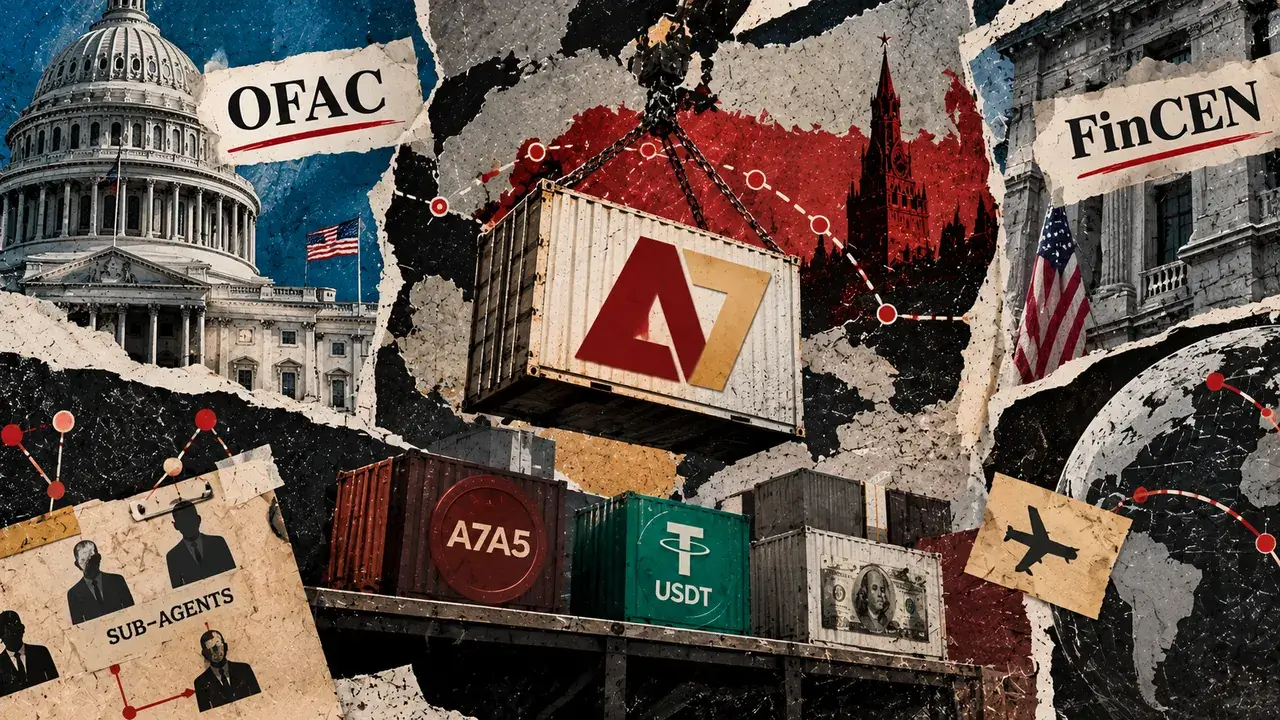
US targets $17 billion Russia-linked crypto payment network using USDT as an escape route
The US sanctioned the Russia-linked A7 Network and proposed new restrictions to cut its crypto intermediaries off from global mark...
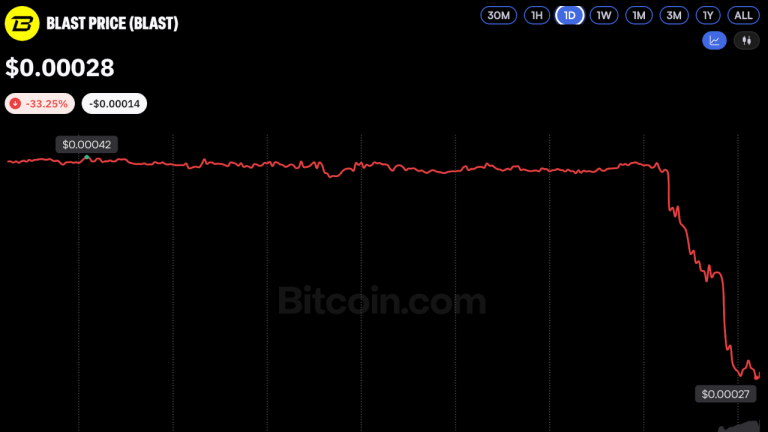
Ethereum Layer 2 Network Blast to Shut Down After Revenue Collapse
Blast, a once-buzzy Ethereum Layer 2 network, is set to shut down later this month after a dramatic decline in activity left the s...

Colosseum upgrades AI Copilot to sharpen Solana project development
The enhanced AI Copilot fosters innovation by providing tailored insights and trend analysis, potentially accelerating Solana's ec...
Porsche scraps NFT project with floor price down 96%
Porsche has written off its 911 NFT project PIONΞERS CIRCLE, leaving buyers with digital artworks that are down 96%. PIONΞERS CIRC...
Ethereum Layer 2 Blast Is Shutting Down, Saying Costs Now Exceed What the Chain Earns
Blast, the Ethereum layer 2 network created by Blur founder Tieshun “Pacman” Roquerre, is shutting down, its team announced on X o...

Polymath And CineCity Explore Regulated Tokenized Film Investment Platform
TL;DR Polymath and Chicago-based CineCity Studios are exploring a platform for financing independent film through regulated digita...