CORVA: Want Greater Adoption Of Bitcoin? Use It To Fix Problems.
Follow Frank on X. Bitcoin will not become more widely adopted as a result of intellectual curiosity or because it’s theoretically the best form of money ever. Instead, people will begin to use it because it solves press...
Archive context
Older archive item. Useful for background and entity history, but not a fresh market-moving signal.
Bitcoin will not become more widely adopted as a result of intellectual curiosity or because it’s theoretically the best form of money ever. Instead, people will begin to use it because it solves pressing problems in their lives.
So, if you’re looking to foster greater Bitcoin adoption, show someone how they can use Bitcoin to solve an issue their facing.
Hermann Vivier, co-founder of Bitcoin Ekasi, a Bitcoin circular economy in South Africa was given this advice from Mike Peterson, Director of Bitcoin Beach, the world’s first Bitcoin circular economy, and it continues to inform his work.
The broader problem that Bitcoin solves for underserved South Africans is that it provides them with a means to save in an environment in which many don’t trust banks or have much access to other investments. Part of the reason they don’t trust banks is because they’re often charged hidden fees from both the banks themselves as well as local merchants.
Vivier told Bitcoin Magazine that many in the community often purchase goods via layaway programs (buy now, pay later) and are often duped by stipulations in the fine print of the deals.
“You can go in and buy something today, not pay for it at all, take it home and then the merchant starts charging you after the second or the third month,” explained Vivier.
“These credit schemes are quite exploitative. The fees would go up over time as interest accumulates and the residents give the company the right to just draw the money from their bank accounts, but the buyers don't understand what they're signing away,” he added.
“After a year, they see there's still money going out of their account, but in their mind, they've already finished paying for this thing, yet they're still paying for it and they don't know why.”
Vivier went on to explain that the simple fact that money cannot be automatically withdrawn from a Bitcoin wallet like it can from a bank account provides Bitcoin Ekasi community members with more of a sense of control over their funds.
Rich Swisher, founder of Motiv, an NGO that develops Bitcoin circular economies and helps members of unbanked communities in Perú become more financially independent, also uses Bitcoin to help the financially disadvantaged have more control over their money.
Swisher told Bitcoin Magazine that residents of the communities with whom Motiv works can’t save cash in their homes because of the high likelihood that they’ll be robbed. And many don't use banks because they charge fees that these residents can't afford to pay (That's if banking services are available at all.) Bitcoin provides them with a way to bank themselves, which serves as a financial base for them to start their own enterprises.
“With Bitcoin, they can start a small business that they can run out of their home and run off of their phone,” Swisher told Bitcoin Magazine.
“Over time they see that they can be financially independent. Then, they start seeing that not only do I have a good path going right now, but if it was all taken away from me tomorrow, I have the know-how to redo it,” he added.
“None of this happens without Bitcoin.”
So, does that mean you have to run out and start a full-on Bitcoin circular economy in an underserved community if you want to see more Bitcoin adoption? Absolutely not.
But how hard would it be to show your friend who runs a non-profit how to accept bitcoin for international donations so to save on wire transfer fees or to show a family member how to send an international remittance using Bitcoin instead of Western Union, which charges high fees for its service? Not that hard.
If you want to see more people using Bitcoin, quit the habit of explaining to those around you how great it is, and start showing them what problems it solves.
This article is a Take. Opinions expressed are entirely the author's and do not necessarily reflect those of BTC Inc or Bitcoin Magazine.
Why this matters
This bitcoin story adds another data point to the current market tape and is useful when read alongside nearby source coverage.
Original source
Read on Bitcoin MagazineRelated market context

Ethereum Price Prediction: Could Aztec’s zk.money Drive ETH Higher as Zcash Fuels Privacy Narrative?
Ethereum is trading at $2,665, flat over 24 hours, leaving it below the $2,700–$2,735 resistance band as our recent price predicti...
Aave’s $50 million lending plan could lose money without a single default
Aave’s proposed institutional lending business would put crypto collateral on both sides of the financing chain. Institutions woul...

Coinbase Faces Hack Cover-Up Allegations as Customers Claim Huge Losses
A public dispute over how Coinbase handles customers who say they lost funds on the exchange has grown over the past week on X, dr...

David Lawant: Bitcoin Entering New “Bullish Regime” According to Options Market
Bitcoin Magazine David Lawant: Bitcoin Entering New “Bullish Regime” According to Options Market Bitcoin futures open interest is...

The SEC’s Buyback Guidance Is Narrower Than It Looks. Does Yours Pass the Test?
Crypto projects that buy back their own tokens have operated under a dour legal cloud within the US for nearly a decade. A buyback...
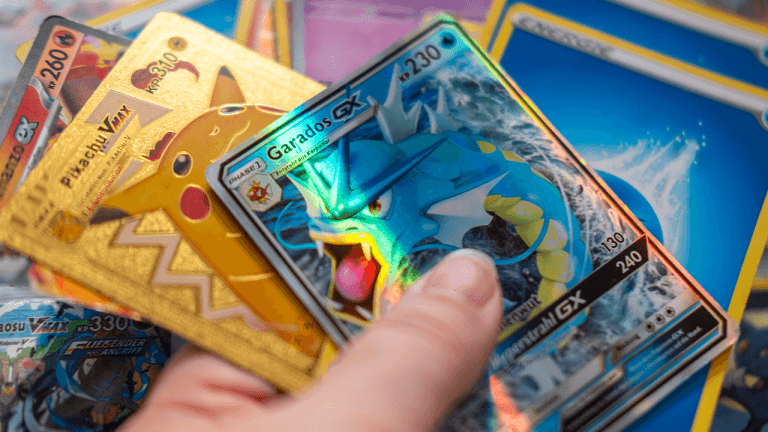
Coinbase Plans Digital Pokémon Pulls With Real Cards Behind Them
Coinbase wants customers to open Pokémon packs on their phones and collect real cards they may never touch. Its Sept. 28 teaser pr...