Federal Bitcoin Reserve Sparks Debate as Lummis Introduces New Legislation
This development has sparked extensive debate among policymakers and industry experts. Lummis has been an outspoken Bitcoin advocate who believes the Federal Bitcoin Reserve could be a strategic asset that secures the Un...
Archive context
Older archive item. Useful for background and entity history, but not a fresh market-moving signal.

This development has sparked extensive debate among policymakers and industry experts.
Lummis has been an outspoken Bitcoin advocate who believes the Federal Bitcoin Reserve could be a strategic asset that secures the United States’ global financial position. It was suggested that the country collect Bitcoins as a strategic asset and a store of value similar to gold. Lummis said, “Bitcoin is decentralized, and its value makes it a perfect addition to our national reserves.”
Not everyone is as excited as Lummis is. One of the most vocal critics, Bill Dudley, cited its infeasibility and the lack of need for such a reserve. The volatility of Bitcoin’s price, according to Dudley, may expose federal reserves to financial risks that may be completely unnecessary. “Central banks usually aim for stability, and Bitcoin, with its extreme fluctuations, goes against that principle,” he said in a recent interview.
Debate Heats Up Over Federal Bitcoin ReserveProponents of the measure say that adopting Bitcoin would protect the United States from global economic risks. Advocates cite countries such as El Salvador, which made Bitcoin legal tender, as examples of bold innovation. However, critics fear that such policies may destabilize rather than strengthen the financial system.
Furthermore, Bitcoin’s energy consumption has raised concerns. Establishing a Federal Bitcoin Reserve would likely require significant mining operations or acquisitions, adding pressure to already strained global energy resources. These environmental implications are expected to feature prominently in debates surrounding the bill.
Senator Cynthia Lummis advocates for the establishment of a Federal Bitcoin Reserve. Source: X
The legislation also emerges at a time when progress is being made globally around digital currency technology, especially in China’s development and testing of CBDCs. Lummis, however, frames Bitcoin in her bill as a way to keep financial markets out of state control, in stark contrast to the digital currencies various countries have been developing. Proponents argue it would be a proactive approach to new financial technologies—one that will help keep the U.S. economy in a competitive position.
Public and Industry ReactionThe proposal for a Federal Bitcoin Reserve elicited varied comments. The cryptocurrency community generally appreciates the endeavor, seeing it as validation of Bitcoin’s legitimacy. Major leaders in the cryptocurrency market believe that the move will hasten mainstream adoption and increase investment in the field. Conversely, financial traditionalists and environmental advocates are urging caution.
The proposed law is still in its infancy, and its passage through Congress remains doubtful. Lummis’ ability to attract bipartisan support will be important. As discussions unfold, the proposal may undergo significant revisions to address concerns around volatility, environmental impact, and regulatory oversight.
A Federal Bitcoin Reserve would underpin the increasing convergence between traditional finance and cryptocurrency. Whether that becomes a reality or remains one of the most maverick ideas, the controversy it has stirred up showcases how digital assets increasingly frame the future of the world’s economy.
Why this matters
This bitcoin story adds another data point to the current market tape and is useful when read alongside nearby source coverage.
Original source
Read on Brave New CoinRelated market context
US targets $17 billion Russia-linked crypto payment network using USDT as an escape route
The US sanctioned the Russia-linked A7 Network and proposed new restrictions to cut its crypto intermediaries off from global mark...

Frank Holmes: They Will Print $100 Trillion – Why to Buy Bitcoin & Gold
Bitcoin Magazine Frank Holmes: They Will Print $100 Trillion – Why to Buy Bitcoin & Gold Bitcoin miners already have the power, th...

Tokenized Stocks, Investor Rights, and Their Crypto Role
Tokenized stocks could give crypto-native investors access to equity exposure through crypto platforms, but a token that tracks a...
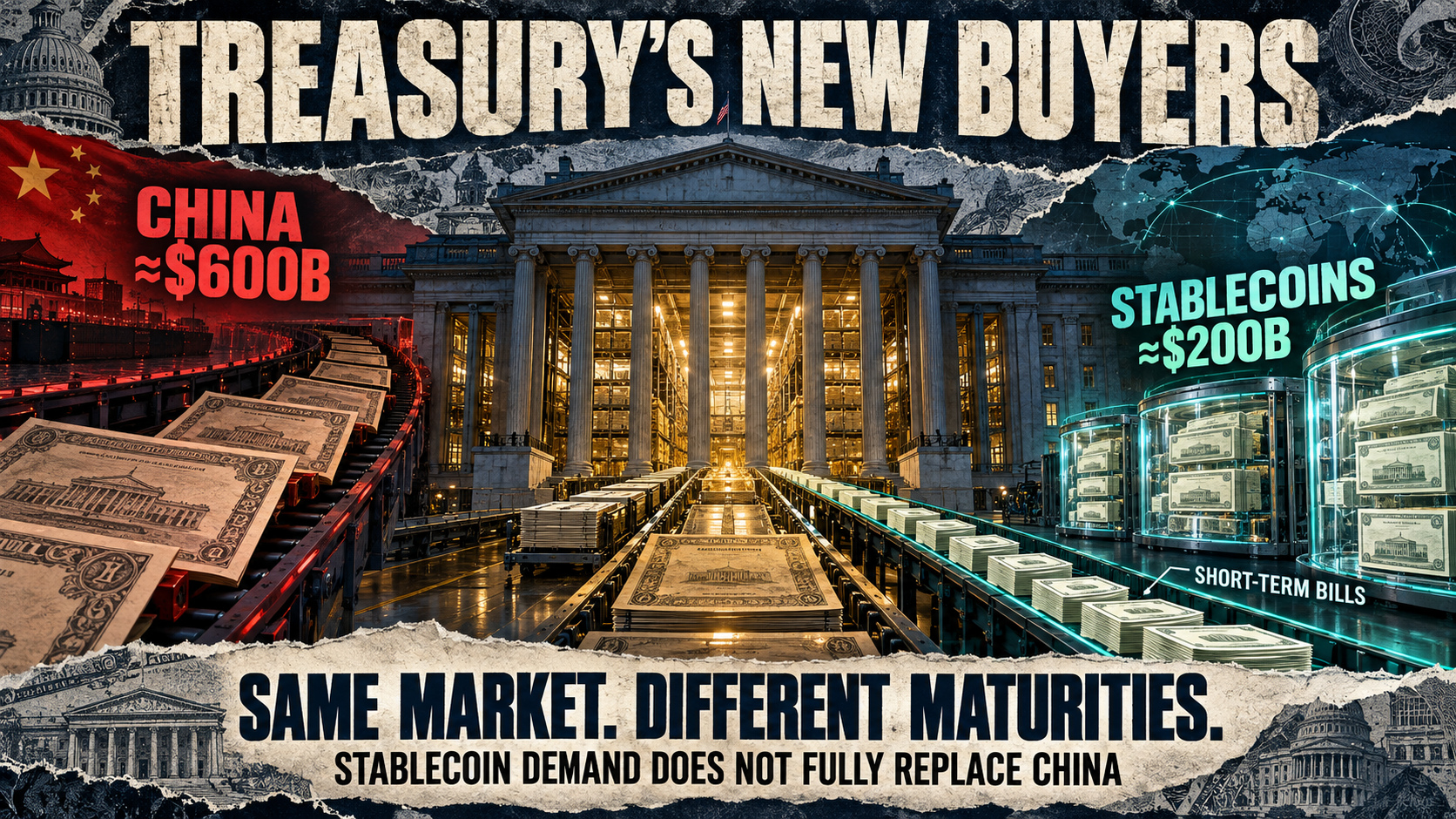
Stablecoin issuers have replaced 40% of China’s lost US Treasury demand
Stablecoin issuers are emerging as a new source of demand for US government debt as foreign official holdings lose ground. Tether...
Cardano’s DeFi has shrunk by more than half and RealFi is betting credit can revive it
Cardano’s “bank the unbanked” push went live with RealFi, putting real-world credit behind a new dollar-token system. On Oct. 1, R...

Circle urges EU to rethink stablecoin reserve rules in MiCA review
Circle's proposal could reshape EU stablecoin regulations, potentially enhancing financial stability and fostering cross-border in...