FedNow's Impact on Your Financial Freedom: What You Need to Know
Last week, the Federal Reserve sent Bitcoin Magazine a cease and desist letter in an attempt to silence criticism of its recently launched FedNow interbank clearing and settlement service. The central bank of the United...
Archive context
Older archive item. Useful for background and entity history, but not a fresh market-moving signal.

Last week, the Federal Reserve sent Bitcoin Magazine a cease and desist letter in an attempt to silence criticism of its recently launched FedNow interbank clearing and settlement service. The central bank of the United States is claiming that Bitcoin Magazine merchandise that parodies its services are not protected speech, but rather an unauthorized infringement of its image and trademarks.
The Federal Reserve alleges that Bitcoin Magazine used the trademark without permission to mislead readers into believing a connection exists between the publication and the central bank. While previous Bitcoin Magazine coverage of the Federal Reserve, particularly pertaining to its FedNow service, says otherwise.
“But what is a FedNow? It is actually a scam,” said Bitcoin Magazine’s Isabella Santos, covering the launch of the service in an episode of Bitcoin Backstage. “Meaning the government wants to keep controlling you, your business, and everyone else's. They would have a direct hand into every transaction made between banks through their system, tracking every single one of your payments.”
Bitcoin Magazine has covered the events leading up to and since FedNow launched this past July. This new service from the Fed aims to empower banks and credit unions of all sizes to facilitate instantaneous money transfers for their customers. The Federal Reserve claims that FedNow transactions can be executed 24/7, 365 days a year.
"The Federal Reserve built the FedNow Service to help make everyday payments over the coming years faster and more convenient," said Federal Reserve Chair Jerome Powell, at the time of launch. "Over time, as more banks choose to use this new tool, the benefits to individuals and businesses will include enabling a person to immediately receive a paycheck, or a company to instantly access funds when an invoice is paid."
While FedNow is not a new currency or CBDC, it gives the Federal Reserve even more centralized control over the financial and banking system. One could argue that the US dollar is already almost a full on CBDC, as most payments and banking is done online today. Giving the Fed and other banks the ability to control your payments, track your history, close your accounts if they disagree with you, limit you from withdrawing cash, and more.
Bitcoin offers a decentralized alternative to this alarming form of banking. The Bitcoin network operates 24/7, 365 days a year, without the need for a trusted third party. It is permissionless, meaning the Fed, or anyone on the planet, does not have the ability to stop you from using it to send and receive money. And with the Lightning Network, Bitcoin users can send BTC to and from each other at little to no cost, reaching instant settlement.
This new form of finance is an upgrade on the traditional financial system, not only because of the benefits of a truly decentralized and permissionless network, but because of the currency. Bitcoin has a hard cap supply, meaning there will never be more than 21 million BTC, compared to the US dollar, where there is an unlimited supply. The FedNow service seems to be one step further into locking people into a financial system where their money is controlled and depreciating. Bitcoin allows users to gain full control of their money, transacting as they please, while saving in a currency that appreciates over time.
Why this matters
This bitcoin story adds another data point to the current market tape and is useful when read alongside nearby source coverage.
Original source
Read on Bitcoin MagazineRelated market context

Visa Says Business Payments Now Drive 17% Of Stablecoin-Linked Card Volume
TL;DR Visa says roughly 17% of its stablecoin-linked card volume in fiscal 2026 year-to-date came from business and commercial car...

71% of UK finance leaders expect tokenization to reshape financial services: Lloyds
A Lloyds survey found that faster payments and settlement are the most significant perceived benefits of tokenization, as the UK b...
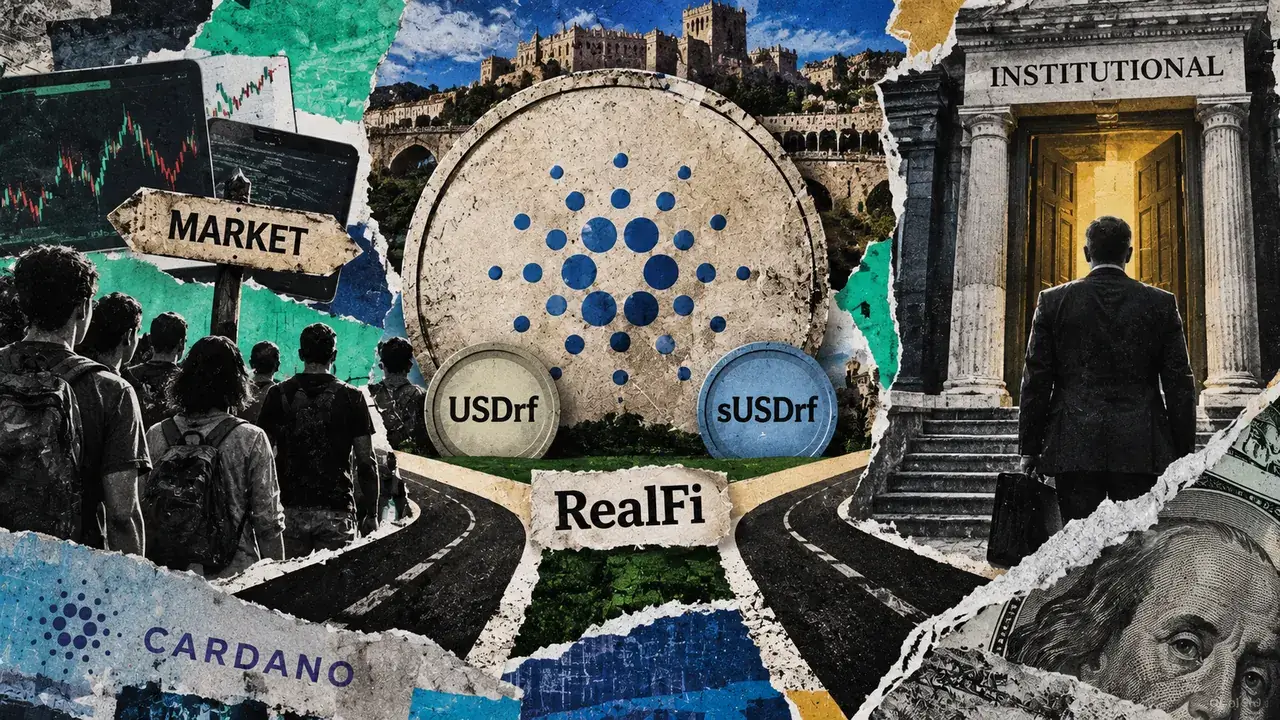
Cardano’s DeFi has shrunk by more than half and RealFi is betting credit can revive it
Cardano’s “bank the unbanked” push went live with RealFi, putting real-world credit behind a new dollar-token system. On Oct. 1, R...

Bitcoin survived 5% yields but crypto’s cheap-money era did not
The US 10-year Treasury yield touched 5.34% on Oct. 1, its highest since 2002, capping a third quarter in which it climbed almost...

Fiserv Puts Stablecoin Banking Platform Live With North Dakota Roughrider Coin
TL;DR Fiserv says its digital-asset platform is now live with financial-institution clients. Bank of North Dakota’s dollar-backed...
Jack Dorsey’s Block Launches Campaign To Get People Spending Bitcoin
Bitcoin Magazine Jack Dorsey’s Block Launches Campaign To Get People Spending Bitcoin Jack Dorsey’s Block continues the push to ma...